Why No Gutter Guard Is Maintenance-Free
It isn't a flaw in any one product. The reasons a guard always needs attention are baked into water, wind and the size of the things that fall from trees.

No gutter guard is maintenance-free because of a problem no product can design away: a guard must let water in, and anything small enough to travel with that water gets in too. Shrink the openings to block the fine stuff, and it simply piles on top instead — where a wet mat can send rain sheeting over the front edge. Every guard reduces the size and frequency of the job. None of them can end it, because water and debris don't sort themselves that cleanly.
"Maintenance-free" is the phrase that launches a thousand disappointed homeowners. It's printed on boxes and repeated in pitches, and it fails not because any particular guard is badly made but because it's asking a barrier to do something barriers can't do. The reasons are physical, not brand-specific — which is oddly reassuring. You're not looking for the one guard that finally cracks it. There isn't one, and understanding why frees you to buy the right guard for the right reasons.
So let's take the promise apart the way water and wind actually do.
The impossible ask at the heart of every guard
A gutter guard has one contradictory job: admit all the water while rejecting all the debris. Those two goals fight each other, and the fight is about size.
Water arrives not as clean droplets but as runoff carrying whatever the roof has collected — grit, dust, granules, pollen, dissolved organic muck. To let that water through, a guard needs openings. And any opening big enough to pass water freely is also big enough to pass a great deal of fine material riding along with it. You can shrink the openings to strain out more of the fine stuff, but you can't shrink them to zero without also blocking the water you were trying to collect.
That's the trap in one sentence: there is no opening size that says yes to water and no to everything else. Every guard is a compromise on that spectrum, and every point on the spectrum leaves maintenance somewhere. This is the same principle that explains, more broadly, why gutter guards don't eliminate cleaning — they only relocate and reduce it.
What slips through, and why it's so small
The debris that defeats the "maintenance-free" claim isn't leaves — a decent guard handles leaves. It's the fine material that's smaller than the openings meant to keep leaves out:
- Windblown grit and dust settle out of runoff and build a silty layer in the trough over seasons.
- Shingle granules shed constantly from asphalt roofs, more so as they age, and they're tiny enough to pass most guards and collect around the downspout outlet.
- Pollen and blossom debris arrive in enormous volume each spring, coating and threading through even fine surfaces.
- Fine pine needles are the classic offender — thin enough to slip through coarse screens and stiff enough to knit into mats.
- Small seeds and pods wedge into openings, hold moisture, and sometimes sprout in the grit that's already there.
None of this is a manufacturing defect. It's the direct consequence of the size compromise above. A guard tuned to stop leaves will pass grit; a guard tuned to stop grit will collect it on top instead. Which brings us to the second half of the physics.
When the debris can't get in, it lands on top
Here's the part homeowners find genuinely counterintuitive: making a guard better at keeping debris out makes it better at collecting debris on top. The material doesn't vanish because the mesh got finer. It just changes address.
A fine surface catches falling leaves, needles and pollen and holds them there. Dry, that's harmless — a scattering of litter. But add rain, and the layer mats into a wet blanket. Now water hitting the guard can't drain through fast enough, so in a real downpour it runs across the surface and pours straight over the front lip, missing the gutter entirely. The trough underneath can be spotless — no clog, nothing wrong inside — while water sheets onto the foundation.
This is why "clog-free" and "maintenance-free" quietly come apart. A guard can keep the trough perfectly clear and still overflow, because the failure has moved to the surface where the marketing wasn't looking. The finer and more effective the guard is at the size game, the more real this surface-loading problem becomes.
Micro-mesh doesn't escape it — it relocates it
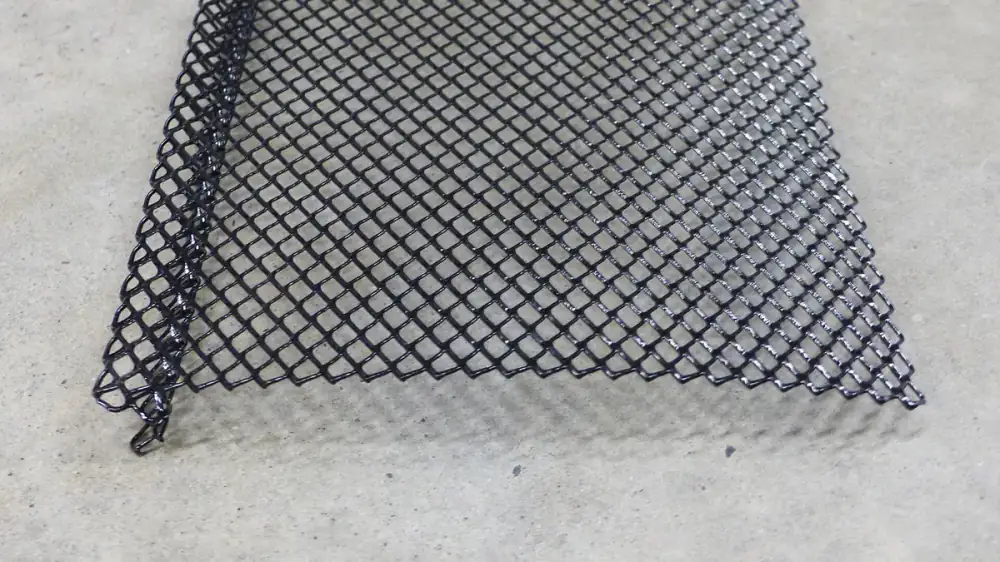
It's fair to ask whether the finest guards beat the physics. Micro-mesh, with its very small openings, genuinely keeps more fine debris out of the trough than a coarse screen does, and that's a real advantage worth having. But it doesn't cheat the trade-off; it takes the other side of it.
Everything a fine mesh stops from entering has to go somewhere, and that somewhere is the top. Pollen films it, dust clogs it, needles blanket it. A loaded micro-mesh surface can shed water over the edge just like any other. So the choice between finer and coarser guards isn't a choice between maintenance and no maintenance — it's a choice about which maintenance you'd rather do: clearing a fine surface more attentively, or scooping a coarser trough more often. Our comparison of micro-mesh versus screen guards walks through exactly that trade.
What "reduced, not eliminated" looks like in practice
Accepting the physics doesn't diminish what guards do — it just aims your expectations correctly. A well-matched guard changes the kind of maintenance and its frequency, and both changes are worth real money:
- The job shifts from scooping wet muck out of the trough to clearing lighter debris off the surface — usually easier and quicker.
- The frequency drops from several cleanings a year to an annual check for many homes, versus the routine an open gutter demands.
- The failure mode you watch for changes too: less "packed and clogged," more "loaded on top and sheeting over."
That's a genuinely better position to be in. It's just not zero, and it never can be. If you want to know what the ongoing job actually involves once you've set your expectations honestly, our guide to cleaning gutters that have guards covers it.
Buy for the physics, not the slogan
The practical upshot is a small shift in how you shop. Stop looking for the guard that ends maintenance — that guard is a category error — and start choosing the guard whose particular maintenance suits your home and your trees. A fine mesh you'll keep an eye on, or a coarser screen you'll clear more often; the right answer depends on what falls on your roof and how you'd rather spend the effort.
The moment you stop expecting a guard to defeat water and wind, it becomes a much easier tool to own. It was never going to make the gutter maintain itself. What it can do — reliably, and worth paying for on the right house — is make the maintenance smaller, lighter and less frequent. That's the honest promise hiding under the impossible one, and it's a good deal on its own terms.
Answers to common questions
Why can't a gutter guard be truly maintenance-free?
Because a guard has to let water in, and anything small enough to ride in with the water — grit, pollen, shingle granules, fine needles — gets in too. Make the openings small enough to stop all of that, and debris simply piles on top instead, where it still has to be cleared. There's no opening size that admits water and rejects everything else, so some maintenance is unavoidable.
What fine debris gets through gutter guards?
Windblown grit and dust, shingle granules washed off aging asphalt roofs, spring pollen and blossom debris, fine pine needles that thread through screens, and small seeds. These are all smaller than leaves, so depending on the guard they either pass through the openings into the trough or collect as a fine layer on the surface.
Why does debris on top of a guard cause overflow?
When leaves or needles mat on top and get wet, they form a layer water can't pass through fast enough. In a heavy downpour the rain runs across that mat and pours over the front edge instead of draining through the guard — so the gutter overflows even though the trough beneath may be completely clear and unclogged.
Do finer micro-mesh guards solve the problem?
They shift it rather than solve it. Very fine mesh does keep more fine debris out of the trough, which is a real advantage. But that same fine surface is where pollen, dust and needles accumulate on top, and a clogged mesh can shed water over the edge. Finer guards trade a trough-cleaning problem for a surface-cleaning one.
How often does a guarded gutter still need attention?
Plan on at least one or two checks a year, plus a look after major storms, with more frequent attention under heavy tree cover or near pines. The goal shifts from scooping out the trough to clearing the surface and confirming water still reaches the downspouts. It's less work than an open gutter, but it isn't zero.
Is a maintenance-free gutter guard just marketing?
Essentially, yes. "Maintenance-free" describes a wish, not a physical possibility, because no barrier both admits water and rejects all debris. The honest claim across every guard type is reduced maintenance — fewer, easier cleanings. A guard that's sold as truly maintenance-free is overpromising something the laws of water and wind won't let it deliver.
More from this section

Common Gutter Guard Problems
Guards solve some problems and create others. Here are the most common gutter guard issues — overflow, surface debris, ice, poor fit — and how to spot them.

Micro-Mesh vs Screen Gutter Guards
Both block leaves, but only one stops fine grit and pine needles. Here's how micro-mesh and screen guards compare on debris, upkeep and fit.
Do Gutter Guards Eliminate Cleaning?
The honest answer is no. Guards cut how often you clean, not the need entirely. Here's what still gets in and why checks still matter.