Galvanized vs. Stainless Fasteners Outdoors
Fasteners are the smallest parts of an exterior and the ones most likely to undo everything around them. The choice between galvanized and stainless isn't about which is stronger — it's about corrosion, staining, and what the fastener is going into.
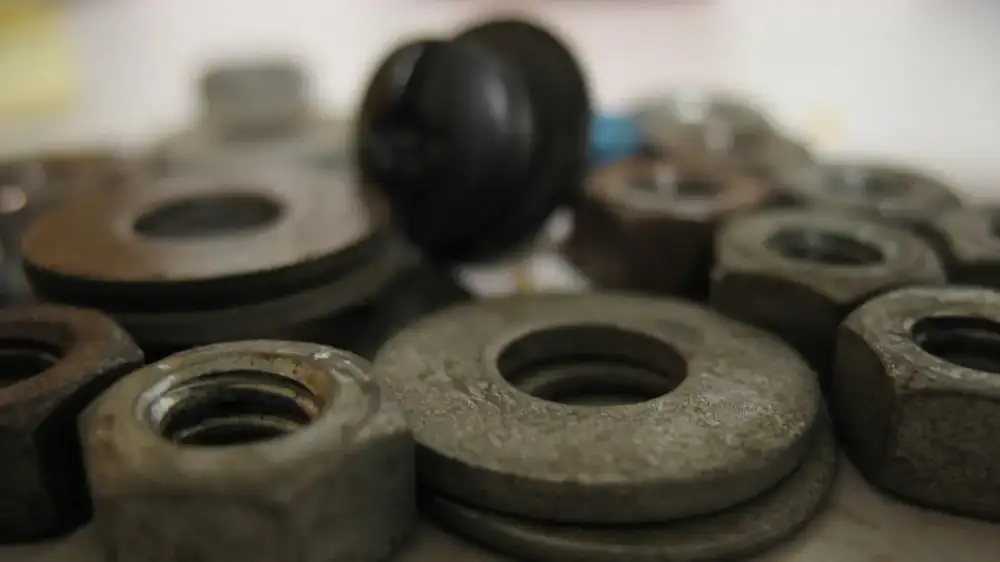
The choice isn't about strength — it's about corrosion. Galvanized fasteners are steel with a sacrificial zinc coating that protects the steel until it's used up or breached; stainless resists corrosion through its own alloy, all the way through. Stainless generally holds up longer in harsh, coastal and long-life uses, but the real rule is compatible, not just corrosion-proof: match the fastener to the metal it's securing (to avoid galvanic problems) and to the exposure. The wrong fastener rusts, streaks the surface, and can even corrode the material around it.
Fasteners are easy to dismiss. They're small, they're cheap relative to everything they hold, and they disappear into the assembly. That combination is exactly why they cause so much trouble. A house can have the right siding, the right trim and the right finish, and still develop rust streaks, loose connections and corrosion damage because someone grabbed the wrong box of screws. Fasteners sit in the tightest, wettest contact of anything on an exterior, and they're where a lot of premature failures actually begin. The galvanized-versus-stainless question is the most common fork in that decision — and it's worth getting right for reasons that have nothing to do with which one is stronger.
Two completely different strategies for surviving outdoors
The first thing to understand is that galvanized and stainless resist corrosion in fundamentally different ways, and that difference drives everything else.
A galvanized fastener is steel with a coating of zinc. The zinc is sacrificial: it corrodes in place of the steel underneath, giving itself up to protect the more vulnerable metal. As long as the zinc layer is intact and has material left to sacrifice, the steel is shielded. The catch is that the protection is finite and coating-dependent. Once the zinc is used up, or once the coating is breached — nicked during installation, cut, or abraded — the steel beneath is exposed and begins to rust like any other bare steel. Galvanized, in other words, is protected steel, and the protection has a lifespan and a weak point.
A stainless fastener resists corrosion through its own composition. The alloy is corrosion-resistant all the way through, not just at the surface, so there's no coating to wear off or breach. It doesn't depend on a sacrificial layer because it doesn't need one. This is why stainless generally outlasts galvanized in harsh conditions and long-life connections — there's no coating clock ticking. It's the same distinction that separates a painted material from an inherently durable one: one relies on a renewable protective layer, the other carries its resistance in the material itself. That contrast runs through how paint and finish drive durability as well, where the coating is the frontline and its condition decides the outcome.
The rust streak, explained
The single most recognizable fastener failure is the brown streak running down a wall from each fastener head. It's almost always a galvanized fastener whose zinc has been used up or was breached at installation: the steel beneath is now rusting, and every rain carries that rust down the surface as a stain. Once it starts, it recurs, because the underlying steel keeps corroding and keeps bleeding.
This is worth naming clearly because people often treat the streak as a cleaning problem. It isn't, fundamentally — the stain is a symptom of a fastener that's corroding, and no amount of washing stops it from coming back while the metal keeps rusting. The real fix is a fastener that won't corrode in that location, which usually means the wrong fastener was specified for the exposure or the material. The lesson generalizes: visible staining from a fastener is a message about the fastener, not just a mark to scrub off.
Why "compatible" beats "corrosion-proof"
Here's the trap that catches people who've learned that stainless resists corrosion best: they reach for stainless by default and assume the problem is solved. Corrosion resistance is only half the question. The other half is compatibility — whether the fastener's metal gets along with the metal it's securing.
When two dissimilar metals share a wet path outdoors, they can form a galvanic couple, and one of them corrodes faster than it would alone. A fastener is a metal too, sitting in the wettest, tightest contact of anything on the assembly, so a fastener made of a metal that's incompatible with its host can drive corrosion — of the fastener, of the host material, or both — even when the fastener itself is corrosion-resistant in isolation. The right fastener is therefore the one that's both durable enough for the exposure and galvanically compatible with what it's going into. This is a specific, high-stakes instance of a broader phenomenon — dissimilar metals sharing a wet path and quietly corroding each other, the same effect that lets copper runoff attack the materials below it, as noted in copper and the story of patina. "Compatible" is the word to keep in mind; "stainless" alone doesn't guarantee it.
What the fastener is going into matters as much as the fastener
Two host conditions change the calculation enough to deserve special attention.
The first is treated wood. Modern pressure-treated lumber is chemically aggressive toward fasteners that aren't rated for it — the same preservatives that make the wood rot-resistant can accelerate corrosion of an unsuitable fastener, so a screw that would be perfectly fine in ordinary lumber can fail early in treated wood. This is a common, avoidable failure, and it's a big reason fastener selection has to account for the substrate, not just the weather. It ties directly to species and material choice, a subject we take up in choosing wood species for outdoor use, where treated wood's chemistry is part of what defines its role.
The second is salt. Salt is a potent accelerant for corrosion of all kinds, so coastal environments and places treated with de-icing salt are far harsher on fasteners than inland, drier locations. A fastener that lasts for years inland can corrode quickly near the coast. In salty exposures the bar for corrosion resistance rises, and appropriate stainless or otherwise high-rated fasteners become more clearly worth it. Exposure is as much a part of the choice as the host material and the fastener metal.
The stakes are bigger than the part
It's worth restating why a component this small deserves this much thought: the wrong fastener doesn't just fail quietly on its own. A corroding fastener bleeds rust that stains the surrounding surface, turning a hidden failure into a visible one. A galvanically mismatched fastener can corrode the host material around it, damaging something far larger and more expensive than the fastener. And a fastener that corrodes and loses its grip can loosen a connection that was holding something important. The failure of a screw is rarely just the failure of a screw.
That's the case for treating fastener selection as a real decision rather than a grab from the nearest jar. Match the corrosion resistance to the exposure — leaning toward stainless in harsh, coastal and long-life connections — but always check that the metal is compatible with what it's securing and suited to what it's going into. On structural connections, roof-edge details and anything you'd rather not revisit, it's worth confirming the specified fastener rather than assuming any corrosion-resistant option will do.
The short version for a real decision
If you're standing in front of two boxes: galvanized is protected steel that works well in ordinary exposures and lasts as long as its coating does, and stainless is inherently corrosion-resistant and the safer bet in harsh, wet, coastal or long-life situations where you don't want to gamble on a coating. But before either, ask what the fastener is going into and what the exposure is — because the best fastener is the one that's corrosion-appropriate, compatible with its host metal, and rated for its environment, all at once. Get that small part right and it quietly does its job for the life of the assembly. Get it wrong and it will announce itself, in rust streaks and loosened connections, long before anything else on the house needed attention. For where fasteners fit in the wider picture of choosing durable exteriors, see the material reference in the materials library.
Answers to common questions
What's the real difference between galvanized and stainless fasteners?
Galvanized fasteners are steel coated in a sacrificial zinc layer that corrodes in place of the steel, protecting it until the coating is used up or breached. Stainless fasteners resist corrosion through their own alloy composition, all the way through, so there's no coating to wear off. Galvanized is a protected steel; stainless is inherently corrosion-resistant metal. That difference explains most of how they behave — and fail — outdoors.
What causes rust streaks running down my siding?
Almost always corroding fasteners. When a galvanized fastener's zinc coating is used up or was breached during installation, the steel beneath rusts, and rain carries that rust down the surface as brown streaks. It's one of the most common and most visible fastener failures. The stain is a symptom; the fix is a fastener that won't corrode in that location, since streaking will keep returning as long as the underlying metal keeps rusting.
Are stainless fasteners always the better choice?
They resist corrosion better, but 'better' isn't the whole question — 'compatible' matters just as much. The right fastener is one whose metal gets along galvanically with the material it's securing and suits the exposure. Stainless is an excellent corrosion choice for harsh, coastal and long-life connections, but pairing any fastener with a dissimilar metal can cause its own problems. Match the fastener to the job, don't just reach for the most corrosion-resistant option by default.
Why do my fasteners corrode faster in treated wood?
Because modern treated wood is chemically aggressive toward the wrong fasteners. The preservatives that make the wood rot-resistant can accelerate corrosion of fasteners that aren't rated for it, so a fastener that would be fine in ordinary lumber can fail early in treated wood. This is exactly why fastener selection has to consider what it's going into — treated wood, in particular, calls for fasteners suited to it rather than whatever's on hand.
Does salt air change which fastener I should use?
Significantly. Salt is a powerful accelerant for corrosion, so coastal and de-icing-salt environments are much harsher on fasteners than inland ones. A fastener that lasts inland can corrode quickly near the coast. In salty exposures the bar for corrosion resistance rises, and appropriate stainless or otherwise high-corrosion-rated fasteners become more important. Exposure is as much a part of the choice as the material you're fastening into.
Can the wrong fastener stain or damage the material around it?
Yes, in two ways. A corroding fastener bleeds rust that stains the surrounding surface, and a fastener made of a metal incompatible with what it's securing can drive galvanic corrosion — damaging the fastener, the host material, or both, where they stay wet together. So the wrong fastener isn't just a small part that fails; it can mark and degrade the far larger, more expensive material it's holding. The stakes are bigger than the fastener's size suggests.
Keep reading
Metal Roof Edges and Drip Edge
Drip edge and metal roof-edge trim quietly protect the fascia, decking and gutters. Here's what they do and how to keep them working.
Composite Decking: Care and Cleaning
Composite decking is low-maintenance, not no-maintenance. Here's how to clean it, remove stains and avoid damaging the boards.
Natural Stone: Exterior Care and Cleaning
Natural stone is the most durable exterior surface, but some stones etch or stain easily. Here's how to clean and care for it safely.