A Musty Smell Coming From the Attic
That damp, earthy smell drifting down from the attic is moisture you can smell before you can see it — and your nose has found the problem earlier than your eyes would.

A musty attic smell means moisture is collecting up there faster than the space can shed it, and mildew is starting to grow. The usual sources are poor ventilation, damp air pushed up from bathroom or kitchen fans, or a small roof leak. Your nose has caught it before the damage is visible. Check what you safely can from the hatch, address ventilation and any fan venting into the attic, and bring in a pro for leaks, roof work, or anything that looks like established mold.
Most exterior problems announce themselves to the eye — a stain, a sag, a drip. A musty attic is one of the few that reaches you through a different sense entirely. You lift the hatch, or catch it drifting down on a warm afternoon, and there it is: that damp, earthy, faintly sour odor that means something above you is staying wet. The reflex is to crack a vent and move on. But a musty attic is worth pausing over precisely because smell is such an early messenger. Moisture betrays itself by odor long before it shows up as a water stain or a drooping ceiling. What your nose has handed you is a head start.
What the smell actually is
That mustiness isn't the moisture itself; it's the exhaust of what moisture allows to grow. When wood, insulation, or the boxes you've stored up there stay damp, mildew and mold take hold, and the earthy smell is their byproduct. So the odor is, technically, a lagging sign — dampness has been present long enough for something to colonize. But measured against visible damage, it is still an early one. That is the hopeful reading of a bad smell: you have found the problem while it is small enough to matter.
Where the water is getting in
An attic turns musty when moisture arrives faster than the space can carry it away. There are only a few ways that happens, and it helps to run through them roughly in order of likelihood.
Ventilation that isn't moving air
This is the most common source and the easiest to miss, because there is no leak to point at. A healthy attic breathes — intake low at the eaves, exhaust high near the ridge — and that steady exchange sweeps humidity out before it can settle. When the venting is blocked (most often by insulation shoved over the eave intake vents), undersized, or never adequate to begin with, humid air simply sits in the space. On a cold surface it condenses, and that condensation feeds mildew without a single drop leaking in. Grasping how the airflow is meant to work — laid out in soffit ventilation explained — is frequently the whole key here, because the intake at the eaves is exactly what tends to get buried.
Moist air pushed up from the living space
Bathrooms, kitchens, and laundry rooms generate remarkable volumes of warm, wet air, all of which is supposed to be exhausted the whole way outside. When a bath or kitchen fan instead vents into the attic — or its duct has worked loose somewhere along the run — it pumps a steady stream of moisture right into the space to condense. This is a surprisingly frequent culprit and a genuinely fixable one once you trace it. Warm indoor air also rises on its own through gaps around light fixtures and the hatch, adding to the load in an attic that is poorly sealed and poorly vented.
A leak too small to drip
Not every roof leak arrives with a dramatic puddle. A minor or intermittent one can wet the decking or insulation just enough to grow mildew and throw off a smell without ever forming a visible drop. These tend to reveal themselves as staining on the underside of the roof or a damp patch that surfaces after rain — the attic's version of stains that appear only after it rains. If the odor sharpens in one area or worsens right after a storm, a leak in that spot climbs the list.
Winter's own contribution
In cold climates, ice building up at the roof edge can drive meltwater back under the shingles and into the attic, wetting the decking every winter. A smell that shows up only in the cold months, sometimes accompanied by frost or condensation glinting on the underside of the roof, can trace back to that seasonal freeze-and-thaw cycle rather than to any year-round fault.
Reading the attic from the hatch
You can learn a great deal without crawling in or getting anywhere near the roof — and that restraint is the whole point, because getting close is where the real risk begins. From the hatch or opening, look and smell rather than climb. Scan the insulation for damp, matted, or discolored patches, since wet insulation both smells and stops insulating. Study the underside of the roof deck for staining or dark discoloration that would flag a leak or condensation. In cold weather, look for frost or beads of moisture on the nails and decking, a classic marker of a humidity and ventilation problem. Check whether the vents are clear, since insulation heaped over the eave intakes is one of the most common and correctable causes of dead airflow. And note where the smell is strongest — general and everywhere suggests ventilation or humidity, while concentrated in one spot suggests a leak or a specific wet source there. From outside and at ground level, you can also confirm that bathroom and kitchen fans genuinely exhaust to the exterior instead of dumping into the attic.
What you should not do is push deep into the space, walk on anything, or disturb what might be mold. That is where the access risks and the need for real expertise take over, and it isn't worth the fall or the exposure to chase a diagnosis a few feet further.
Fixes within reach, and fixes to hand off
The accessible wins cluster around airflow and the moisture sources you can reach from below or outside. Clearing insulation away from blocked eave intake vents restores the exchange an attic depends on. Making sure bath and kitchen fans vent fully outdoors — and reconnecting a duct that has obviously slipped, if it is safely reachable — cuts off a major supply. Reducing the humid indoor air leaking upward through the ceiling helps too. Together these address the causes behind most musty attics.
Beyond that, the work belongs to a professional. Diagnosing and repairing a roof leak, correcting ventilation that needs vents added or reworked rather than merely unblocked, dealing with ice dams at the roof edge, and safely handling any established mold all involve the roof itself, close contact with the problem, or specialized knowledge. It is also worth resisting a few tempting shortcuts: masking the odor with air fresheners hides the symptom while the moisture keeps working; leaving a fan to vent into the attic because it "seems minor" leaves a continuous moisture feed running; and sealing the attic up tighter to trap the smell out only starves it of the airflow it needs, making the dampness worse. The persistent moisture behind a musty attic is the same force that drives dark stains on the soffits and, over time, fascia rot at the roof edge — so a pro assessing the smell can catch related trouble before it spreads, and confirm whether the dampness has begun to affect the structure or the air in the rest of the house.
A musty attic is one of the more considerate warnings a house gives. It speaks up early, before the damage shows its face. Take the hint, follow the moisture to its source, and you get to solve a small problem instead of a large one. For how attic moisture threads into the wider web of exterior water issues, the full list of common exterior problems is a good place to keep reading.
Questions homeowners ask
Why does my attic smell musty?
A musty smell means moisture is present and something is starting to grow in it. Attics are prone to this because warm, damp air rises into them and, if the space can't ventilate, that moisture condenses on cold surfaces and lingers. The earthy, damp odor is the byproduct of mildew or mold getting established on wood, insulation, or stored items. In short, your attic is holding more moisture than it can shed, and the smell is the first noticeable result.
Is a musty attic smell dangerous?
The smell itself is a warning rather than an immediate hazard, but what it points to is worth taking seriously. Persistent attic moisture can lead to mold growth, damp or matted insulation that stops working well, and over time damage to the wood structure. It can also affect the air in the rest of the house as attic air migrates down. So while it isn't an emergency, it's a signal worth acting on before the moisture does lasting damage.
Can poor ventilation alone cause the smell?
Yes, and it's one of the most common causes. An attic needs a steady exchange of air to carry moisture out. When intake and exhaust venting is blocked, insufficient, or was never adequate, humid air sits in the space, condenses on cold surfaces, and feeds mildew — with no active leak required. If the smell is general rather than tied to one damp spot, and worse in humid or cold weather, ventilation is a leading suspect.
Could a roof leak be causing the musty smell?
It can. A small or intermittent roof leak wets the decking or insulation just enough to grow mildew without ever producing an obvious drip. This kind of leak often shows itself as staining on the underside of the roof or a damp patch that appears after rain, along with the smell. If the odor is stronger in one area or worse right after it rains, a leak in that spot is worth suspecting.
Can bathroom or kitchen fans cause attic moisture?
Yes, if they vent into the attic instead of all the way outside, or if their ducting has come loose. Those fans move a lot of warm, moist air, and dumping it into the attic delivers a steady moisture load right where it can condense and feed mildew. A vent line that terminates in the attic or has disconnected is a surprisingly common and very fixable source of a musty smell.
What can I safely check myself?
From the attic hatch or opening, you can look and smell without going far in: check for damp or discolored insulation, staining on the underside of the roof, frost or condensation on cold surfaces in winter, and whether vents are blocked. You can also confirm from outside that bathroom and kitchen fans exhaust to the exterior. What's best left to a professional is anything involving walking the roof, disturbing possible mold, or diagnosing a leak's source up close.
Related guides

Why Green Growth Keeps Returning on Siding
Algae and mold return because cleaning removes the growth but not the shade and moisture that feed it. Fixing those conditions is what makes it stop.
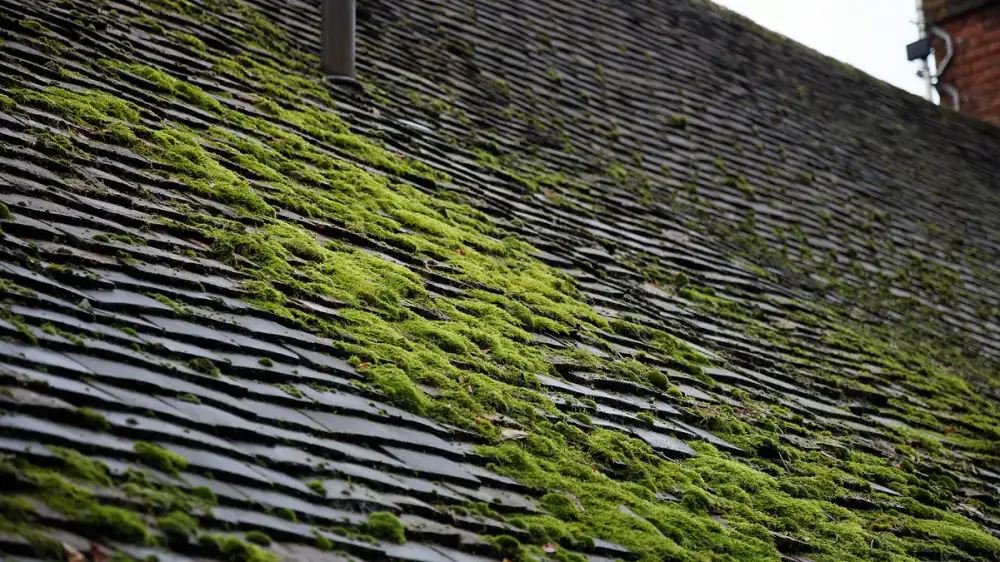
Moss Growing on the Roof: What to Do
Moss takes hold on shaded, damp roof sections and holds moisture against the shingles — but removing it from the roof is risky work for a professional.

Efflorescence: The White Residue on Brick
The white powder on brick is efflorescence — mineral salts drawn to the surface by moisture moving through the masonry and left behind as water evaporates.