Why Downspouts Make Loud Noises in the Rain
That drumming, banging, or dripping in a storm usually comes down to how water hits the metal — and often points to a fixable drainage detail.
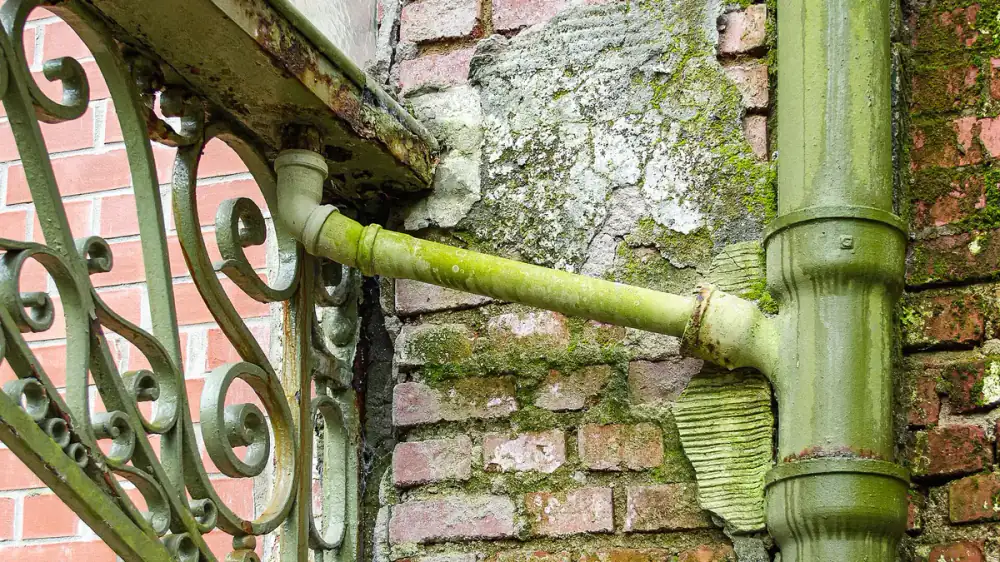
Downspouts get loud in the rain mostly because of how water strikes the thin metal — drips echoing in an empty section, splashing at a bend, or a stream drumming against the pipe. New or worsening noise can also mean a partial clog or a loose fitting. Check from the ground for reduced flow and loose hardware, then quiet it by clearing the pipe and securing what's loose.
A downspout is, acoustically speaking, a long metal tube — which is to say it is basically an instrument, and rain is a fairly enthusiastic player. That is why a storm can turn the pipe outside a bedroom window into a drum, a rattle, or a maddening metronome of drips. Most of the time the sound is telling you about acoustics, not about damage. But a noise that is genuinely new, or getting steadily worse, can double as an early bulletin about your drainage. Learning to tell those two apart is most of the battle.
First, learn to hear the difference
Not all downspout noise is the same, and the character of the sound is your best diagnostic tool. Before touching anything, just listen, and try to sort what you're hearing into a rough category.
A steady drip or a hollow drum that rises and falls with the intensity of the rain, then fades as the storm eases, is almost always benign — it's water meeting metal, nothing more. A gurgle or a backing-up sound is a different message: that's water fighting its way past an obstruction. A bang or a rattle, especially one that kicks up when the wind gusts, points at hardware rather than water. And a sharp slapping at the bottom of the run is often just the discharge, where the flow hits something hard and hollow at the base.
Naming the sound narrows the cause before you've done anything else. The drips and drums are cosmetic annoyances; the gurgles and bangs are worth a closer look.
The physics behind the racket
Underneath every one of those sounds is the same basic fact: thin metal amplifies whatever strikes it. When drips fall onto the dry floor of an empty downspout section, or a stream of water hits the back wall of the pipe, the whole tube resonates like a snare. Lightweight metal does this far more readily than its weight would suggest, which is why a modest trickle can sound so outsized indoors.
Bends make it worse. Every elbow forces the water to change direction, and each of those transitions kicks up splashing and turbulence. A run with several bends — or one fed fast by a steep roof — tends to be noisier at every joint. The discharge point contributes its own note: a stream landing on a splash block, a slab, or an empty extension can be as loud as anything higher up the wall.
Those causes are inherent to how downspouts work, and you'll never silence them completely. The two that are worth acting on are the ones that signal a developing problem. A partial clog makes water gurgle, pool, and strike the pipe unevenly, which is why a new gurgling sound so often shows up alongside reduced flow at the outlet or overflow at the gutter above. And loose hardware — a bracket that has worked free, a fitting that no longer grips, a downspout that has pulled away from the wall — lets the pipe move and knock against the wall or itself in the wind, producing that characteristic bang or rattle.
Sorting acoustic from meaningful, from the ground
You can do this entire investigation without a ladder, which is fortunate, because everything above easy reach is a job better left to someone equipped for height. The trick is to inspect during and just after a rain, while the system is actually working.
Start by listening and locating: is the sound a high drip, a mid-pipe drum, a low gurgle, or a bang, and roughly where along the run does it live? Then watch the outlet as the water leaves. A strong, steady stream suggests the pipe is clear; a weak dribble paired with the gutter overflowing above is a strong clog signal. Watch the pipe itself in the wind and heavy flow — does it shift, knock the wall, or reveal a gap where it has pulled away? Check whatever brackets and fittings you can reach from the ground for looseness. And glance at the discharge point to see whether the water is simply smacking a hard, hollow surface at the bottom.
By the end of a single storm you should know whether you're dealing with harmless acoustics, a clog, loose hardware, or a noisy landing — and each of those points to a different response.
Quieting the parts worth quieting
Match the fix to the sound. If the flow is reduced and the gutter overflows, you're likely dealing with a blockage, and clearing the downspout tends to restore both the drainage and the quiet at once; the recurring version of this is covered in why downspouts keep clogging. If the noise is a bang or a rattle, refastening the brackets and fittings you can safely reach stops most of it. Where the racket is all at the bottom, changing what the water lands on — or extending it onto a gentler surface — cuts the noise there and helps keep water from pooling near the foundation as a bonus. And when a single downspout is being force-fed by too much water at once, easing the overflow upstream helps, which ties into overflowing gutters and their causes.
A little judgment goes a long way here. Don't wave off a new gurgle or a backing-up sound, since that's frequently the opening act of a clog that will eventually overflow. Don't crank fittings down so hard that you stress the metal or the seams. Don't leave a downspout that has pulled from the wall, because loose hardware only ever works looser, and a neglected section can eventually come down. And whatever you do, don't stuff rags or foam into the pipe to muffle it — you'll manufacture the exact clog you were trying to avoid. Finally, make peace with a certain amount of sound: water moving through thin metal will always sing a little, and the goal is to remove the abnormal notes, not to achieve silence.
Knowing when the ladder work isn't yours
The line to draw is at height and at anything you can't clear from the ground. Bring in a professional when the noise arrives with poor drainage you can't reach, when the downspout or its fittings need resecuring up the wall, or when a storm has clearly shifted or damaged the run. A pro can free stubborn clogs, reattach or reroute the pipe, and address the volume of water feeding into it in the first place.
One last habit worth keeping: if the noise showed up in the company of other post-storm surprises, treat it as a prompt to look at the wider picture and run through the signs your gutters need repair while you're at it. A downspout that suddenly found its voice after a big blow is often trying to tell you the storm left more than just a sound behind.
Questions homeowners ask
Why is my downspout so loud when it rains?
Most downspout noise comes from water striking thin metal. Drips hitting the bottom of an empty section, water splashing at an elbow, or a stream drumming against the back of the pipe all resonate through the metal like a drum. The sound is usually about how and where the water hits, and small changes to that path often quiet it considerably.
Is a noisy downspout a sign of a problem?
Not always, but it can be. A new or worsening noise sometimes points to a partial clog, a loose fitting, or a downspout pulling away from the wall. Persistent banging or rattling is worth investigating because it can accompany drainage backing up or hardware working loose, both of which are better caught early.
Can a clog make a downspout noisy?
Yes. A partial blockage makes water gurgle, back up, and hit the pipe unevenly, which changes and often amplifies the sound. If the noise came with reduced flow from the outlet or overflow at the gutter above, a clog is a likely cause. Clearing it usually restores both the flow and a quieter sound.
Why does my downspout bang or rattle rather than drip?
Banging and rattling usually mean something is loose. A downspout that has pulled away from the wall, a fitting that isn't secure, or a bracket that's come loose lets the pipe move and knock against the wall or itself in the wind and water flow. Securing the loose hardware typically stops the noise.
How can I make my downspout quieter?
The right fix depends on the cause. Clearing a partial clog, securing loose brackets and fittings, and changing how water enters the pipe all help. Some noise is inherent to water moving through thin metal, but reducing splashing at bends and making sure the water flows smoothly through a clear pipe addresses most of it.
Should I be worried if the noise is new?
A sudden change is worth a look. New noise can accompany a developing clog, a fitting that has loosened, or storm damage that shifted the downspout. None of that has to be urgent, but checking from the ground for loose hardware, reduced flow, or overflow above helps you catch a small problem before it grows.
Related reading

Why Green Growth Keeps Returning on Siding
Algae and mold return because cleaning removes the growth but not the shade and moisture that feed it. Fixing those conditions is what makes it stop.

Moss Growing on the Roof: What to Do
Moss takes hold on shaded, damp roof sections and holds moisture against the shingles — but removing it from the roof is risky work for a professional.

Efflorescence: The White Residue on Brick
The white powder on brick is efflorescence — mineral salts drawn to the surface by moisture moving through the masonry and left behind as water evaporates.