Gutters Leak at the Seams
Drips coming from the joints and corners of your gutters usually mean the sealant has failed or the sections have shifted. Here's why seams leak and how to tell a simple reseal from a bigger problem.
Gutters leak at the seams because the sealant at the joints fails or the sections shift and loosen, letting water escape at corners, end caps, and connections instead of draining through. Sometimes the seam is fine and the real issue is a clog or poor slope backing water up until it finds the joint. The fix is to clear the flow, then clean and reseal the joint once it's dry — or replace fasteners and sections if the movement is structural.
A sectional gutter is a chain, and like any chain it fails at the links. The long stretches between joints are single, continuous pieces of metal with nothing to leak through; every drip you see is coming from a place where two things had to be joined — where two runs connect, where a corner turns, where an end cap closes off the channel. That's why "my gutters leak" almost always turns out to mean "my seams leak," and it's genuinely good news, because a joint is a far smaller and cheaper thing to address than a whole run. The real work is figuring out which kind of seam problem you have, since a couple of them aren't seam problems at all.
The four ways a joint gives up water
Seams leak for a short list of related reasons, and it's common for more than one to be at play on the same run.
The most frequent is simply aged sealant. Sectional gutters rely on a bead of sealant at the joints, and sun, temperature swings, and constant wetting dry that bead out until it cracks and lets water through. This is ordinary wear, a normal maintenance point over the life of any gutter, and on its own it's the easiest to fix.
Close behind is movement. Metal expands and contracts with temperature, and fasteners work loose over the years. When adjoining sections shift relative to each other, the joint opens a hair and the seal breaks. Storms can drive this hard and fast — the more dramatic version is covered in gutters came loose after a storm — but even without one, slow creep does the same job over time.
The two remaining causes are the sneaky ones, because the seam is often innocent. A clog or backup raises the water level inside the channel until it escapes through joints that stay perfectly dry in light rain; the seam is just the lowest exit for water that has nowhere else to go. And poor slope leaves a section holding standing water against the nearest seam, where constant pressure eventually works through any weakness. In both cases, resealing the joint fixes nothing, because the joint was never the problem. On older systems, add corrosion: rust around joints and end caps thins the metal and defeats the sealant, and when several seams fail together, age is usually the story underneath.
Matching the symptom to the cause
The pattern of the leak tells you a great deal before you touch anything. This is the core of the diagnosis, and most of it you can read from the ground during a good steady rain.
| What you notice | What it usually points to |
|---|---|
| A single joint dripping in light and heavy rain alike | Failed or aged sealant at that seam |
| A visible gap where two sections meet | Shifted joint or loosened fasteners |
| A seam that only weeps in heavy rain | A clog or capacity backup, not the seal |
| Standing water lingering at a low spot after rain | Lost slope putting pressure on the nearest seam |
| Many seams weeping at once, metal discolored | Age, movement, or corrosion across the whole run |
While you're watching, trace each leak to its specific joint — corners and end caps are the usual offenders, so mark which ones weep. Then look below: staining or streaking on the fascia beneath a seam, water marks or eroded soil on the ground under a joint rather than at the downspout, and peeling paint or soft-looking wood all tell you how long the leak has been running and whether it's started to do damage. If water is pooling beside the foundation instead of exiting the downspout, you've got a drainage issue worth addressing alongside the seam.
The fixes, in the order that saves you work
Match the repair to what the pattern told you, and do them in a sequence that avoids wasted effort.
Clear the flow before anything else. If the leak only appears in heavy rain, clean the gutters and downspouts first. Removing the backup frequently stops the seam from leaking with no resealing at all, and there's no sense sealing a joint that was only ever leaking because water couldn't get out the proper way. When overflow persists despite clear gutters, gutter guards overflow in heavy rain explains the related capacity failure.
Reseal accessible joints properly. For a ground-reachable seam on a single-story home, clean the joint thoroughly, let it dry completely, and apply a gutter-appropriate sealant. The clean, dry surface is the whole game — sealant bonds to that or to nothing.
Resecure or replace loose fasteners where sections have shifted, so the joint closes back up and the seal can hold. And correct the slope where a section holds standing water, adjusting the pitch so it drains fully to the downspout and stops pressing on the seam.
Know when resealing is a losing battle. When many joints leak, the metal is corroded, or the run is sagging and pulling apart, another bead of sealant just delays the inevitable. Signs gutters need repair helps you judge when the honest answer is replacement rather than repair.
A few things to steer clear of: don't seal over a wet or dirty joint, don't reseal before ruling out a clog, and don't keep resealing the same failing run storm after storm. And don't dismiss a small drip — water escaping at a seam lands against the fascia and foundation, causing damage well beyond the gutter itself.
Where the ladder stops being a good idea
The dividing line here is height and access. A low seam you can reach from stable footing on a single-story home is reasonable homeowner work. High seams that require a tall or unstable ladder, or any work near the roof edge over a hard surface, belong to someone with proper access and equipment — the reach isn't worth the risk. Bring in a professional, too, when many joints are failing at once or when the gutters are corroded, sagging, or visibly pulling apart, since those point past a simple reseal.
A pro can also tell you whether a chronic leak has begun to affect the wood behind it. Leaking seams and rotting fascia travel together for a reason, spelled out in what causes fascia rot, and for the wider picture of edge and drainage troubles you can browse related problems.
Frequently asked questions
Why do gutters leak at the seams and not elsewhere?
Seams are the weak points in a gutter run. Anywhere two sections join, or where a corner or end cap meets the channel, relies on sealant and a tight fit to stay watertight. Over time sealant dries out and cracks, joints loosen from expansion and contraction, and fasteners work loose. The middle of a gutter section is one continuous piece, so leaks naturally concentrate at these joints.
Can I reseal a leaking gutter seam myself?
A ground-accessible seam on a single-story home can often be resealed by a homeowner comfortable working safely at that height. The key steps are cleaning the joint thoroughly, letting it dry, and applying a gutter-appropriate sealant. That said, anything requiring a tall or unstable ladder, or work over hard surfaces, is better handled by a professional with proper access.
Why does my gutter leak at the seam only during heavy rain?
Often because the gutter is backing up. When debris or an undersized downspout slows drainage, water level rises inside the channel and finds its way through seams that stay dry in light rain. In that case the seam isn't the root problem — the blockage or capacity is. Clearing the flow frequently stops the leak without any resealing.
How do I know if a leaking seam means I need new gutters?
A single failed seam usually just needs cleaning and resealing. You should think about larger repair or replacement when many seams leak at once, when the metal is corroded or the sealant won't hold, or when the gutters are sagging and pulling apart at the joints. Widespread seam failure often signals age or movement that resealing won't durably fix.
Does standing water at a seam cause it to leak?
Yes. Water shouldn't sit in a gutter — it should drain to the downspout. When a section holds standing water because of a low spot, poor slope, or a clog, that constant pressure works through any weakness at the nearest seam. Fixing the slope or clearing the blockage so water drains fully often resolves a seam that leaks because it's always submerged.
Will gutter sealant last, or is it a temporary fix?
A properly applied seam seal on a clean, dry joint can last for years, but no sealant is permanent. Sun, temperature swings, and constant wetting eventually break it down, which is why seams are a recurring maintenance point. Resealing is a normal part of gutter upkeep rather than a one-time repair, especially on older systems.
Can leaking seams damage my home?
They can, because a leaking seam drips water exactly where the gutter was meant to prevent it — against the fascia, down the wall, or onto the ground beside the foundation. Over time that misplaced water contributes to fascia rot, siding stains, and drainage problems at the base of the house. A small drip is worth fixing before it becomes a bigger moisture issue.
Related reading

Why Green Growth Keeps Returning on Siding
Algae and mold return because cleaning removes the growth but not the shade and moisture that feed it. Fixing those conditions is what makes it stop.
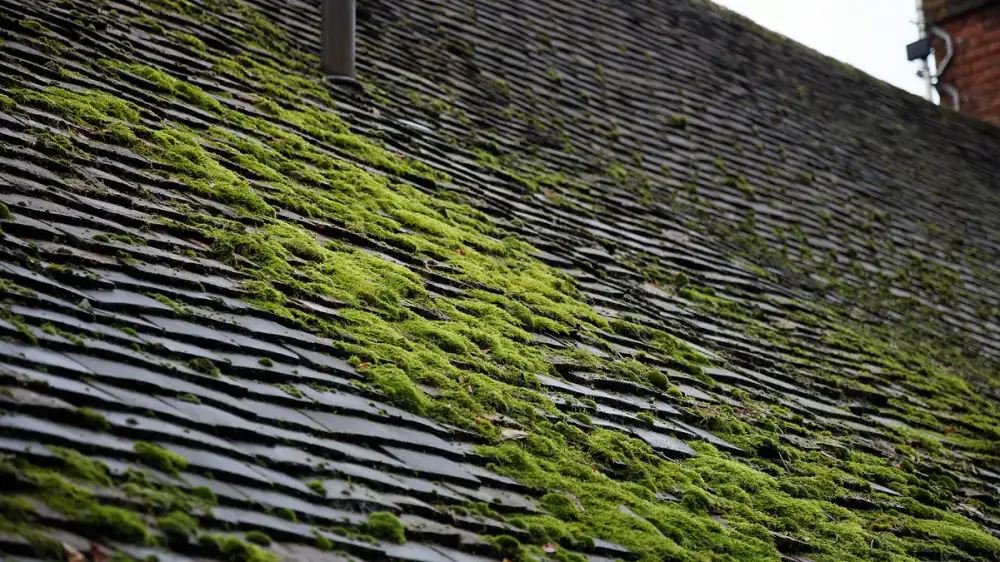
Moss Growing on the Roof: What to Do
Moss takes hold on shaded, damp roof sections and holds moisture against the shingles — but removing it from the roof is risky work for a professional.

Efflorescence: The White Residue on Brick
The white powder on brick is efflorescence — mineral salts drawn to the surface by moisture moving through the masonry and left behind as water evaporates.