Icicles Forming Along the Gutters
A fringe of icicles on the gutter line can look festive, but it usually means meltwater is refreezing at the roof edge — and that pattern is worth understanding.
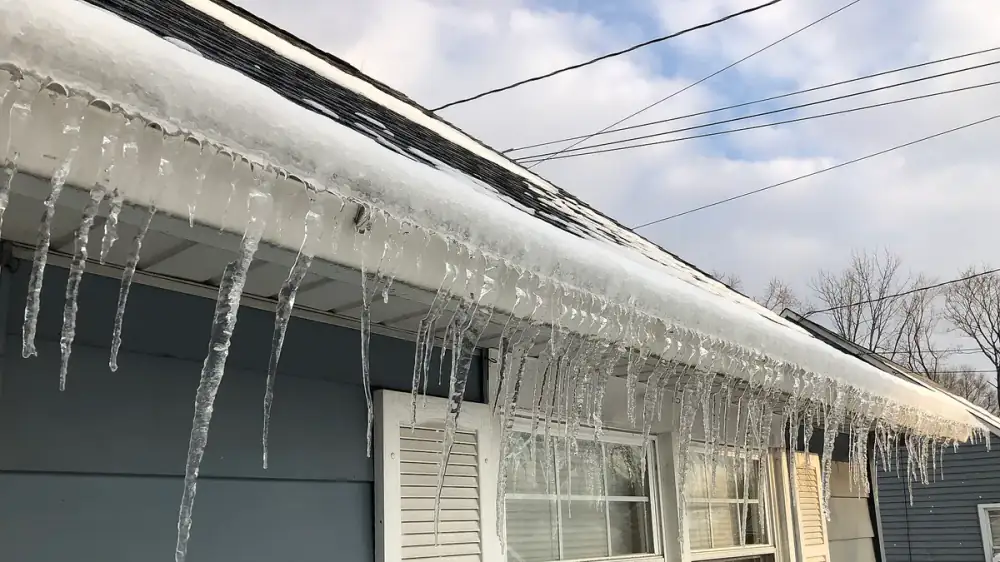
Icicles form along the gutters when snow melts higher on a warm roof and refreezes at the cold edge. A few after a sunny thaw are normal, but a heavy, recurring fringe usually means heat is escaping into the attic — the same condition that causes ice dams. The real fix is reducing attic heat loss and improving ventilation, not knocking icicles down. Treat ice removal at height as a job for a professional.
Not every icicle is a warning. A row of short ones dripping off the eaves on the first bright afternoon after a snowfall is just the sun doing its job, and it will be gone by evening. What deserves a second look is the icicle line that keeps rebuilding — thick, long, and back again by morning no matter how cold the air stays. That version isn't the weather melting your snow. It's your house.
Two kinds of icicle, and how to tell them apart
The harmless kind is a thaw icicle. Sunshine or a brief warm spell melts a little snow, water beads at the edge, and the temperature drop overnight freezes what's left hanging. It's occasional, it's light, and it clears on its own.
The kind worth understanding forms even when the outdoor temperature never climbs above freezing. If snow is melting on your roof while the thermometer says it shouldn't be, the heat isn't coming from the sky — it's coming from inside. That distinction is the whole diagnosis. A persistent, heavy fringe that returns after every clear night is meltwater refreezing at a cold edge, and it's driven by warmth leaking up into the attic.
What's actually happening above the gutter
Picture the roof in two zones. The upper zone sits over heated living space. Warm air escaping into the attic reaches the underside of the deck there and melts the snow resting on top of it — slowly, from below, even in a hard freeze. That meltwater runs downhill.
Then it reaches the eaves. The overhang extends past the heated walls of the house, so there's no warm room beneath it; it stays at outdoor temperature. The water arriving from the warm zone hits this cold shelf and freezes. Some of it freezes at the very lip and hangs as icicles. Some of it freezes just behind the edge and starts to build a ridge — and that ridge is the beginning of an ice dam forming at the roof edge. The icicles you see dangling in front are often just the leading edge of that dam gathering behind them.
A few conditions make the cycle stronger. Poor attic ventilation lets warm pockets develop, so the roof melts in patches instead of staying uniformly cold; soffit ventilation explained covers how that airflow is meant to keep the deck even. Deep snow acts as a blanket that holds meltwater against the roof. Alternating sunny days and freezing nights run the melt-and-refreeze loop over and over. And a gutter already clogged with frozen debris becomes an ice tray, giving the water a place to pool and freeze right at the front edge.
Where the icicles cluster tells you a lot
Because the icicles mark exactly where warm meets cold, their pattern is a readable clue — and you can read all of it from the ground, which is the only safe place to be around a roof in winter.
Look first at your snow cover from across the yard. Even melting is normal. Bare patches high on the roof with ice piling up at the edge is the signature of heat loss. Notice whether the heavy icicles concentrate over one room or one section; a dense cluster in a single spot usually sits above the warmest point in the attic below it — a poorly sealed light fixture, a chase, a gap in the insulation.
Then check behind the fringe. If you can see a hard band of ice sitting along the eaves behind the icicles, you're looking at damming, not just dripping. Watch the gutters themselves for strain — a run that sags or hangers that have pulled loose are telling you the ice load is stressing the system. Finally, step inside during a snowy stretch and scan the ceilings and upper walls near the exterior edge for fresh water stains, which can mean meltwater is working its way under the shingles. How snow and ice damage gutters goes deeper into what all that weight does to the metal.
Fixing the cause instead of the symptom
Everything durable here happens away from the icicles themselves. The goal is to keep the roof cold and even so the melt-and-refreeze cycle never gets started.
The core of it is inside the attic. Improving insulation and ventilation keeps the deck near outdoor temperature, and that's the step that genuinely ends the problem rather than managing it. Alongside that, sealing the specific gaps where warm air escapes — around attic hatches, recessed lights, and ductwork — cuts the heat feeding the melt. These indoor measures are safe to pursue and they target the actual source. The insulation and ventilation work is often best handed to a qualified contractor, but it's the work that pays off.
Two supporting habits help. Clearing gutters of debris in the fall, from safe ground-level access, gives any meltwater a path to drain instead of pooling and freezing — it won't stop heat-driven melt, but it removes one contributor. And once icicles have formed, the right move is usually to monitor rather than to remove: watch for a growing ice ridge and for interior stains, and document the pattern so a professional can plan the correction.
What doesn't work is worth being blunt about. Knocking icicles down from below or off a ladder invites falling ice and slick footing, and you'll likely dent the gutter in the process. Chipping at ice inside the gutter tends to detach it. Pouring hot water or aiming a flame at the edge just adds water that refreezes fast, sometimes making things worse. And treating heat cables or gutter guards as the fix leaves the attic heat loss — the real driver — completely untouched.
Knowing when to hand it off
Bring in a professional when the icicles are heavy and persistent, when a hard ice ridge is building at the eaves, when interior stains suggest meltwater is getting under the roofing, or when the gutters are visibly straining under the load. Removing roof-edge ice safely takes proper access and equipment that ground-level effort simply can't match, and it's not worth risking a fall to save a call.
A professional can also confirm whether the true cause is insulation, ventilation, or air leakage — and correct it so next winter's roof stays cold and the icicles don't come back. For the wider set of eave and drainage issues that travel with winter weather, browse the full list of common exterior problems.
Answers to common questions
Are icicles on my gutters a sign of a problem?
A few small icicles after a sunny thaw can be normal, but a persistent, heavy fringe usually signals that warm air is escaping into the attic and melting snow on the roof. That meltwater runs down to the cold eaves and gutters and refreezes. The same conditions that produce those icicles also produce ice dams, so a heavy icicle line is worth taking seriously rather than dismissing as decoration.
What's the difference between icicles and an ice dam?
Icicles hang from the gutter or roof edge, while an ice dam is a ridge of ice that builds up along the eaves and blocks meltwater from draining. They come from the same process — snow melting higher on a warm roof and refreezing at the cold edge — and icicles are often the visible edge of a dam forming behind them. Where you see heavy icicles, it's wise to check for damming too.
Why does snow melt on my roof when it's freezing outside?
Heat escaping from the living space into the attic warms the underside of the roof, melting the snow resting on it even when the air outside is below freezing. That meltwater trickles down to the eaves, which stay cold because no living space sits beneath them, and refreezes into icicles and ice. Insulation and ventilation issues in the attic are the usual root cause.
Can heavy icicles damage my gutters?
Yes. The weight of a thick icicle load and the ice that builds up behind it can pull on gutters, strain the hangers and fascia, and in some cases bend or detach a section. Ice that forms inside the gutter also expands and can distort it over repeated freeze-thaw cycles. This is one reason a persistent icicle problem is worth addressing rather than leaving through the winter.
Should I try to knock the icicles down?
It's best not to. Knocking icicles off from below can send heavy, sharp ice down onto you, and reaching them from a ladder on icy ground is dangerous. You also risk damaging the gutter you're trying to protect. The safer path is to reduce what's causing the melt-and-refreeze cycle and to have a professional handle removal if ice buildup has become a hazard.
Do gutter guards or heat cables stop icicles?
Neither is a cure for the underlying cause. Guards don't prevent the melt-and-refreeze that forms icicles, and heat cables only manage symptoms in specific spots rather than fixing the attic heat loss driving the problem. Reducing heat escaping into the attic and improving ventilation address the source; add-on devices at the edge treat the result and should be considered carefully, not as a first move.
Keep reading

Why Green Growth Keeps Returning on Siding
Algae and mold return because cleaning removes the growth but not the shade and moisture that feed it. Fixing those conditions is what makes it stop.
Moss Growing on the Roof: What to Do
Moss takes hold on shaded, damp roof sections and holds moisture against the shingles — but removing it from the roof is risky work for a professional.

Efflorescence: The White Residue on Brick
The white powder on brick is efflorescence — mineral salts drawn to the surface by moisture moving through the masonry and left behind as water evaporates.