Soffit Panels Are Sagging or Falling
When soffit panels droop, bow, or drop out of their channels, it's rarely the panels failing on their own — something behind them has usually gotten wet or come loose.
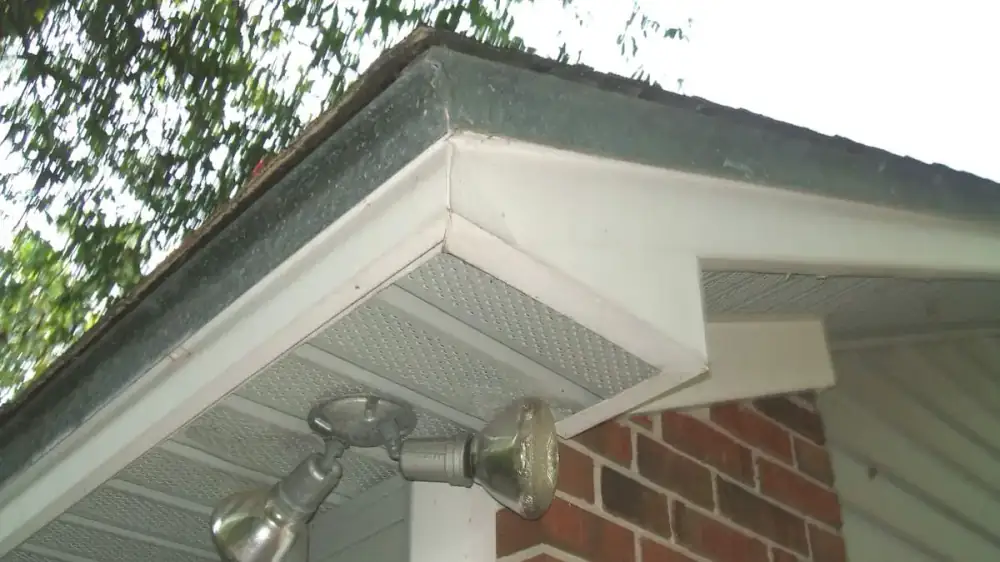
Soffit panels sag or fall because something behind them has failed — most often moisture from gutter overflow, poor ventilation, or a roof leak that rots the wood they attach to. Pests and failed fasteners can do the same. The panel is the symptom; the fix is finding the moisture or support problem behind it. Reseating a loose panel from safe ground level is temporary — the cause still needs professional attention at the eave.
A drooping soffit panel looks like the panel itself gave out — bowed, slipped from its channel, hanging below the neat line of its neighbors. But a soffit doesn't hold itself up. It's carried by the fascia and framing at the roof edge, clipped into channels and held by fasteners that bite into wood. So when a panel loses its grip, the honest interpretation is that its support let go, and the panel is just the visible end of the failure. Reading a sag correctly means looking past the panel to the eave behind it.
What a sag is really about
Panels don't droop on their own; they respond to what's happening in the eave. And in the great majority of cases, that something is water. Moisture reaching the eave — from an overflowing gutter, a roof leak, or trapped humidity — soaks the wood the soffit fastens to. As that wood swells and rots, it loses its hold on nails and screws, and the panels sag or drop. This is the leading cause by a wide margin, and the same water often announces itself earlier as dark stains on the soffits before anything starts to droop.
Two moisture routes deserve singling out. Gutter overflow sends water straight down the fascia and into the soffit area, saturating exactly the wood that holds the panels; when a gutter only overflows in downpours, the damage can build quietly across many storms, a pattern our piece on gutters that overflow only in heavy rain lays out. Poor ventilation works from the inside instead: soffit vents feed attic airflow, and when that airflow is inadequate, humid air and condensation collect in the eave and keep the soffit damp from behind. Over time that moisture warps and weakens both the panels and their supports. Our guide to soffit ventilation covers how the airflow is meant to work.
Not every sag is moisture, though. Sometimes a panel has simply worked loose from its channel, or its fasteners have corroded and let go — common on older installations, and possible without much rot, though dampness usually plays a supporting role. And pests can do it directly: birds, squirrels, and insects drawn to the sheltered eave push into gaps, nest above the panels, and dislodge them, turning a small opening into a hanging panel.
Reading the eave from the ground
Most of what you need is visible from below with a careful look and, at most, a stable step. The aim is to understand why the panel let go, because reseating it without finding the moisture or support problem only hides a spreading issue.
Study the eave and note the scope: a single dropped panel suggests a local cause, while a whole run drooping points to a broader moisture or ventilation problem. Trace the gutter directly above — if the sag sits beneath a gutter that overflows or leaks, drainage jumps to the top of the suspect list. Look for staining and paint failure on the fascia and soffit, which mark the paths water has been taking. During a rain, watch the eave from a safe distance to see whether water is spilling into the soffit area. And scan for pest signs: droppings, feathers, nesting material, or a clear opening near the loose panel. Keep your feet on stable ground throughout; overhead eave work is not the place to improvise with a ladder.
What you can safely take on
A homeowner can handle the low-risk, ground-level parts of this, and those parts matter — but the order counts.
Address the water source first. If gutter overflow or drainage is feeding the eave, correcting it is the single step that changes the outcome; clearing gutters from safe, low access and making sure downspouts carry water away removes the moisture that's rotting the supports. If a panel has merely slipped its channel and you can reach it safely from a stable, low position, easing it back stops it flapping in the wind — but treat that as a stopgap, because a panel dropped by rot won't hold. Where you can reach them, clearing debris or paint from accessible soffit vents helps restore the airflow that keeps the eave dry; better ventilation won't reverse existing rot, but it slows further buildup. And it's worth photographing the sag, the staining, and any gutter overflow, so a professional can see the full picture and target the cause rather than just swapping panels.
A few things are worth avoiding. Don't push the panel back and walk away if moisture caused it, because the damage keeps spreading behind it. Don't paint or seal over rotting wood, which traps moisture and hides the decay. Don't ignore the gutters above — a sag fed by overflow returns no matter how many times you reseat the panel. Don't work overhead from a shaky or tall ladder, where height and awkward reach make access genuinely risky. And don't seal a pest entry with animals still inside; trapping wildlife in the eave only creates a worse problem that needs proper handling.
When the eave needs a professional
Some situations reach past a ground-level fix and into structural repair at height. Call in a pro when panels are sagging across a run, when you find rot or soft wood in the fascia or framing, when the cause traces to a roof leak or ventilation problem, or when the eave is simply out of safe reach. These cases involve elevated work and often overlap with roof-edge and drainage repairs that no amount of reseating from below will resolve.
A professional can also confirm whether the damage has reached the fascia, sheathing, or attic, and correct the moisture source so that replacement panels actually last rather than dropping again a season later. To see how sagging soffits connect to related eave and drainage complaints, it's worth browsing the full list of common exterior problems — the same water tends to surface in more than one of them.
Your questions, answered
Why are my soffit panels sagging?
Sagging usually means something is pushing or pulling on the panels or the framing that holds them. The most common driver is moisture — from gutter overflow, poor ventilation, or a roof leak — that swells and rots the wood the soffit attaches to, letting panels droop. Failed fasteners, panels that have slipped out of their channels, or pest activity in the eave can produce the same look. The panel is usually the symptom, not the cause.
Is a falling soffit panel an emergency?
Not usually an immediate safety crisis, but it shouldn't wait. A soffit that's dropping out exposes the eave and attic to weather, pests, and more moisture, all of which accelerate whatever damage started the problem. It can also signal rot in the fascia or framing behind it. Getting it assessed promptly keeps a contained issue from spreading into the roof edge and attic.
Can gutter overflow make soffits sag?
Yes, and it's one of the most common causes. When gutters overflow or leak, water runs down the fascia and into the soffit area, saturating the wood the panels attach to. Over time that wood softens and rots, loses its grip on the fasteners, and lets panels sag or fall. If your sagging soffit sits below a gutter that overflows, drainage is a prime suspect worth checking first.
Does poor attic ventilation cause soffit damage?
It can. Soffit vents are a key part of attic airflow, and when that ventilation is inadequate, humid air and condensation build up in the eave. That trapped moisture dampens the soffit and surrounding wood, encouraging the rot and warping that eventually show up as sagging panels. Blocked or painted-over vents make it worse by cutting airflow while moisture keeps accumulating.
Could animals be behind my sagging soffit?
Sometimes. Birds, squirrels, wasps, and other pests are drawn to the sheltered eave and can push into gaps, nest above the panels, and dislodge them. A panel that has popped loose at one corner or has a visible opening nearby may have become an entry point. If you notice droppings, nesting debris, or animal activity around the eave, pests are worth weighing alongside moisture.
Can I just push the panel back into place?
You can sometimes reseat a panel that has slipped from its channel, but if moisture, rot, or a failed support caused it to drop, it won't stay — and you may be hiding damage that keeps spreading behind it. Reseating from a stable, low position is reasonable to stop a panel flapping, but treat it as temporary. The underlying cause still needs to be found and fixed.
More from this section
Why Green Growth Keeps Returning on Siding
Algae and mold return because cleaning removes the growth but not the shade and moisture that feed it. Fixing those conditions is what makes it stop.
Moss Growing on the Roof: What to Do
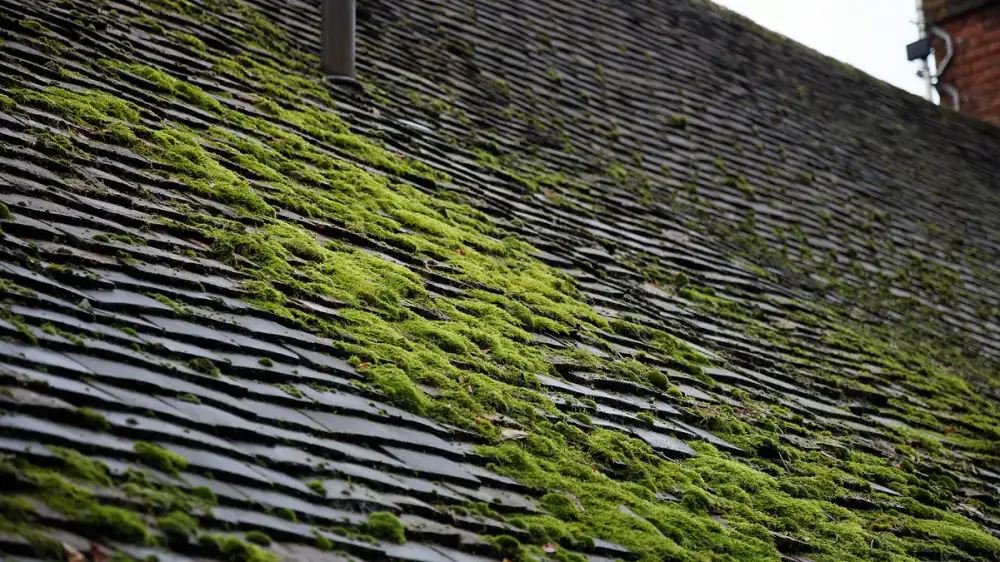
Moss takes hold on shaded, damp roof sections and holds moisture against the shingles — but removing it from the roof is risky work for a professional.
Efflorescence: The White Residue on Brick
The white powder on brick is efflorescence — mineral salts drawn to the surface by moisture moving through the masonry and left behind as water evaporates.