When a Quick Fix Makes Things Worse
Some patch-jobs don't just fail to fix the problem — they hide it and speed it up. Sealing the wrong thing, painting over rot, caulking gaps that should drain: here's why.

The quick fixes that backfire share one flaw: they trap moisture or hide a symptom instead of dealing with its cause. Painting over a stain or damp wood seals water in and erases the warning sign. Sealing a surface that's meant to breathe or drain keeps moisture from escaping. Caulking a gap that exists to let water out turns it into a dam. Before you patch anything, ask where the water is going — if the fix doesn't answer that, it's likely making things worse.
There's a particular satisfaction to a quick fix. The stain disappears under a coat of paint, the gap vanishes under a bead of caulk, the ugly spot is gone, and the job feels done. The trouble is that on the outside of a house, a whole category of quick fixes doesn't just fail — it actively accelerates the damage while convincing you it's solved. The problem goes quiet, so you stop watching, and it works away in the dark behind your tidy repair.
These aren't exotic mistakes. They're the most intuitive responses a homeowner can have: cover the bad-looking thing, seal up the openings, keep the water out. The reason they backfire is that they misunderstand what the exterior is actually doing with water — and once you see the pattern, it's easy to avoid.
The common thread: trapping instead of moving
Nearly every backfiring quick fix commits the same error. It treats water as something to block and hide when the exterior is designed to move and release it. A house doesn't keep itself dry by being perfectly sealed; it keeps itself dry by shedding water off surfaces and letting the small amount that gets in drain back out and evaporate. Materials breathe, joints drain, and assemblies are built with escape routes.
A fix that seals or covers without respecting those escape routes doesn't stop water — it stops water from leaving. And trapped water is far more destructive than water that's free to run off and dry, because it sits against wood, siding, and masonry with nowhere to go. So the guiding question for any patch is not "does this cover the problem?" but "does this let water keep moving the way it's supposed to?" Three classic mistakes show what happens when the answer is no.
Painting over the problem
The most common one, by a wide margin, is paint over a stain or over soft wood. A dark patch on the fascia or under the eaves is unsightly, and a fresh coat makes it vanish — for a while. But a stain is a record of water arriving, and paint does nothing about the water. Within a season the mark usually bleeds back through, because its source never changed.
Painting over rot is worse. Wood that's begun to decay is wood that's staying wet, and a coat of paint on damp wood tends to seal the moisture inside rather than shut it out. The surface looks freshly sound while the wood beneath keeps softening, hidden under a skin of new paint. This is exactly how a manageable case of fascia rot becomes a board that has to be replaced — the paint bought cosmetic time at the cost of the actual repair window. The stain was a warning sign; painting it out doesn't answer the warning, it just silences the alarm. When a mark keeps returning after you cover it, like stains on the soffits, the paint isn't the fix — finding the water is.
Caulking a gap that's supposed to drain
Caulk is the other great over-used tool, and the mistake here is subtle because caulking is often exactly right. The problem is that not every gap is a flaw. Many are deliberate drainage paths.
Windows have weep holes along the bottom that let water that gets into the frame escape. The lower edges of trim and some siding courses are left open at the bottom on purpose, so any moisture that finds its way behind can run out. Caulk those openings shut and you don't keep water out — you keep the water that inevitably gets in from getting out. You've built a dam, and the moisture pools behind it against the very materials you were trying to protect.
The rule of thumb is to think about direction. Seal the tops and sides of a joint, where water could drive in. Leave the bottom open, where water needs to drain out. If you find yourself running a bead across the lowest edge of something, stop and ask whether you're closing an entry point or plugging an exit.
Sealing the wrong surface
The broader version of the same error is sealing a surface that's meant to breathe. Masonry, in particular, is often designed to let moisture pass through and evaporate; coating it with the wrong sealer can trap water inside the material, where it can lead to spalling and worse over freeze-thaw cycles. The same logic applies to slapping an impermeable coating over damp siding or trapping a wall that needs to dry out.
And sealing over active growth is its own trap: painting or coating a wall that's green and damp locks moisture against it. The growth may be a symptom of a drainage problem you haven't found, which is why green growth that keeps returning is best answered by drying the wall out, not sealing it in. The instinct to "just seal it up" feels protective, but on a surface that needs to release moisture, sealing is the opposite of protection.
Why the quick fix is so tempting
If these mistakes are so predictable, why are they so common? Because they're genuinely satisfying and genuinely intuitive. The bad spot disappears immediately, the work is cheap and fast, and "keep the water out" sounds like exactly the right instinct. The damage the fix causes is invisible and delayed, so there's no feedback telling you it went wrong until much later. Every incentive in the moment points toward the patch.
The deeper issue is diagnosing backwards — reaching for the fix before understanding the flaw. Whether a mark is cosmetic or a symptom of something active is a question worth answering first; that's the whole point of learning to tell cosmetic from serious before you decide how to respond.
The test to run before you patch anything
You can avoid nearly all of these traps with a single habit: before you cover, seal, or caulk, spend a few minutes answering two questions.
First, where is the water coming from? If a stain, a damp spot, or peeling paint keeps appearing, something is delivering water there. Watching the spot during a steady rain usually reveals it. A patch that doesn't address that source is treating a symptom.
Second, where does the water need to go? Is this a surface that should shed and dry, or an opening that should drain? If your fix would stop water from leaving — sealing a breathing surface, damming a drainage gap, coating damp wood — it's the wrong fix, no matter how good it looks when you're done.
Plenty of quick fixes are perfectly good: clearing a clog, extending a downspout, reattaching something loose, cleaning a surface so it can dry. What those have in common is that they address the cause and keep water moving. The dangerous ones cover, seal, and dam. And if you're not certain which kind you're dealing with — especially on the roof edge or anywhere at height — the most useful thing you can do isn't to patch it at all, but to observe it carefully and be ready to describe it accurately to a professional before the evidence gets painted over.
Common questions
Why is painting over a stain or rot a bad idea?
Because paint hides the symptom without touching the cause. A stain comes from water still arriving, and rot comes from wood that's staying wet — a coat of paint stops neither. Worse, fresh paint on damp or decaying wood tends to trap the moisture underneath, which can speed the decay while making the surface look sound. You lose both the warning sign and the time you'd have had to fix the real problem.
Isn't sealing things up always good for keeping water out?
No — and this is one of the most common misunderstandings in exterior care. Some assemblies are designed to let water drain out or let surfaces breathe and dry. Sealing those traps moisture inside instead of keeping it out. The goal is never to seal everything; it's to seal what should be sealed and leave open what needs to drain. Blanket sealing often causes the very moisture damage it was meant to prevent.
How do I know if a gap should be caulked or left open?
Ask which way water and moisture need to move. Gaps at the tops and sides of a joint, where water could get in, are often meant to be sealed. Gaps at the bottom — weep holes in windows, the lower edge of trim, the base of some siding courses — are frequently drainage paths that let trapped water escape. Caulking those bottom openings dams the water inside. When in doubt, seal the top, leave the bottom.
Can a quick fix make it harder for a professional later?
Yes. A patch can mask the evidence a pro needs to diagnose the problem — covering the stain that showed the leak's path, or sealing in the moisture that made the damage readable. It can also let hidden damage keep growing behind a sound-looking surface, so that what would have been a small repair becomes a larger one by the time someone opens it up. Describing what you saw before you patched helps, but an un-patched problem is easier to assess.
What quick fixes are actually fine?
Plenty are, as long as they address the cause and don't trap moisture. Clearing a clog, extending a downspout so it drains away from the house, reattaching something that came loose, cleaning growth off a surface that can then dry — these tackle the source rather than hiding a symptom. The fixes that backfire are the ones that cover, seal, or dam without asking where the water is going.
I already painted or caulked over a problem. What now?
Watch it closely and don't assume it's solved. If a stain bleeds back through, paint peels again in the same spot, or a caulked area stays damp or smells musty, the trapped moisture is still at work and needs to be opened up and addressed properly. Documenting when and where it reappears will help whoever takes a proper look, since the underlying cause was never removed — only covered.
Related guides

Why Green Growth Keeps Returning on Siding
Algae and mold return because cleaning removes the growth but not the shade and moisture that feed it. Fixing those conditions is what makes it stop.
Moss Growing on the Roof: What to Do
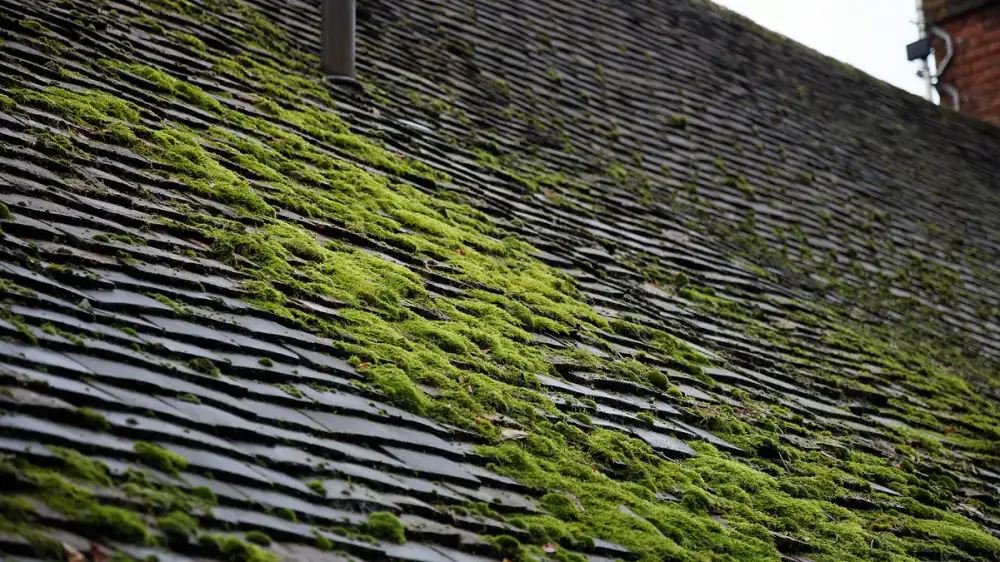
Moss takes hold on shaded, damp roof sections and holds moisture against the shingles — but removing it from the roof is risky work for a professional.

Efflorescence: The White Residue on Brick
The white powder on brick is efflorescence — mineral salts drawn to the surface by moisture moving through the masonry and left behind as water evaporates.