Cosmetic or Serious? How to Tell the Difference
Not every crack, stain, or peel is a crisis — and not every small flaw is harmless. Here is a simple framework for telling a cosmetic blemish from a structural warning.

Judge an exterior flaw by behavior, not appearance. Run it through three questions: Is it wet? Is it moving? Is it spreading? A flaw that stays dry, holds still, and hasn't changed in months is usually cosmetic. One that is damp, opening up, or growing is a warning worth tracing to its source — and if it sits at the roof edge or foundation, worth a professional look.
Every homeowner eventually stands in front of a crack, a stain, or a patch of peeling paint and asks the only question that matters: do I need to worry about this? It is a genuinely hard call, because a serious problem and a harmless one can look nearly identical on day one. A hairline crack could be plaster settling into place decades ago, or the first visible sign of something moving underneath. A dark patch could be leftover dirt, or a leak that soaks the wall every time it rains.
The good news is that you don't have to guess from a single glance. The difference between cosmetic and serious almost always reveals itself in how a flaw behaves over time and in wet weather. What follows is a framework you can apply to nearly anything on the outside of your house.
The question behind the question
Most exterior damage that actually costs money comes down to one thing: water going somewhere it shouldn't, or a structure shifting under load. Purely cosmetic issues, by contrast, are about the surface — the finish, the color, a little dirt or age. So the real test isn't "how bad does this look," it's "is this a surface story or a water-and-movement story?"
That reframing is powerful because it stops you from being reassured by things that look minor and alarmed by things that look dramatic. A tiny, damp crack that leaks can matter far more than a wide, dry one that has been stable for twenty years. To sort one from the other, ask three questions in order.
Test one: is it wet?
Moisture is the single most useful signal you have. Water is what turns a cosmetic mark into structural damage — it rots wood, corrodes fasteners, feeds growth, and undermines foundations. So before anything else, find out whether the flaw is dry or active.
Press the back of your hand to the area during a dry spell. Then watch the same spot during and just after a steady rain. A cosmetic mark stays dry and unchanged. An active problem darkens when it rains, feels damp, and often has soft, feathered edges rather than a crisp outline. The clearest tell of all: an active stain comes back after you clean it, because the water that made it is still arriving. This is why a stain that reappears — on siding, on the fascia, under the eaves — should never simply be scrubbed and forgotten. If dark patches keep returning under your roofline, stains on the soffits are a good example of a mark that reads as cosmetic but usually isn't.
Test two: is it moving?
The second question separates settling from structure. Houses move a little — that is normal, and it produces plenty of harmless hairline cracks as materials expand, contract, and settle over the years. What you are looking for is ongoing movement.
Signs that something is actually shifting, rather than just showing its age:
- A crack that steps diagonally through brick or block, following the mortar joints in a staircase pattern.
- Doors or windows that have started sticking, or gaps opening at the corners of their trim.
- A crack wide enough to slip a coin into, especially if one side sits proud of the other.
- Siding, trim, or gutters pulling away from the wall they're fastened to.
A single dry, stable hairline crack in stucco or a painted surface is, on its own, usually cosmetic. The same crack that is visibly wider than it was last season, or is paired with sticking doors, is a different conversation.
Test three: is it spreading?
The third question is about trajectory. Cosmetic flaws tend to hold still — the fade, the dirt, the old crack look about the same month after month. Problems with a cause behind them tend to grow, because the cause is still at work.
This is why time is your best diagnostic tool, and why a phone photo is worth more than an opinion. Take a dated picture, note the exact extent of the mark against a fixed reference — a window edge, a course of brick, a trim seam — and look again in a month or after the next big storm. If the stain is larger, the peeling has crept outward, or the crack has lengthened, you are watching an active process. If nothing has changed, you are almost certainly looking at cosmetics. Building this kind of before-and-after habit is the core skill in reading exterior warning signs.
Where the two look identical
A few spots are notorious for blurring the line, and they deserve extra suspicion because a serious version hides behind a cosmetic-looking front:
- Peeling paint on wood trim. Often just weathering — but when paint blisters and lifts in the same damp spot repeatedly, it is frequently reacting to moisture and early decay in the wood beneath. The roof edge is the classic location; what causes fascia rot explains why a painted board can look fine while softening behind the coating.
- Efflorescence on brick. The white, powdery residue itself is cosmetic, but it is evidence that water is moving through the masonry — worth understanding rather than just brushing off.
- A damp-looking patch near the base of a wall. Could be splashback that dries and means nothing. Could also be a sign that water is collecting where it shouldn't; persistent pooling near the foundation is among the costliest problems there is, and it often starts looking like nothing more than a damp shadow.
When "cosmetic" is the expensive assumption
The instinct to call something cosmetic is comfortable, and often correct. But it is worth remembering which direction the mistake runs. Assuming a genuinely cosmetic flaw is serious costs you a little worry and maybe a professional's time. Assuming a genuinely serious flaw is cosmetic costs you the repair plus everything the water or movement damaged while you waited.
That asymmetry is why the three tests matter, and why the safest response to a flaw you can't confidently sort is not to paint over it. Covering a stain or caulking a crack without answering "is it wet, is it moving, is it spreading" is exactly how a small problem gets sealed in and forgotten — the trap explored in when a quick fix makes things worse.
So run the tests. If a flaw stays dry, holds still, and hasn't grown, let it be cosmetic and move on with a clear conscience. If it fails even one test — or if the honest answer is "I can't tell from down here" and it involves the roof edge, the foundation, or work at height — treat that as your cue to look closer or bring in someone who can. The mark on your wall is not the problem to solve; it is the question to answer. Learning to notice the subtler versions early is its own skill, and one worth building — many of the warning signs homeowners most often miss are exactly these ambiguous, easy-to-dismiss flaws caught before they declared themselves.
Answers to common questions
Is a crack in my exterior wall always something to worry about?
No. Fine, stable hairline cracks in stucco, paint, or a masonry joint are common and often cosmetic. What matters is behavior: a crack that is widening, stepping diagonally through brick courses, letting water in, or paired with sticking doors and windows is telling you something structural. A crack that has looked the same for years and stays dry is usually just age.
How can I tell if a stain is old or active?
Touch the area during dry weather and watch it in the rain. An old stain is dry, its edges are sharp and unchanging, and it does not reappear after you clean it. An active leak is damp to the touch, has soft or spreading edges, darkens during rain, and returns after cleaning. The stain that keeps coming back is the one worth chasing to its source.
Is peeling paint just cosmetic?
Sometimes, but treat it as a moisture question first. Paint on sound, dry wood that peels from sun and age is cosmetic. Paint that lifts, blisters, or peels in the same damp spot over and over is usually reacting to water in the surface beneath it — an early sign of rot rather than a finish problem. Repainting without finding the moisture just resets the clock.
What everyday flaws are almost always cosmetic?
Faded or chalky paint, light surface dirt, minor efflorescence on masonry, fine hairline cracks that hold still, and weathered but firm caulk lines tend to be cosmetic. They affect appearance without signaling active water damage or movement. Even so, some — like a wall that stays damp — are worth watching, because cosmetic conditions can point to the dampness that later causes real problems.
When should I stop watching and call someone?
When a flaw fails one of the three tests — it is wet, it is moving, or it is clearly spreading — and especially when it involves the roof edge, the foundation, or anything at height. Those are the areas where a serious problem is both costly and hard to assess from the ground, so a professional eye is worth it before you assume the best.
Keep reading

Why Green Growth Keeps Returning on Siding
Algae and mold return because cleaning removes the growth but not the shade and moisture that feed it. Fixing those conditions is what makes it stop.
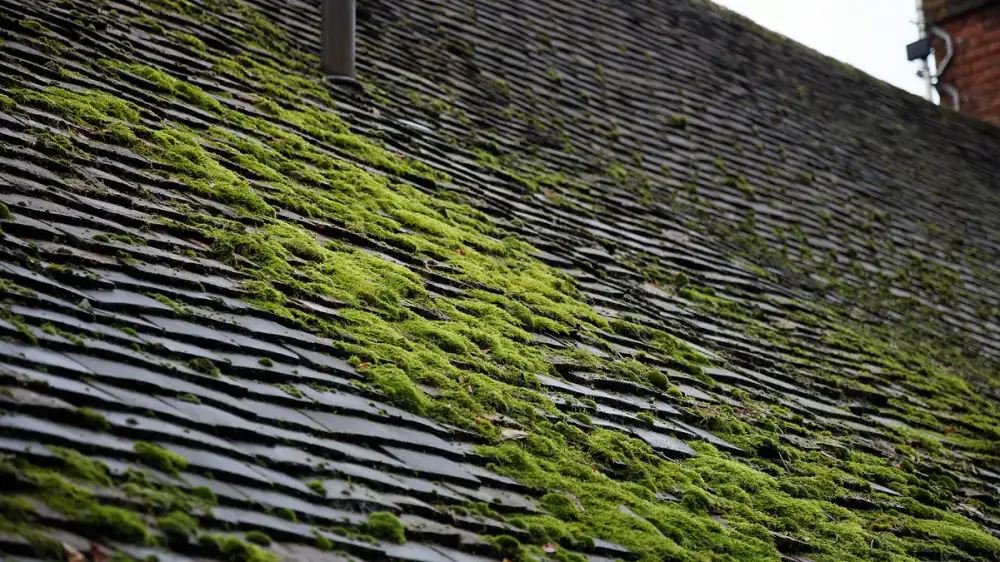
Moss Growing on the Roof: What to Do
Moss takes hold on shaded, damp roof sections and holds moisture against the shingles — but removing it from the roof is risky work for a professional.

Efflorescence: The White Residue on Brick
The white powder on brick is efflorescence — mineral salts drawn to the surface by moisture moving through the masonry and left behind as water evaporates.