How to Describe an Exterior Problem to a Pro
The quality of the help you get often depends on the quality of what you report. Here's how to observe, document, and describe an exterior problem so a pro can actually solve it.

You'll get better help by being a good reporter, not a diagnostician. Before you call, capture four things: where the problem is, when it appears, whether it tracks the weather, and how it has changed over time. Back it up with photos — wide and close, dry and wet — and a short video of the house in the rain if water is involved. Describe what you observed and let the pro reach the conclusion; leading with your own diagnosis can send them looking in the wrong place.
When something goes wrong on the outside of your house, the instinct is to get a professional out as fast as possible and let them figure it out. That's reasonable — but there's a step in between that quietly determines how well the whole thing goes: what you tell them. A vague report ("there's a stain, can you take a look?") leads to a vague visit, guesswork, and sometimes a fix aimed at the wrong thing. A precise report turns the pro's visit into confirmation rather than investigation, which means faster diagnosis, a more honest quote, and a much better chance the problem actually gets solved.
The good news is that the observation you'd do to describe a problem well is the same observation that makes you a smarter homeowner generally. You don't need to know what's wrong. You need to notice, clearly, what's happening.
Why your description is half the job
A professional walking up to your house sees a single frozen frame: how things look at the moment they arrive, usually on a dry day chosen for the appointment. But most exterior problems are stories that unfold over time and weather. The leak that only shows during a downpour, the stain that's been slowly spreading for months, the dampness that appears on cold mornings — none of that is visible in a single dry-weather snapshot.
You, on the other hand, live there. You've seen the problem across seasons and storms. That accumulated observation is information the pro physically cannot gather on one visit, and it's often the exact information needed to tell competing causes apart. When you supply it well, you're not just saving time — you're handing over evidence that would otherwise be lost. That's what makes a homeowner's report so valuable, and it builds directly on the habit of reading exterior warning signs over time.
The four things a pro actually needs
Boil a good report down to four questions, answered as concretely as you can.
Where is it, exactly? Not "the side of the house" but "the fascia above the front bay window, on the left end of the gutter run." Precise location matters because the cause is often near the symptom — the gutter above a stained fascia, the downspout beside a wet foundation. Describing what's around the problem is frequently more useful than describing the problem itself.
When does it appear? During rain? Only in heavy rain? On cold mornings? All the time? Timing is diagnostic. A mark that darkens during rain points to water getting in; one that shows on cold mornings regardless of weather suggests condensation; dampness that lingers days after rain points to drainage. The same-looking stain can have completely different causes, and the timing is what separates them.
Is it weather-dependent? Closely related, but worth its own answer. Tell the pro whether the problem tracks the weather or ignores it — that single fact rules whole categories of cause in or out before anyone climbs a ladder.
How has it changed? Is it spreading, holding steady, or coming back after you clean it? A problem that keeps returning after cleaning is active; one that's been identical for years may be old and stable. This history tells a pro how urgent it is and helps sort a live problem from an old cosmetic mark.
Take photos that carry information
Photos do most of the heavy lifting, but only if they carry the right information. Two habits make them useful.
First, shoot wide and close. The wide shot places the problem on the house and captures its surroundings — the gutter overhead, the grade below, the downspout nearby — which is where the cause usually hides. The close-up captures the diagnostic detail: whether paint is blistering or flaking, whether a crack is hairline or wide, whether a stain has sharp old edges or soft active ones. Include something for scale — a coin, your hand — so the pro can judge size from the image.
Second, shoot dry and wet. A stain photographed dry and again mid-rain tells a pro whether it's active. Dated photos taken weeks apart show whether it's spreading. This is the same before-and-after habit that reveals slow change to you; it just doubles as evidence.
Capture the rain, because it won't wait
If water is involved at all, the single most valuable thing you can capture is the house during a steady rain, filmed from a safe, dry spot. A short video of water spilling over the front edge of a gutter, sheeting down the fascia behind the trough, or discharging in a torrent against the foundation shows the water's actual path in a way no description can match. It's also the evidence most likely to be gone by the time a contractor arrives on a clear day.
You're not climbing anything or getting close — you're watching from a window or a covered spot and letting the camera record where the water goes. Note roughly how hard it was raining and how fast the problem showed up. Those details help a pro gauge whether you're looking at a clog, a pitch problem, a drainage issue, or something else. Many of the signs that gutters need repair are only visible in exactly these wet-weather moments.
Report what you saw, not what you concluded
Here's the counterintuitive part: be careful about leading with your own diagnosis. It's natural to open with "I think the roof is leaking," but that framing can quietly steer a professional toward looking for a roof leak — when your actual observations might point to gutter overflow, condensation, or drainage. A confident wrong theory is worse than no theory, because it anchors the investigation in the wrong place.
So separate what you observed from what you concluded. Say "there's a stain on the ceiling near the exterior wall that darkens during heavy rain and has grown over two months" — the facts — rather than "the roof's leaking" — the guess. Let the professional connect the dots. Your credibility as a reporter goes up, and the diagnosis gets more accurate. It also helps you tell, later, whether a proposed fix actually addresses what you observed, or whether it's the kind of patch that just covers the symptom.
Have it ready before you call
Pull it together before you pick up the phone: a precise location, a short timeline of when you first noticed it and how it's changed, a note on whether it's weather-dependent, and your photos or video. Mention anything you've already cleaned or patched, since that changes what the pro will see when they arrive.
A report like that does more than speed up the call. It signals that you're an engaged, observant homeowner — which tends to earn a more careful response and a more honest quote — and it gives the contractor what they need to decide what kind of visit the job actually requires. When you're then weighing who to hire, the same clarity helps you evaluate a contractor's response: a good one will engage with your specifics and ask sharp follow-up questions, rather than quoting a fix before they understand the problem. The description you bring is where the whole thing starts.
Questions homeowners ask
What information does a contractor most want to know?
Four things, above all: where the problem is, when it appears, whether it's tied to weather, and how it has changed over time. Location and pattern point to the source; timing and weather-dependence tell a pro whether it's a leak, condensation, or drainage; and the history — is it spreading, holding steady, recurring after cleaning — tells them how active it is. A description covering those four points gets you far closer to an accurate diagnosis than 'there's a stain on the wall.'
What kinds of photos are most useful?
Take both wide and close shots. A wide photo shows where on the house the problem sits and what's around it — the gutter above, the downspout nearby, the grade below — which is often where the cause hides. A close-up shows the detail: the texture of a stain, whether paint is blistering or flaking, the width of a crack. Include something for scale, like a coin or a hand, and photograph it in both dry and wet conditions if you can.
Should I tell the pro what I think is wrong?
Share what you observed, but be careful about leading with your diagnosis. If you say 'the roof is leaking,' a contractor may anchor on that and look for a roof leak, when your observations might actually point to gutter overflow or condensation. Describe what you see and when — the facts — and let the professional reach the conclusion. Your job is to be an accurate reporter, not to solve the case in advance.
Why does timing matter so much?
Because when a problem shows up often reveals what's causing it. A stain that darkens only during rain points to water intrusion; one that appears on cold mornings regardless of weather suggests condensation; dampness that lingers long after rain points to drainage or poor drying. The same-looking mark can have completely different causes, and the timing is frequently what separates them. It's information a pro can't get from a single visit on a dry day.
How do I document a problem that only happens in the rain?
Watch and record the house during a steady rain, from a safe, dry vantage point. A short video of water spilling over a gutter's front edge, sheeting down the fascia, or discharging against the foundation is worth more than any description, because it shows the water's actual path. Note how heavy the rain was and how quickly the problem appeared. This is the evidence that's gone by the time a contractor arrives on a clear day.
What should I have ready before I call?
A clear location, a short timeline of when you first noticed it and how it's changed, notes on whether it's weather-dependent, and your photos or video. If you've done any patching or cleaning, mention that too, since it affects what a pro will see. Having this ready makes the call efficient and helps the contractor decide what kind of visit or equipment the job needs before they arrive.
More from this section

Why Green Growth Keeps Returning on Siding
Algae and mold return because cleaning removes the growth but not the shade and moisture that feed it. Fixing those conditions is what makes it stop.
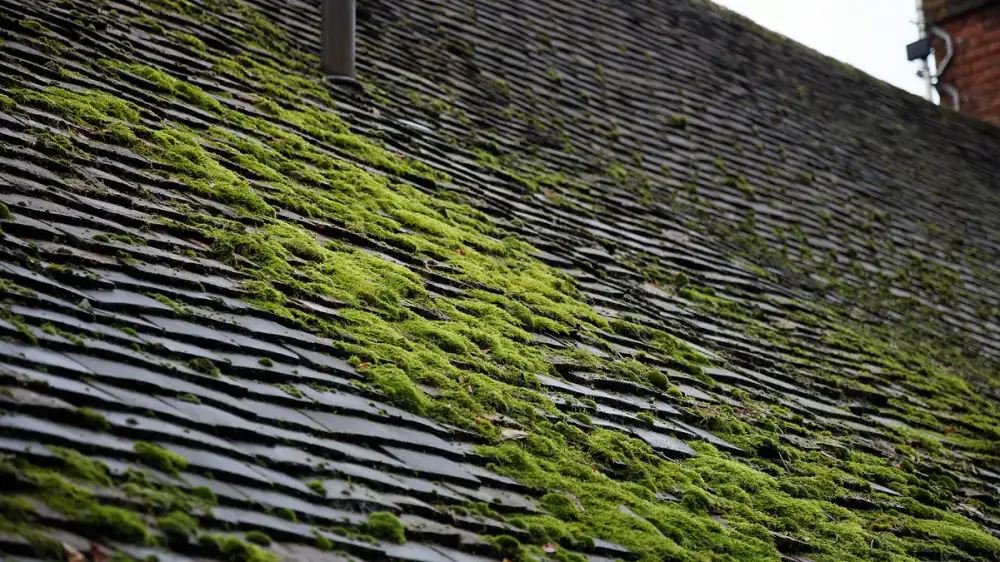
Moss Growing on the Roof: What to Do
Moss takes hold on shaded, damp roof sections and holds moisture against the shingles — but removing it from the roof is risky work for a professional.

Efflorescence: The White Residue on Brick
The white powder on brick is efflorescence — mineral salts drawn to the surface by moisture moving through the masonry and left behind as water evaporates.