Ice and Water Shield at the Roof Edge, Explained
Ice and water shield is a self-sealing membrane that lines the roof edge to stop water forced backward by ice dams. Here's what it does — and what it can't do on its own.
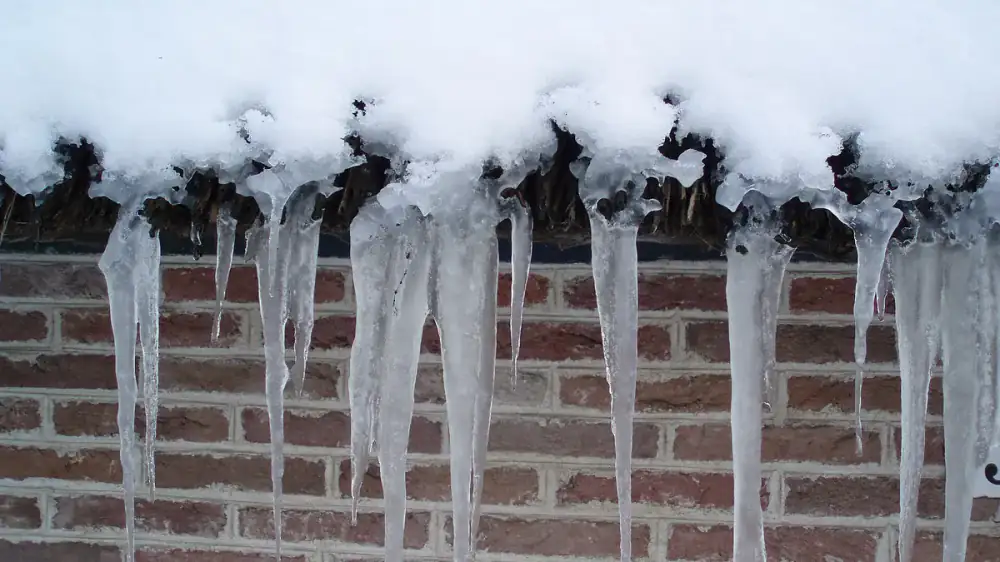
Ice and water shield is a self-sealing waterproof membrane that hides under the shingles along the eaves and other exposed spots, bonding to the deck and closing around every nail driven through it. Its one job is to stop water that an ice dam has forced backward, up under the shingles, from ever reaching the wood. Think of it as the last line of defense rather than a cure: it contains the damage a dam causes but does nothing to keep the dam from forming.
Bring up winter roof protection and ice and water shield surfaces almost immediately — usually trailing a few misconceptions with it. It isn't a heating cable, it isn't a gutter accessory, and it will not keep ice from stacking up along your eaves. It is a membrane, invisible beneath the shingles, and its entire purpose is to keep water out of the wood at the moment everything above it has failed.
What follows is a plain explanation of what the membrane is, the band of roof it covers, and how it fits into the larger problem of ice dams. It is deliberately not an installation guide. Putting the material in is roof work — it belongs to a re-roof or a professional repair, not to a homeowner on a January ladder.
A membrane, not a machine
Ice and water shield is a self-adhering sheet of rubberized asphalt. Ordinary roofing underlayment simply lies over the deck and sheds water that runs across it; this membrane does something different. It bonds directly to the roof deck, and — this is the part that matters — it seals around any nail or fastener punched through it during installation.
That self-sealing behavior is the whole trick. On a conventional roof, every nail hole is a potential leak waiting for the right conditions. Driven through ice and water shield, the material grips the nail shank and closes tight around it, so even the penetrated areas stay watertight. What you end up with is a genuinely waterproof zone, not merely a water-resistant one, exactly where water is most likely to be pushed somewhere it shouldn't go.
The band of roof it protects
The membrane isn't rolled out across the entire roof; that would be costly and pointless. It's concentrated where water tends to get driven backward or to pool:
- The eaves — the horizontal lower edge, and the single most important spot, because that's where ice dams form.
- Valleys, where two roof planes meet and funnel heavy runoff.
- Around penetrations such as chimneys, skylights, and vents.
- Rakes and other edges in certain climates and code jurisdictions.
At the eaves it usually runs from the roof edge up the slope far enough to cover past the interior wall line, so the entire ice-dam-prone band sits under protection. How far it should extend is a question of local climate and building practice — one more reason the coverage is a roofer's decision rather than a rule of thumb.
The problem it was built for
To see why the membrane matters, you have to picture what it's up against. An ice dam is a ridge of ice that builds at the cold eave when snow higher up a warmer stretch of roof melts, trickles down, and refreezes at the edge. Once that ridge exists, it traps the meltwater flowing behind it. The full sequence is worth understanding on its own; see how ice dams form at the roof edge.
The trouble is that trapped water has to go somewhere. Backed up behind the ice, it can be forced uphill — seeping up and under the shingles, a direction ordinary roofs simply aren't built to resist. This is the exact moment the membrane earns its keep. By sealing the deck at the eave, it stops that backed-up water from reaching the wood and dripping into the house below.
Here's the distinction that trips people up:
| What ice and water shield does | What it does not do |
|---|---|
| Seals the roof deck against backed-up water | Prevent ice dams from forming |
| Seals around nail penetrations at the eave | Melt or remove ice at the edge |
| Limits interior leaks during winter thaws | Fix the attic heat that causes dams |
| Protects the most vulnerable roof edges | Replace insulation or ventilation |
Why a sound membrane still isn't the fix
Ice and water shield is defensive by nature. It's the backstop for the moment a dam has already formed and started shoving water where it doesn't belong. But the dam itself is powered by heat leaking into the attic, which melts snow unevenly across the roof and feeds the whole cycle.
So the real prevention of ice dams lives in the attic, not on the shingles: enough insulation to keep the attic cold, and balanced attic ventilation to carry off any warm air that does sneak up there. The membrane guards the wood; insulation and ventilation attack the cause. A roof can carry flawless ice and water shield and still throw up ugly, gutter-wrecking dams every winter if the attic above it runs warm. It's also worth remembering that dams stress the gutters and roof edge in ways no membrane touches — see how snow and ice damage gutters for that side of the ledger.
Clues that the eave is under pressure
You can't lay eyes on the membrane without pulling shingles, but you can read the conditions that suggest it's being tested — or that it's missing or failing. Watch for interior water stains on ceilings or top-floor walls near exterior walls during winter thaws; icicles and ice ridges building along the eaves after snowfall; damp or discolored wood at the eave, soffit, or fascia in the cold months; paint peeling or blistering along the eave line once winter sets in; and water dripping behind the gutter during a midwinter melt. Any one of these means water is reaching somewhere it shouldn't, and all of them are worth a professional's eye before spring.
Because the membrane sits on the deck beneath the shingles, both checking it and installing it are roofing tasks, not ground-level chores — and climbing a snowy or iced roof to investigate is its own hazard, best avoided entirely. Call a roofer if you get interior leaks or eave-line stains during winter thaws, if dams recur year after year, or if you're planning a re-roof and want the eaves confirmed protected. A good one will tell you whether the membrane is present, recommend coverage suited to your climate, and — just as importantly — look at whether the warm, under-ventilated attic driving your dams needs attention too. Understanding how the roof edge works together helps you see where the membrane fits among the drip edge, gutters, and ventilation.
Your questions, answered
What is ice and water shield?
Ice and water shield is a self-adhering, waterproof membrane installed under the shingles along vulnerable parts of the roof, especially the eaves. Unlike ordinary underlayment, it bonds directly to the roof deck and seals around the nails driven through it. Its job is to stop water that gets forced backward — up and under the shingles — by ice dams or wind-driven rain from reaching the wood beneath.
Does ice and water shield prevent ice dams?
No. It does not stop ice dams from forming; it limits the damage when they do. An ice dam is a ridge of ice at the eave that traps meltwater behind it, and that trapped water can be pushed up under the shingles. The membrane keeps that water from reaching the roof deck and leaking inside, but preventing the dam itself is about attic insulation and ventilation, not the membrane.
Where is ice and water shield installed?
Most commonly along the eaves, extending from the roof edge up the slope past the point where the interior wall line sits, so it covers the area most prone to ice dams. It is also used in valleys, around chimneys and skylights, and along rakes in some climates. The exact coverage depends on local building practice and climate, which is why installation is a roofer's call.
Is ice and water shield the same as regular underlayment?
No. Regular underlayment (felt or synthetic) sheds water but is not sealed to the deck and does not seal around fasteners. Ice and water shield is a self-adhering membrane that bonds to the deck and seals around nails, making it waterproof rather than just water-resistant. Many roofs use both: the membrane at the vulnerable edges and standard underlayment across the rest of the field.
Can ice and water shield be added to an existing roof?
Not without removing the shingles above the area first, because the membrane must be installed on the bare deck beneath the shingles. That effectively makes it part of a re-roof or a roof-edge repair rather than a standalone add-on. A roofing professional can tell you whether it is present and whether adding it makes sense during your next roofing project.
When should I call a professional about ice and water shield?
Call a pro if you get interior leaks or water stains at the eave during winter thaws, if you have recurring ice dams, or if you are planning a re-roof and want to confirm the eaves will be protected. Because the membrane sits under the shingles on the roof deck, assessing or installing it is roof work and should be left to a qualified roofer.
Keep reading
How Gutters Damage Fascia When They Overflow
Overflow sends water onto and behind the fascia, rotting the board and loosening hangers — then the gutter sags and overflows more. Here's the cascade and how to stop it.

Signs Soffits Have Moisture Damage
Staining, sagging, peeling paint, pests and mold under the eaves all signal soffit moisture damage. Here's what causes it and when to call a pro.
Water Stains Below the Roof Edge
Stains under the eave are a map of misdirected water — overflow, water behind the gutter, drip edge trouble, ice dams or condensation. Here's how to read them.