A Plain-English Guide to Exterior Cleaning Products
The cleaning aisle is a wall of promises and no explanations. Strip away the marketing and there are really just three kinds of product doing three different jobs.

Almost every exterior cleaner is one of three things: a detergent that lifts dirt and grime, an oxidizer that bleaches and brightens (the "oxygen" and chlorine-type cleaners), or a biocide that kills living growth like algae and mildew. Match the category to the problem — grime wants a detergent, living stains want a biocide, dulled wood often wants an oxidizer — and then let the product label be the authority on dilution, dwell time, protective gear and what to keep it away from. Never mix products.
The exterior cleaning shelf is designed to confuse you. Every bottle promises to remove "dirt, grime, mold, mildew, algae and more," which tells you nothing about which one to actually buy. Behind the marketing, though, the chemistry is far simpler than the labels suggest. There are basically three kinds of product, they do three different jobs, and once you can tell them apart, the aisle stops being intimidating.
This isn't a guide to specific brands or recipes — those change, and the label on the bottle in your hand always outranks anything written here. It's a guide to the categories, so you can walk up to any shelf and know what you're looking at.
Category one: detergents, the dirt-lifters
Detergents are the soap family. Their job is to break the bond between grime and a surface so that water can carry it away. If the problem is honest dirt — pollen, road film, exhaust haze, the general grubbiness of a season outdoors — a detergent is what you want.
What's useful to understand is what a detergent doesn't do. It doesn't kill anything. On a wall that looks dingy because of algae, a detergent can make it look better for a little while, because it lifts the loose surface layer along with the dirt. But the growth is still alive and still rooted, so the improvement is temporary. People buy a detergent, treat a living-growth problem with it, watch the stain come back, and conclude that cleaning "doesn't work." The cleaner worked fine. It was the wrong category for the job.
Detergents are generally the most forgiving products to work with, and they pair naturally with the gentle approach behind soft washing — a mild cleaner, some dwell time, a low-pressure rinse. For plain dirt on a sound surface, you rarely need anything more aggressive.
Category two: oxidizers, the brighteners
Oxidizers work by chemically breaking down staining and, in the process, bleaching what's left. This is the family that includes the chlorine-type cleaners and the "oxygen" or percarbonate cleaners you'll see marketed for decks and wood.
They earn their place on two kinds of problem: discoloration you want to lighten, and dulled, grayed surfaces you want to brighten back up. A weathered wood deck that's gone silver-gray is the classic oxidizer job — the product lifts the tired top layer and reveals fresher wood beneath, which is why cleaning is the step before sealing. Oxidizers also help knock back the dark staining left behind by organic growth.
The two branches of this family behave differently in ways worth knowing. The chlorine-type products are aggressive and effective but harder on plants, metal and finishes, and they can lighten colors you didn't mean to lighten. The oxygen-type products are gentler and a common choice for wood, but "gentler" is relative — they still bleach, still irritate, and still need respect. Neither is a category to use casually near landscaping, and both demand the eye protection and rinsing their labels call for.
A word of caution that applies to this whole category: oxidizers can change the color of the very surface you're cleaning if left too long or mixed too strong. Test an inconspicuous spot, follow the dwell time, and don't improvise the concentration.
Category three: biocides, the growth-killers
Biocides are the category that confuses people most, because their whole job is invisible. They don't primarily lift dirt or brighten — they kill living growth: algae, mold, mildew, moss and the like. On the shaded, north-facing, tree-covered surfaces where green and black stains take hold, a biocide is doing the work that actually lasts, because it treats the organism rather than the smudge on top.
This is the missing piece behind one of the most common frustrations in exterior cleaning. When green growth keeps returning on siding no matter how often it's washed, it's usually because every previous attempt used a dirt-lifter on a living-growth problem. The stain looked like dirt, got treated like dirt, and grew right back. Reaching for a product that actually kills the growth is what breaks that cycle — and it's the logic behind proper methods for removing algae from exterior walls.
Because biocides are, by definition, made to kill living things, they're also the category that most demands care around plants, pets and yourself. Their effectiveness on algae is precisely why they can stress a shrub or irritate skin. That's not a reason to avoid them — it's a reason to use them exactly as directed.
The one rule that outranks all the others: read the label
Everything above is a map, not a manual. The specific product in your hand was formulated and tested for particular surfaces, at a particular dilution, with a particular dwell time and set of precautions — and the label is where all of that lives. Treat it as the authority, because it is:
- Dilution. Products are engineered to work at a specific strength. Going stronger doesn't clean better; it damages surfaces, stresses plants and wastes product. The label's ratio is the tested one.
- Dwell time. Most exterior cleaners need to sit and work before rinsing. Too short and the job's half done; too long and oxidizers and biocides can start affecting the surface itself.
- Surface compatibility. The label lists what a product is for and what to keep it off of. That second list is the one people skip and regret.
- Protective gear. Gloves and eye protection are the baseline; some products ask for more. Follow it.
Never mix products
This deserves its own heading because it's the one genuinely dangerous mistake amateurs make. Combining cleaning products — especially anything chlorine-based with anything acidic or ammonia-containing — can release toxic gas. There is no cleaning problem that a homemade blend of two products solves. If a product isn't working, the answer is the right product used correctly, never two products mixed together. One bottle, used as its label directs, at a time.
Protecting plants, pets and the runoff
The same properties that make these products effective make them a hazard to the living things around the work. The general approach is consistent across categories:
- Wet plants down before and after. Foliage soaked in clean water absorbs far less of anything that drifts onto it, and a second rinse afterward dilutes whatever landed.
- Cover what you can and avoid working on windy days, when overspray goes everywhere but where you aimed it.
- Mind the runoff. Don't let solution pool around roots, run into beds, or drain where pets or wildlife might drink. Think about where the rinse water ends up.
- Keep pets and kids off treated surfaces until everything is rinsed and dry.
Then add whatever the specific label tells you. Those extra precautions aren't boilerplate — they're the manufacturer telling you how their particular formula behaves.
Choosing well, in one breath
Put the three categories together and product selection becomes a short conversation with yourself. Is this dirt? A detergent. Is it dulled or discolored wood or a stain I want to lighten? An oxidizer. Is it alive — green, black, fuzzy, spreading? A biocide. Then let the label set the strength, the timing and the precautions, protect the plants, and never combine two products.
That's the entire framework. The rest — the promises, the "and more," the crowded shelf — is marketing. Knowing which of three jobs you're actually trying to do is what turns it back into a simple choice, and it pairs naturally with the broader case for cleaning gently: the right product, at the right strength, doing the least work necessary.
Frequently asked questions
What's the difference between a detergent and a biocide?
A detergent lifts dirt and grime so it can be rinsed away — it's a soap-family cleaner. A biocide kills living growth like algae, mold and mildew. A detergent can make an algae-stained wall look cleaner temporarily, but it doesn't kill what's growing, so the stain returns. For living growth you need something that treats the growth, not just the dirt on top of it.
Do I need different products for different surfaces?
Often, yes — which is exactly why reading the label matters. A product safe on concrete may be too harsh for painted wood; one made for siding may do nothing for rust. The label tells you what a product is formulated for and, just as importantly, what to keep it away from. Matching product to surface is the whole point of choosing carefully.
Are 'oxygen' cleaners safer than chlorine-based ones?
They tend to be gentler on plants and finishes and are popular for wood and deck cleaning, but 'gentler' isn't the same as 'harmless.' Oxidizers can still bleach, irritate and damage the wrong material. Safe use comes from following the directions on whichever product you choose, not from assuming a category is risk-free.
Can I mix products to make them stronger?
No — this is one of the few genuinely dangerous mistakes in exterior cleaning. Mixing cleaners, especially anything chlorine-based with anything acidic or ammonia-based, can release toxic gas. Use one product as directed. If it isn't working, the fix is the right product for the job, never a homemade blend of two.
How do I keep cleaning products from harming plants and pets?
Wet plants thoroughly before and after so foliage is coated in clean water, cover what you can, and never let runoff pool in beds or drain where pets drink. Keep pets and children off treated areas until surfaces are rinsed and dry. Then follow whatever specific precautions the product's label adds — those exist for a reason.
Is a stronger concentration always more effective?
No, and it's often counterproductive. Products are formulated to work at a specific dilution; going stronger can damage the surface, stress plants and leave residue without cleaning any better. The label's mix ratio is the tested one. 'More' is not a strategy — the right product at the right strength with enough dwell time is.
Keep reading

Pressure Washing vs Soft Washing
One relies on force, the other on cleaning solution at low pressure. Matching the method to the surface is what protects siding, roofs and trim.
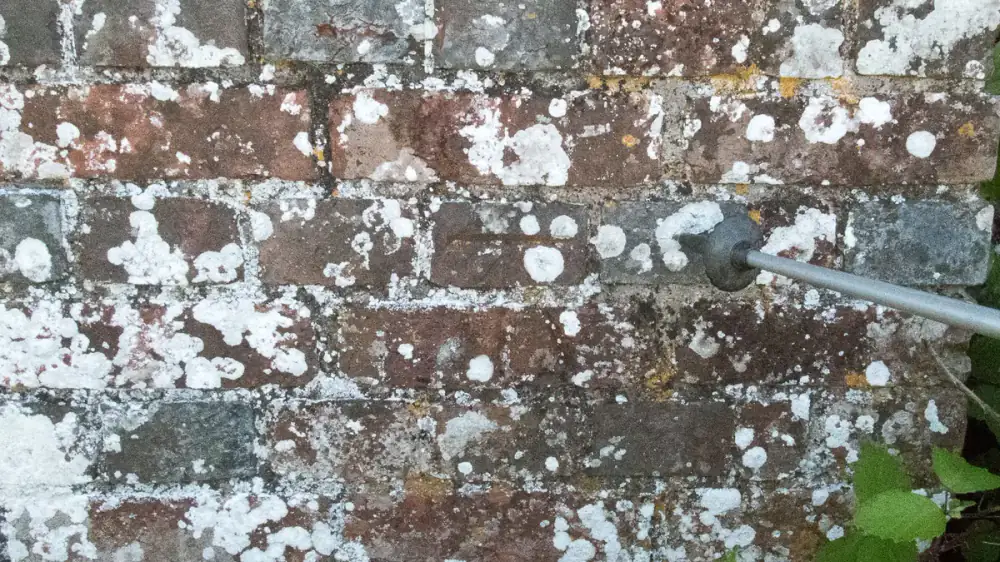
How to Remove Algae from Exterior Walls
That green film is a moisture problem, not just dirt. Here's why gentle cleaning beats blasting, how to protect plants and windows, and how to stop it coming back.
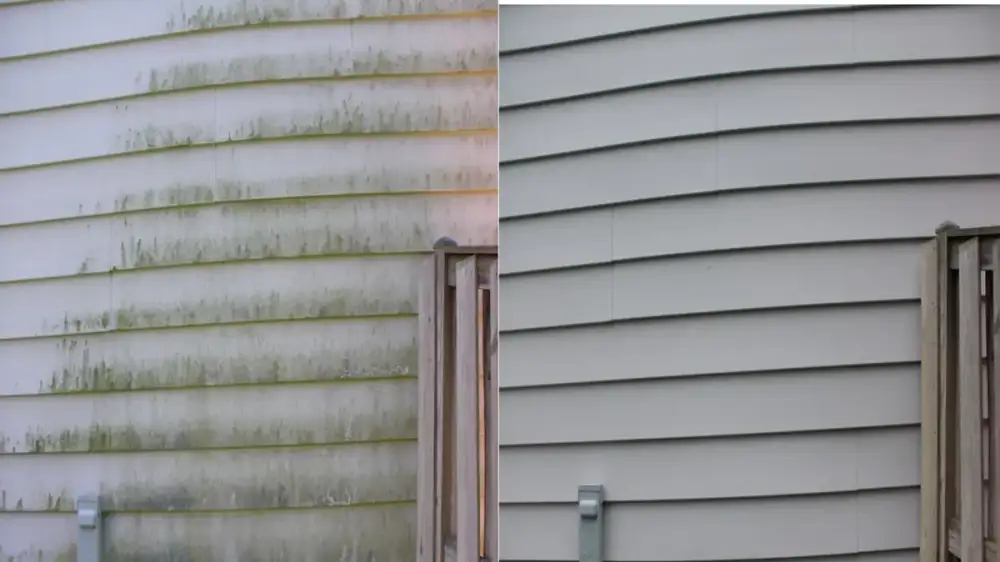
Can Pressure Washing Damage Siding?
The same force that strips dirt can crack panels, peel paint and push water into the wall. Here's how siding gets damaged — and the safer way to clean it.