How to Clean Exterior Brick
Sound brick can take a fair amount, but aged brick and old mortar can't. On masonry, the mortar joints — not the brick — are usually what force destroys first.
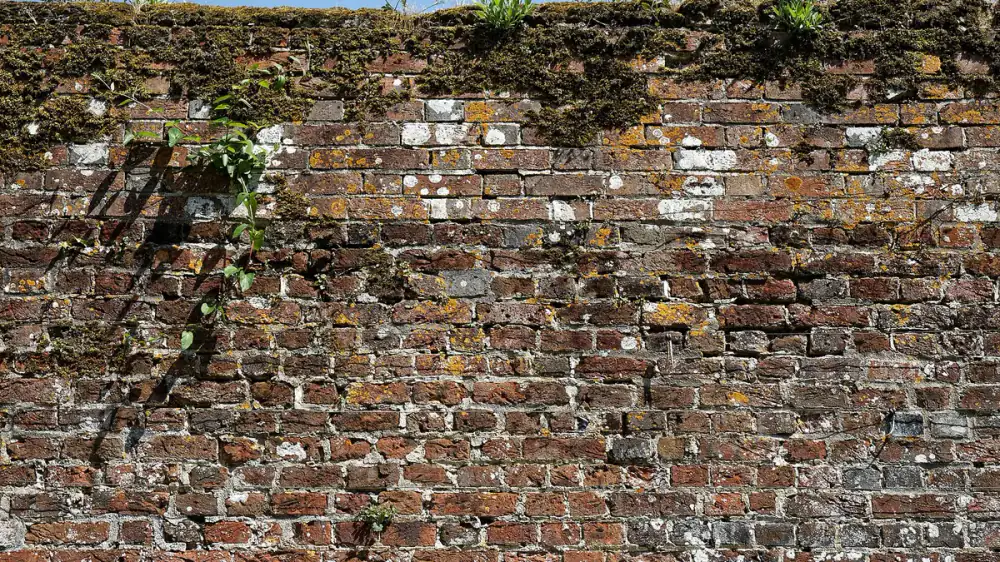
The right method depends entirely on condition. Sound, modern brick can often handle pressure washing, but the mortar joints are the weak point — high pressure erodes mortar, especially the older, softer kind, and opens the wall to water. For aged, soft or historic masonry, stay with gentle methods and appropriate cleaners, and read efflorescence and organic growth as moisture problems rather than dirt to blast off.
Brick reads as the toughest thing on the house, and in some respects it is. But cleaning brick isn't really a question about the brick at all — it's a question about the mortar between it. The joints are usually softer than the brick face by design, and they are what holds the whole wall together. On masonry, force reaches the mortar long before it troubles the brick, and once the joints start to go, you've quietly converted a cleaning afternoon into a repair project. So the first thing to establish is not how to clean the wall but what state it's in, because sound brick and tired old brick call for genuinely different treatment.
The joints, not the faces, set the limit
It's worth being precise about why mortar is the thing to protect. In a masonry wall, mortar is meant to be the sacrificial element — softer than the brick so the joints, not the units, absorb movement and stress. That intended softness is also its vulnerability: a high-pressure stream erodes the joints, opens gaps, and lets water travel behind the brick and into the wall. The water is the real cost. It doesn't just look bad; it can feed moisture problems inside the wall, and repointing eroded joints is an actual repair, not a rinse. Seen through how pressure washing works, the danger is plain — the tool is built to erode and dislodge, and soft mortar is exactly what it erodes fastest.
Two walls, two approaches
The dividing line is condition, and it changes everything downstream.
Sound, modern brick in good repair, with firm joints, can often take a fair amount — including careful pressure washing. The face is hard and the mortar is intact enough to resist erosion. Aged or soft brick paired with old mortar is a different animal. Older mortar tends to be softer to begin with, and years of weathering can leave both the brick and the joints fragile, so force a sound wall would ignore can wash crumbling mortar out and even flake the face of soft brick. Here gentle methods aren't a preference — they're the only safe option.
The catch is that condition isn't always readable from the yard. If the mortar looks powdery, cracked or recessed, or crumbles when you press a finger to it, treat the wall as fragile no matter how solid the brick looks from a distance.
A low-pressure routine that spares the mortar
For most home brick — and for anything you're the least bit unsure about — the safe default is low-pressure and cleaner-led:
- Rinse the wall gently to carry off loose dirt.
- Apply a masonry cleaner per its directions, and let it dwell to break down grime and growth.
- Scrub problem areas with a soft or medium brush instead of escalating the pressure.
- Rinse at low pressure, keeping the stream from digging into the joints.
Because brick is porous and the mortar is vulnerable, this is a natural soft washing surface in most cases. Letting the chemistry carry the work protects the joints in a way that raw force never can.
Reading efflorescence and growth as moisture
Two problems turn up on brick constantly, and both are really moisture stories wearing a cleaning disguise.
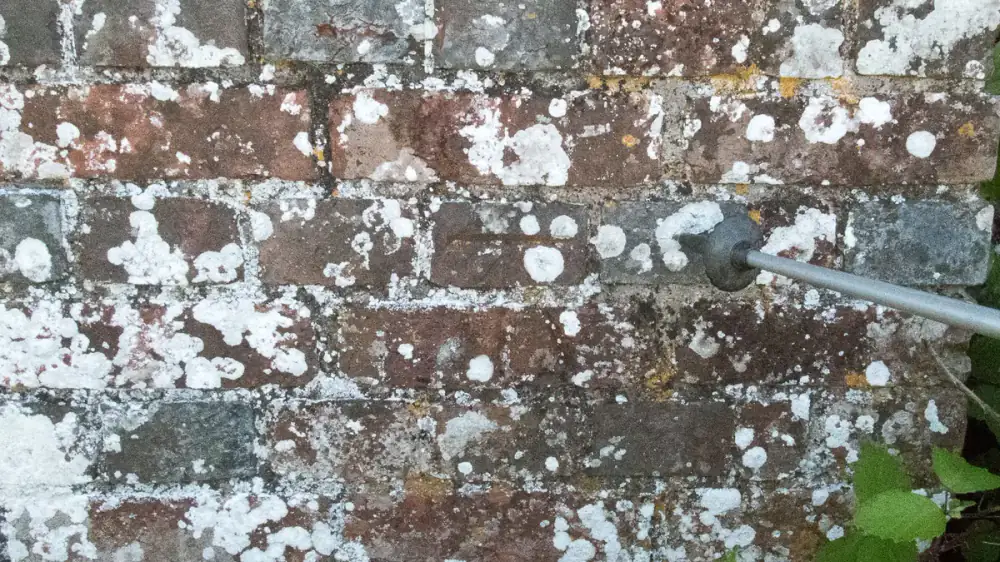
Efflorescence is the white, powdery bloom that appears when moisture moves through the masonry, carries dissolved salts to the surface, and evaporates, leaving the salt behind. Gentle methods and an appropriate cleaner can take the deposit off, but the deposit is only the symptom. As long as moisture keeps traveling through the wall, the efflorescence keeps coming back — so the durable fix is usually reducing the water reaching the brick, not scrubbing harder.
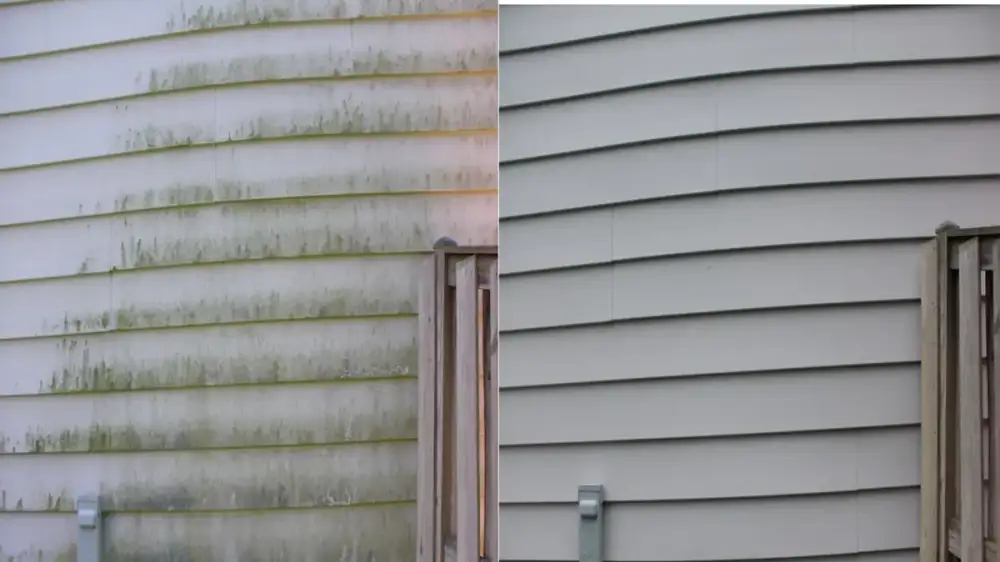
Green and black organic growth — algae, mildew and their staining — is alive, which means it needs a cleaner rather than force. A cleaner treats the growth at its source; blasting strips the visible layer, threatens the mortar, and lets the growth return anyway. The same low-pressure approach used for algae on exterior walls transfers directly to brick, and where growth or efflorescence keeps returning, green growth that returns on siding walks through the moisture-and-shade logic that drives it on masonry too. Watch, as you clean and after, for mortar washing out or looking recessed, chips or spalling on the brick face, joints that widen enough to see into, damp or stained interior walls, or growth that comes back fast — each one is the wall reporting a problem a clean won't cure.
Old masonry wants a lighter hand
Historic and aged masonry deserves its own category. It often pairs soft, handmade brick with lime-based mortar, and both can be permanently harmed by modern high-pressure methods and harsh chemicals. On material that can't be replaced, an aggressive clean isn't merely risky — it can do damage nothing undoes. The governing instinct here is restraint: gentle methods, tested carefully in an inconspicuous spot, and a strong bias toward handing the work to specialists who understand how historic masonry is meant to be cleaned. That same bias toward help applies whenever the mortar is crumbling and may need assessment or repointing, whenever the wall is large or high enough to add real height risk, or whenever you simply can't tell how sound the brick and joints are — a professional can judge what a wall will safely take before the first drop of water hits it. When the material is irreplaceable, the cost of getting it wrong dwarfs the cost of doing less.
Questions people also ask
Can I pressure wash brick?
Sound, modern brick in good condition can often take pressure washing, but the mortar joints are the weak point. High pressure erodes mortar — especially older, softer mortar — leaving gaps that let water into the wall. When brick or mortar is aged or crumbling, gentler methods are far safer.
Why is high pressure bad for old mortar?
Older mortar is typically softer than the brick around it, and it's what holds the wall together. A high-pressure stream erodes it, opening the joints and letting water reach behind the brick. Because repointing mortar is a real repair job, protecting the joints is a bigger priority than cleaning the brick face.
What is efflorescence and how do I remove it?
Efflorescence is the white, powdery deposit that appears on brick when moisture carries salts to the surface and evaporates. It signals moisture moving through the masonry. It's often addressed with gentle methods and appropriate cleaners, but the lasting fix is usually reducing the moisture reaching the wall.
How do I remove green or black growth from brick?
Green algae and dark growth are living, so they need an appropriate cleaner rather than force. A cleaner treats the growth at the source, while blasting only removes the visible layer and risks eroding mortar. The same low-pressure approach used for algae on other exterior walls applies to brick.
Is cleaning old or historic brick different?
Very. Historic and aged masonry often has soft brick and lime-based mortar that modern methods and harsh chemicals can seriously damage. Caution is essential — historic masonry is often best left to specialists who understand how to clean it without harming irreplaceable material.
Should I hire a professional to clean brick?
Consider it for older or historic masonry, for large or high walls, for crumbling mortar that needs assessment or repointing, or when you're unsure how sound the brick and joints are. A pro can judge what the wall can safely take before any cleaning starts.
More from this section

Pressure Washing vs Soft Washing
One relies on force, the other on cleaning solution at low pressure. Matching the method to the surface is what protects siding, roofs and trim.
How to Remove Algae from Exterior Walls
That green film is a moisture problem, not just dirt. Here's why gentle cleaning beats blasting, how to protect plants and windows, and how to stop it coming back.
Can Pressure Washing Damage Siding?
The same force that strips dirt can crack panels, peel paint and push water into the wall. Here's how siding gets damaged — and the safer way to clean it.