What Exterior Cleaning Can and Can't Fix
Cleaning solves a surprising number of problems that look like damage. It also gets blamed for a lot it was never going to fix. Knowing the line saves money and disappointment.

Exterior cleaning fixes things sitting on a surface — algae, mildew, dirt, most black streaks, cobwebs, pollen, and the general grime that dulls a house. It can't fix things that have changed the material itself: faded or chalky finishes, rot, cracks, warping, deep rust pitting, or stains that have soaked all the way in. The test is simple — if it's on the surface, cleaning usually wins; if the surface itself is damaged or gone, you're looking at repair, not a wash.
A good exterior cleaning can be genuinely transformative. A house that looked tired and neglected turns out to have been fine the whole time — just wearing a layer of algae like a bad mood. That result is common enough that people start to expect cleaning to fix everything, and that's where the disappointment starts.
Because cleaning has a hard limit, and it's a physical one. Cleaning removes what's sitting on a surface. It cannot restore a surface that has been changed or destroyed. Almost every "the cleaning didn't work" complaint traces back to that line being crossed — someone asked a wash to undo damage, and no wash can.
The honest test: on it, or in it?
Before you decide whether cleaning is the right tool, figure out where the problem lives. There's a quick physical test for it.
Look closely, and if you can, touch it with a gloved finger. Surface problems smear, lift, or feel like a film. Algae has a slight give to it. Dirt comes away on the glove. Mildew streaks. These are things that landed on the material and stayed there — and things that land can be removed.
Damage doesn't move. A crack is still a crack under your finger. A faded panel is faded all the way through the finish. A rusted, pitted spot has actually lost metal. Rot is soft. None of it wipes, smears, or rinses, because there's nothing sitting on top to remove — the material itself is what changed.
That distinction does most of the work. Once you know whether you're looking at something on the surface or something that happened to the surface, you know whether you're booking a cleaning or a repair.
What cleaning reliably fixes
On the "cleaning wins" side of the line, the list is longer and more satisfying than people expect:
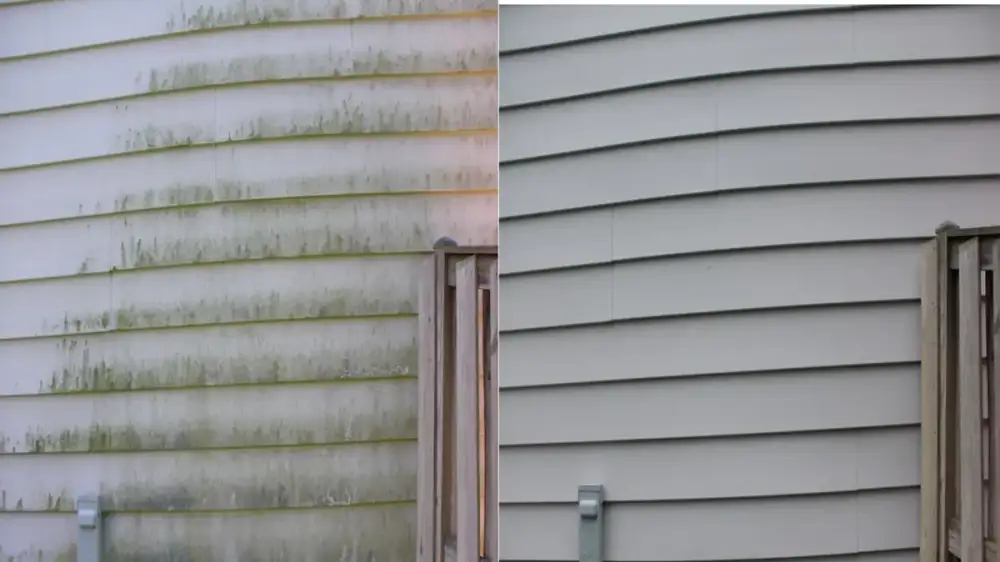
- Green algae and the shaded-wall dinginess it causes. This is the single most common thing mistaken for ruined siding. It's living growth, it sits on the surface, and treating it properly — chemistry first, low pressure to rinse — clears it. The catch is that it comes back if the conditions do, which is a separate problem we'll get to.
- Black streaks and mildew. The dark vertical runs on siding and the speckling in shaded corners are organic, not embedded. They respond to the right cleaning approach, though force alone tends to spread them.
- Dirt, pollen, cobwebs and general film. The ordinary settling of a season outdoors. This is the easiest category and the one cleaning was invented for.
- Surface grime on hard surfaces. Concrete, pavers and sound masonry that have gone gray with traffic and weather clean up well, because the discoloration is sitting on a durable surface that can take a proper wash.
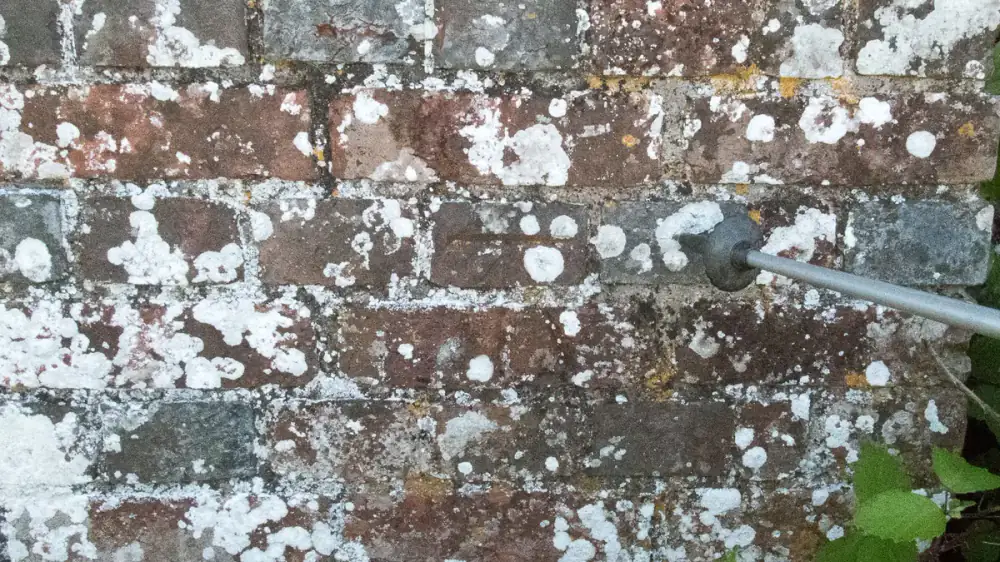
For the specific and stubborn cases, it's worth reading up on the method before you start — removing algae from exterior walls is a good example of a problem that looks permanent and usually isn't, provided you treat the growth rather than just blast the visible layer.
What cleaning can't fix
Now the harder conversation. These are the things people most want cleaning to solve, and the ones it simply can't:
- Faded and chalky finishes. When siding or paint has oxidized, the finish itself has broken down under UV. There's no dirt to remove — the color you want back is gone. A wash can lift the loose chalk and even things out slightly, but restoring the finish is a refinishing or replacement job. If you can rub a powdery residue off a panel of vinyl siding with your bare hand, you're looking at a finish that's oxidizing, not a stain sitting on top.
- Rot, soft wood and structural wear. Cleaning a deck reveals whether the boards are sound; it doesn't make unsound boards sound. Soft, spongy, or crumbling wood is past cleaning.
- Cracks, dents, warping and holes. These are missing or deformed material. A wash cleans them — it doesn't close them.
- Deep rust pitting. Light rust staining can often be treated. But once rust has eaten into the metal and left pitting, the surface itself is damaged; cleaning removes the stain, not the loss.
- Stains that soaked all the way in. Tannin bleed from a redwood post, some oil intrusions, certain mineral stains in porous concrete — if it's saturated the material rather than sitting on it, cleaning may lighten it but rarely erases it.
The frustrating part is that some of these look exactly like cleanable stains from ten feet away. The gloved-finger test is worth the thirty seconds it takes, because it's the difference between a satisfying afternoon and a wasted one.
When cleaning is the wrong tool entirely
Sometimes cleaning isn't just insufficient — it's actively the wrong move, and reaching for it makes things worse.
Paint removal is the classic mistake. Blasting old paint off with a pressure washer seems efficient and is a genuinely bad idea: the force that lifts paint also gouges the wood, drives water into the substrate, and scatters chips into the yard. Older coatings can carry hazards that make the whole approach unwise. Stripping paint is a scraping-and-prep job that belongs in the repair-versus-hire decision, not on a cleaning to-do list.
Cleaning as a cover-up is the other trap. Washing a wall you suspect has water damage behind it doesn't fix anything — it hides the surface evidence right when you most need to be reading it. If a wall is stained from the inside out, the cleaning tells you nothing about the leak still feeding it.
And cleaning something that keeps coming back without asking why is a treadmill. Which brings us to the most useful reframe in all of this.
When the return trip is the real message
Here's the situation that confuses people most: they clean something correctly, it looks great, and it's dingy again within weeks or a couple of months. Their conclusion is that the cleaning failed. Usually it didn't.
Fast recurrence is a signal, not a failure. Algae that races back means the wall stays damp and shaded — a moisture and airflow problem, not a cleaning problem, and the reason green growth keeps returning on siding no matter how carefully it's washed. Rust stains that reappear mean there's still an iron source bleeding onto the surface. Streaks that return in the same pattern point to something above them shedding onto the wall. In each case the cleaning did its job on the symptom; something is still producing the cause.
That's the real boundary of what exterior cleaning can and can't fix. It can reliably remove the effect. It can't remove a cause that lives somewhere else — a downspout dumping against a wall, a tree holding shade and moisture on the siding, a rusting fixture upstream of the stain. Cleaning buys you a clean surface. Keeping it clean means fixing whatever kept dirtying it.
Get that framing right and cleaning stops disappointing you, because you stop asking it to do two jobs. Use it for what it's superb at — lifting what sits on the surface — and hand the rest, the damage and the underlying causes, to the repairs and the source-fixing that actually address them.
Your questions, answered
How can I tell if a stain will clean off or not?
A rough test: if it sits on top of the surface, it usually cleans off — algae, mildew, dirt, most black streaks. If it's soaked into the material, changed the material's color permanently, or is actually missing material, cleaning won't restore it. Running a gloved finger over it helps: surface growth smears, embedded damage doesn't move.
Will cleaning fix faded or chalky siding?
Not really. Fading and chalkiness are the finish itself breaking down from sun exposure, not dirt sitting on top. A gentle wash removes the loose chalk and can make the color look a little more even, but it can't bring back a finish that has oxidized away. That's a refinishing or replacement question.
Can pressure washing remove paint I want gone?
It's a tempting shortcut and usually a bad one. Force strong enough to strip paint also gouges the wood underneath, drives water into the substrate and scatters chips everywhere. Paint removal is a prep-and-scrape job, not a cleaning job, and older paint can carry hazards that make blasting it a poor idea.
My deck looks gray and rough. Can cleaning bring it back?
Partly. A proper cleaning removes the grime and gray weathered layer and can reveal fresher wood beneath, which is why cleaning is the first step before sealing. But if boards are cracked, cupped, or soft with rot, that's structural wear cleaning can't reverse — those boards need repair or replacement.
If a stain comes back fast after cleaning, does that mean cleaning failed?
Not necessarily — it usually means there's an underlying condition feeding it. Growth that returns quickly points to constant moisture or shade; rust that reappears points to an ongoing metal source. Cleaning treated the symptom correctly; something is still causing it. Fix the source and the cleaning holds.
You might also like

Pressure Washing vs Soft Washing
One relies on force, the other on cleaning solution at low pressure. Matching the method to the surface is what protects siding, roofs and trim.
How to Remove Algae from Exterior Walls
That green film is a moisture problem, not just dirt. Here's why gentle cleaning beats blasting, how to protect plants and windows, and how to stop it coming back.
Can Pressure Washing Damage Siding?
The same force that strips dirt can crack panels, peel paint and push water into the wall. Here's how siding gets damaged — and the safer way to clean it.