When DIY Exterior Cleaning Goes Wrong
Most cleaning disasters aren't freak accidents — they're the same handful of mistakes, made confidently, by people who thought a pressure washer was foolproof.

Most DIY exterior cleaning disasters come from a small, repeatable set of mistakes: driving water behind siding by spraying upward, stripping paint and gouging wood with too much force, etching concrete with a narrow tip held too close, and stripping granules off a roof that never should have been pressure washed. Each one traces back to the same root cause — reaching for maximum force by default. The fix is equally simple: start gentle, match the method to the surface, test a hidden spot, and keep high pressure away from anything delicate or high up.
A pressure washer is one of the few power tools you can rent on a whim, use with no instruction, and cause four figures of damage with before lunch. It's also genuinely satisfying to operate, which is exactly the trap. The machine feels foolproof, the results are immediate, and the harm is often invisible until much later.
The reassuring part is that the disasters aren't random. The same handful of failures show up again and again, because the same handful of mistakes cause them. Learn to recognize each one before you start, and you've avoided most of what goes wrong.
Water behind the siding: the invisible one
This is the worst failure precisely because you can't see it happen. Siding — vinyl, fibre cement, wood lap, all of it — is engineered to shed water from the top down, each course overlapping the one below like shingles. Point a pressurized stream upward into that overlap, and you defeat the entire design. Water gets behind the panels, hits the sheathing and the wall assembly, and stops. There's nowhere for it to drain and little airflow to dry it.
Outside, the wall looks fantastic — clean, bright, freshly done. Inside the wall, moisture is now doing what trapped moisture does: feeding rot, lifting interior paint, growing mold, and announcing itself weeks later as a musty smell or a soft spot that nobody connects back to the cleaning.
How to avoid it: keep the stream level or angled slightly down, never up into the laps. Stand back. Use lower pressure. Better yet, recognize that most siding wants gentle cleaning in the first place — this is the whole reason pressure washing can damage siding even when nothing visibly cracks. If you own vinyl siding in particular, understand how it sheds water before you aim anything at it, because the failure mode is baked into how the panels overlap.
Stripped paint and gouged wood
Somewhere along the way, "pressure washing removes paint" got filed under feature instead of warning. It's a warning. A stream strong enough to peel a coating is also strong enough to tear into the soft wood beneath it, raise the grain, splinter edges and drive water into the substrate. You finish with paint gone in patches, wood damaged where it's now exposed, and chips scattered across the yard.
Two things make this worse than it sounds. First, the damage to the wood is permanent — you can repaint, but you can't un-gouge. Second, older paint can carry hazards that make blasting it a genuinely poor idea, turning a cosmetic mistake into a cleanup problem.
How to avoid it: don't use a pressure washer as a paint stripper — that's a scrape-and-prep job, and where it gets involved, it's squarely in professional territory. For cleaning painted or aged wood, use low pressure and let a cleaning solution do the lifting. Painted and aged wood belong firmly on the list of surfaces that should not be pressure washed at full force.
Etched concrete: yes, even concrete
People treat concrete as bombproof, and it's certainly the surface most forgiving of pressure. But "durable" isn't "immune." A narrow tip — the zero-degree or 15-degree kind — concentrates the machine's full force onto a tiny point. Hold that in one place, or drag it slowly, and it lifts the smooth top layer of the concrete unevenly, leaving stripes, swirls or a permanently rougher, blotchier texture. It's most brutal on decorative or stamped concrete, where the finish is the whole point.
Once concrete is etched, it's etched. That's missing material, not a stain, so no amount of further cleaning brings it back.
How to avoid it: use a wider spray pattern, keep the tip well back from the surface, and never let it dwell in one spot — keep it moving in smooth, overlapping passes. A surface cleaner attachment, which spreads the force out, gives far more even results than a wand for large flat areas. The goal is even coverage, not maximum bite.
Roofs: the failure that comes with a fall risk
Everything above is a property-damage problem. Roof cleaning adds a personal-injury one, which is why it's in a category of its own.
Pressure washing an asphalt shingle roof strips the granules that protect it from UV, physically aging the roof to buy a temporary cosmetic win. That alone makes it a bad trade. But the deeper problem is that you're doing it on a slope, at height, on a surface made slick by water and cleaning solution, often while managing a heavy wand that kicks back. The combination of the two risks — ruining the roof and falling off it — is what makes roof work the clearest "hire it out" situation in all of exterior cleaning.
How to avoid it: don't pressure wash a roof, full stop. Roof staining is organic growth that responds to low-pressure, chemistry-first methods — and the height means those methods are best left to professionals equipped to work up there safely. If your roof looks streaked, that's a reason to call someone, not to buy a longer ladder.
The mistake under all the mistakes
Read those four failures together and the same root cause runs through every one: reaching for maximum force as the default setting. Upward spray, paint-stripping pressure, a narrow tip on concrete, a wand on the roof — each is force applied where a gentler approach was both safer and, on those surfaces, actually more effective. The full comparison of pressure and soft washing is really a comparison of two mindsets, and the DIY disaster reel is what the force-first mindset produces.
So the prevention checklist is short, and it's the same for all of them:
- Start gentle and step up only if you must. Use the least pressure that does the job. You can always add force; you can't take back a gouge.
- Test a hidden spot first. A small, out-of-sight area tells you how the surface and any cleaning product behave before you commit to the whole wall.
- Match method to material. Hard and durable can take pressure; delicate, porous, painted or high-up wants gentle. Confirm which you've got before you squeeze the trigger.
- Keep high pressure off the do-not-blast list. Siding seams, painted and aged wood, stucco, older mortar, windows and screens, and roofs — these fail reliably under force no matter how careful you feel.
- Respect height. If the job needs a ladder or a roof, the calculus changes entirely, and hiring out stops being an admission of defeat and starts being the obvious call.
If it's already gone wrong
Maybe you're reading this a step too late. If so: stop before you compound it. More cleaning won't fix stripped paint or etched concrete — those need refinishing or repair. Suspected water behind siding needs the wall assessed before anything gets painted over, because the hidden moisture, not the surface, is the actual problem. And document what happened while it's fresh; if a product warranty or a contractor is in the picture, early evidence helps.
The encouraging truth in all of this is that none of these disasters requires bad luck. They require force applied where it didn't belong. Take the force out of the equation as your default, and the whole reel of failures mostly stops playing.
Common questions
What's the single most common DIY pressure washing mistake?
Aiming the stream upward at siding. It feels natural to spray up toward the eaves, but siding is built to shed water downward, so an upward jet drives water behind the panels and into the wall, where it can't dry. The visible surface looks clean while the real damage is happening out of sight.
How would I even know if water got behind my siding?
Watch the interior in the weeks after cleaning. Damp spots, staining, peeling interior paint, a musty smell, or warm-side condensation can all point to trapped moisture. Outside, look for panels that now sit loose. Because the signs are delayed and easy to blame on something else, water intrusion is the failure people catch latest.
Can you really etch concrete with a pressure washer?
Yes. Concrete is hard, but a narrow tip held close concentrates enormous force on a small spot and can leave permanent lines, swirls or a rougher texture. Once concrete is etched the marks don't wash out — they're missing material. Keeping the tip moving, backed off, and using a wider spray prevents it.
Is it ever safe to pressure wash my own roof?
Pressure washing a roof is a bad idea regardless of who does it — the force strips the protective granules from asphalt shingles and shortens the roof's life. Add the fall risk of working at height on a slope, and roof cleaning is the clearest case for leaving it to professionals with the right low-pressure methods and equipment.
I already damaged something. What now?
Stop and assess before doing anything else. For stripped paint or etched concrete, the fix is refinishing or repair, not more cleaning. For suspected water intrusion, get the wall looked at before it's painted over, because the hidden moisture is the real problem. Documenting the damage early also helps if a warranty or contractor claim is involved.
How do I avoid all this without hiring someone?
Start gentle, test a small hidden area first, keep high pressure off anything delicate or high up, and match the method to the surface rather than the mood. Most DIY disasters come from using maximum force by default. Using the least force that works — and knowing which surfaces to never blast — prevents the large majority of them.
Related guides

Pressure Washing vs Soft Washing
One relies on force, the other on cleaning solution at low pressure. Matching the method to the surface is what protects siding, roofs and trim.
How to Remove Algae from Exterior Walls
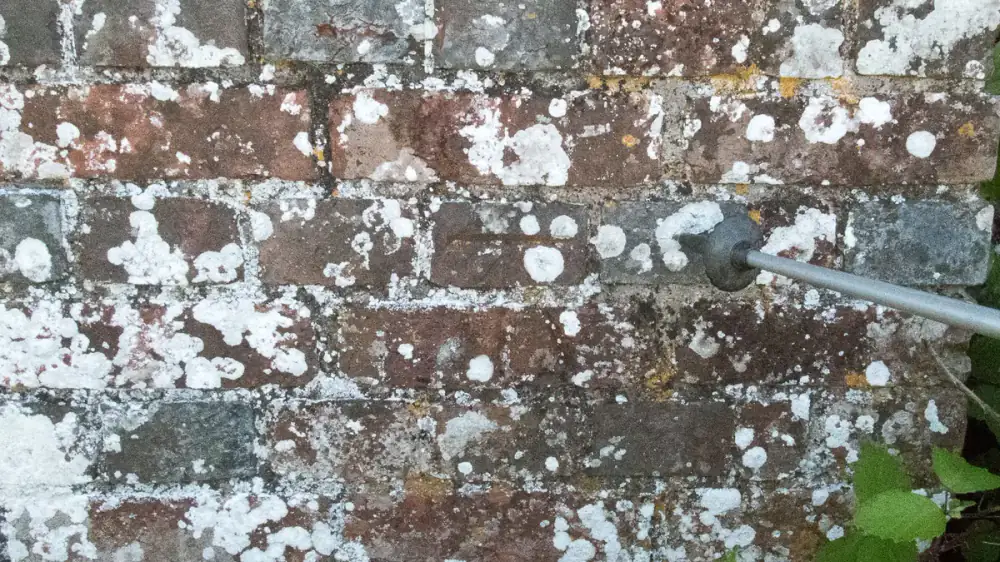
That green film is a moisture problem, not just dirt. Here's why gentle cleaning beats blasting, how to protect plants and windows, and how to stop it coming back.
Can Pressure Washing Damage Siding?
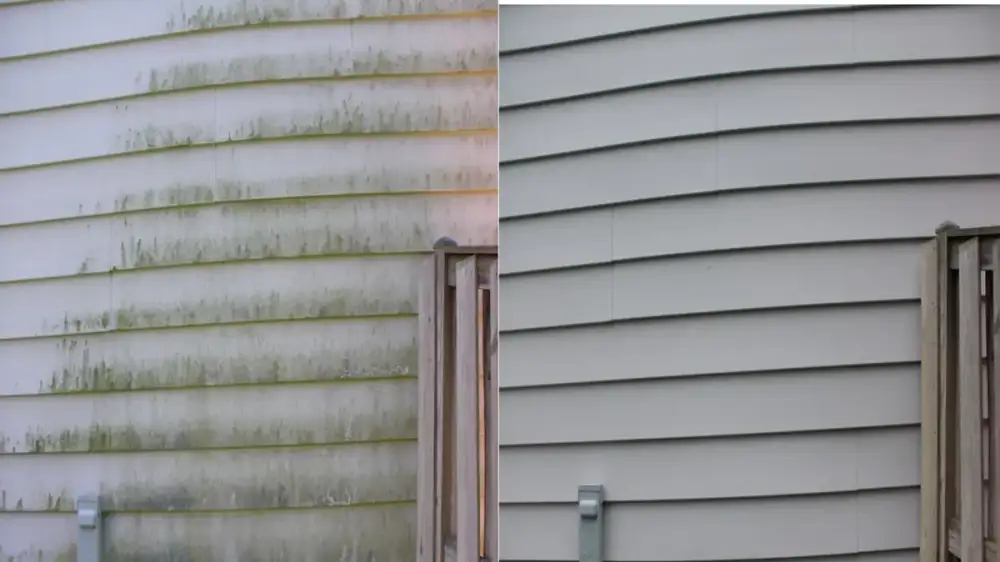
The same force that strips dirt can crack panels, peel paint and push water into the wall. Here's how siding gets damaged — and the safer way to clean it.