Best Gutter Guard Types for Heavy Rain
In a downpour, some guards let water through cleanly and others send it sheeting over the edge. Here's how each type handles heavy rain — and what to expect realistically.

In heavy rain the guards that cope best are clean micro-mesh and open screens, because water drops through a large open area spread across the whole panel. Reverse-curve designs move a lot of water but can overshoot on steep roofs in the fiercest bursts, while foam and brush pass water freely at first but clog with fine debris over time. The catch that no product page mentions: any guard will overflow if its surface mats or if the gutters and downspouts beneath it can't carry the volume. Type matters, but fit, upkeep, and system capacity matter just as much.
Light rain flatters every gutter guard. A drizzle trickles through almost anything, so on a mild day the differences between types stay hidden. It's the downpour that separates them — and that separates realistic expectations from marketing. No guard turns an undersized, debris-choked system into one that swallows unlimited water. But some types pass high volume far better than others, and matching the type to your roof and your rainfall changes how a storm behaves at your eaves.
We don't sell guards, so this is a plain look at what happens when the rain really comes down, and at the limits of what "handles heavy rain" can honestly mean.
Two jobs at once in a downpour
A storm asks a guard to do two things simultaneously: pass a surge of water quickly, and reject the debris riding in with it. A type passes the test when it lets water drop into the trough fast enough while keeping leaves and grit on top — and when the gutter and downspouts below can then carry that water away.
That last clause is the one homeowners forget. A guard can be flowing flawlessly while water still pours over the front edge, simply because the trough is too small or the outlet is blocked. So "best for heavy rain" is never only about the guard; it's about the whole system holding up together. Our overview of how gutter guards work lays out the mechanism each type leans on.
Ranking the types by how they shed volume
Line the types up by raw wet-weather flow and a clear order emerges — along with the specific weakness each one brings to a storm.
| Guard type | Heavy-rain flow | Where it lets you down in a storm |
|---|---|---|
| Screen | Very good | Passes finer debris into the trough |
| Micro-mesh | Good when clean | A matted or filmed surface sheds water |
| Reverse-curve | High volume | Overshoots on steep roofs and hard bursts |
| Foam | Fine at first | Fine debris clogs it and holds water back |
| Brush | Fine at first | Debris lodges between the bristles |
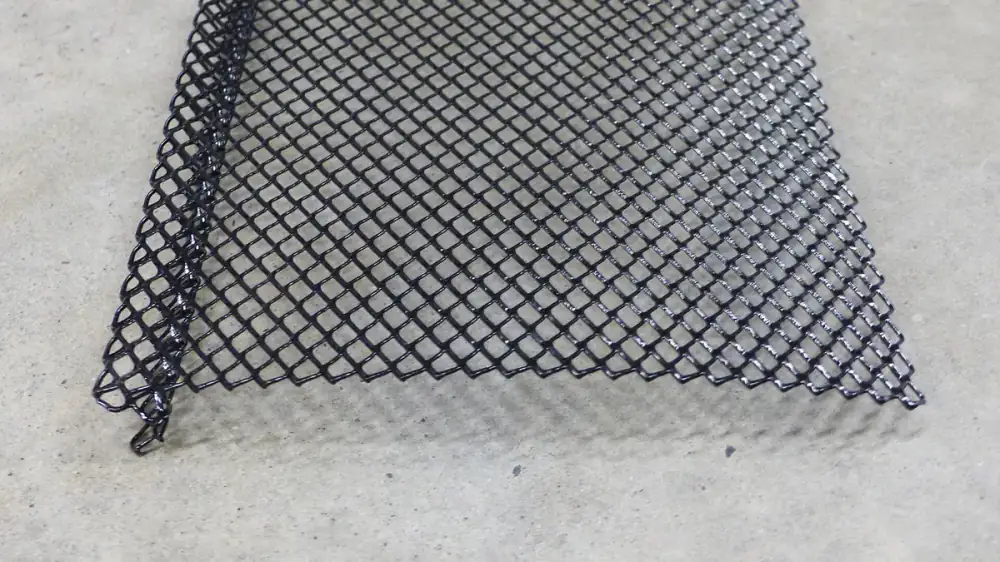
Open screens win on brute volume. Their large openings let water pour straight in, so flow is rarely the problem; the trade is that finer material slips through into the trough and light debris rides on top. Screen gutter guards explained covers where they fit best.
Micro-mesh flows across its entire panel, giving a clean sheet of stainless plenty of open area for a downpour. Its strength is filtering fine debris while still passing water; its weakness is that a grimy or matted surface — pollen, shingle grit, a film of dust — quietly cuts how much water gets through, so neglected mesh can shed water even on a good product. The trade-offs are detailed in micro-mesh gutter guards explained.
Reverse-curve designs guide water around a curved nose into a slot and can move an impressive volume. Their storm weakness is overshoot: on a steep roof or in a violent burst, fast water skips past the opening and launches over the edge. Sizing and installation are everything here — see reverse-curve gutter guards explained.
Foam and brush let water pass through and around them easily, so initial flow is fine. Volume isn't their problem; time is. Fine debris packs into the foam or threads between the bristles, and a clogged insert then holds water back and encourages spillover.
There's no universal champion. A clean micro-mesh or an open screen is the safest general bet for high volume, but your roof pitch, your debris, and your upkeep all shift the answer.
Why the same guard behaves differently on your roof
Take one guard and put it on two different houses and you'll get two different storm performances. A steep roof throws water fast and far, which raises the overshoot risk for surface-tension and reverse-curve designs — mesh and screens that let water drop straight down cope better with that speed. A large roof plane funnels more total volume into the same length of gutter, so even a well-chosen guard gets overwhelmed if the trough and downspouts beneath are undersized. Pitch and roof area are why a guard that a neighbor swears by can disappoint on your house. Match the type to your slope, and remember the guard is one component in a chain.
When overflow isn't the guard's fault
Here's the honest ceiling. A good, clean, well-fitted guard will pass heavy rain and keep most debris out. It will not enlarge an undersized gutter, clear a blocked downspout, or force water through a matted surface. Some spillover in a rare, once-a-season deluge isn't necessarily a failure — it can simply mean the entire system has hit capacity.
When water pours over despite guards, the cause is usually one of a short list: a debris mat on the surface, overshoot on a steep pitch, undersized gutters or downspouts, or a blockage below the guard. Clearing the surface tells you a lot. If overflow keeps happening after that, the problem is fit or capacity rather than debris, and our guide to overflowing gutters causes and fixes helps you narrow it down. Persistent spillover on a high or steep roof, or alongside sagging and fascia stains, is worth a professional's eye on sizing and pitch rather than another climb up the ladder.
The best guard for heavy rain isn't a brand — it's the type matched to your pitch and debris, kept clean, and sitting over gutters and downspouts sized for the water your roof actually sheds. Get those three right and a downpour becomes a non-event. Expect that, not magic.
Questions people also ask
Which gutter guard type is best for heavy rain?
No single type wins for every home, but well-made micro-mesh and open screens generally handle high volume well because water passes straight through a large open area. Reverse-curve guards can move a lot of water but may overshoot on steep roofs in the heaviest downpours. Foam and brush let water through easily but clog with fine debris over time. The best choice balances flow, your debris and your roof pitch.
Can heavy rain overflow gutter guards?
Yes. Any guard can overflow if water arrives faster than it can pass through, if the surface is matted with debris, or if the gutters or downspouts underneath are undersized or blocked. Overflow in a downpour doesn't always mean the guard failed — it can mean the whole system is at capacity. Keeping the guard surface clear and the downspouts open is what gives any type its best chance.
Why does water pour over my gutter guards in a storm?
Usually one of a few reasons: debris matting the surface so water can't get through, a guard that overshoots the trough on a steep roof, undersized gutters or downspouts that can't carry the volume, or a blockage below the guard. A very intense burst can simply exceed what the system was built to handle. Diagnosing which is happening tells you whether it's an upkeep, fit or capacity problem.
Do fine micro-mesh guards restrict water flow in heavy rain?
A quality micro-mesh has enough open area to pass heavy rain when the surface is clean, because water flows across the whole panel. The risk is a matted or dirty surface — pollen, shingle grit or a film of fine debris can reduce how much water gets through, causing overflow. Clean mesh flows well; neglected mesh can shed water. Periodic clearing is what keeps flow up.
Are reverse-curve guards good for heavy rain?
They can move a large volume of water, guiding it around a curved nose into the trough. Their weakness in heavy rain is overshooting — on steep roofs or in very intense bursts, fast water can shoot past the opening and over the edge. Correct sizing and installation matter a lot with these, which is why they're usually a professional install.
When should I call a professional about heavy-rain overflow?
Call a pro when overflow persists after you've cleared the guard surface, when you suspect undersized gutters or downspouts, when the roof is too high or steep to inspect safely, or when you see sagging, leaks or fascia damage. Persistent overflow often points to a capacity or fit issue that needs assessment — not just cleaning. A professional can check sizing, pitch and the guard's suitability for your roof.

Common Gutter Guard Problems
Guards solve some problems and create others. Here are the most common gutter guard issues — overflow, surface debris, ice, poor fit — and how to spot them.

Micro-Mesh vs Screen Gutter Guards
Both block leaves, but only one stops fine grit and pine needles. Here's how micro-mesh and screen guards compare on debris, upkeep and fit.
Do Gutter Guards Eliminate Cleaning?
The honest answer is no. Guards cut how often you clean, not the need entirely. Here's what still gets in and why checks still matter.