Do Gutter Guards Cause Ice Dams?
Gutter guards get blamed for ice dams, but they neither cause nor cure them. The real driver is heat escaping through the roof — and that's true with or without guards.
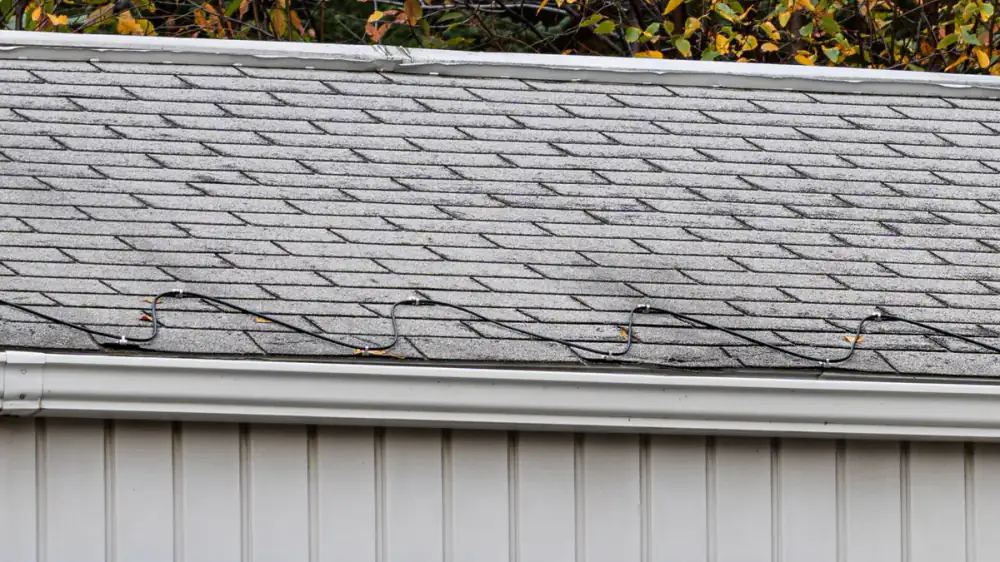
Gutter guards don't cause ice dams, and they don't cure them either. Ice dams form when heat escaping through the roof melts snow that refreezes at the cold eave — a process driven by attic insulation, air sealing and ventilation, not by the gutter or its guard. A guarded gutter can freeze up in the same conditions a bare one would, and a frozen guard can hold a slab of ice, but the guard isn't the origin of the problem. Fixing ice dams is roof-and-attic work.
Stand under a fresh ice dam and the guilty party seems obvious. The ice is heaped right at the gutter, the guard is sitting in the middle of it, and the mind draws a straight line between the two. It's a reasonable-looking conclusion that happens to be wrong. An ice dam is a roof-and-attic event that merely finishes at the eave, and the guard is standing at the scene, not causing it.
Because we don't sell guards, we can treat this as what it is — a question about where heat goes — rather than a reason to push or defend a product.
Trace the ice back to its source
Follow an ice dam upward and you leave the gutter behind almost immediately. The process starts inside the house.
Warm air escaping the living space collects in the attic and warms the underside of the roof deck. That warmth melts the bottom of the snowpack resting on the upper roof, and the meltwater trickles down the slope. When it reaches the eave — the overhang beyond the exterior wall, with no heated room beneath it to keep it warm — the water crosses back below freezing and hardens. Repeat that over days of snow cover and a ridge of ice grows at the edge, pooling water behind it until it works up under the shingles.
The engine of all this is a temperature split: a warm upper roof, a cold lower edge. That split is manufactured in the attic, by heat that shouldn't be up there. Our deeper look at ice dams forming at the roof edge lays out the full mechanics. And notice what never appears in the sequence — the gutter, and the guard. The ice would form on a bare fascia with no gutter at all.
Why suspicion lands on the guard anyway
If guards are innocent, the persistence of the accusation deserves an explanation. Three things keep it alive.
The evidence is all at the gutter. Dams appear at the eave, exactly where the gutter and guard live, so the eye blames the nearest object. It's correlation wearing the mask of cause.
A guard gives ice something to hold onto. A guard adds a broad, roughly horizontal surface at the edge, and in a hard freeze ice can build across it. A guarded eave can therefore look icier than a bare one — but that ice was always going to form at the cold edge; the guard just offered it a grip.
Frozen, a guard is stubborn. Once ice locks around a guard, the whole slab at the eave melts out more slowly than a bare trough might. That lingering, visible ice cements the impression that the guard is the problem long after the thaw begins elsewhere.
Every one of these puts the guard near the crime without making it the criminal. The melt-and-refreeze cycle is running on the roof overhead, powered by heat you can't see from the driveway.
The one caveat worth conceding
Honesty runs both directions, and guards aren't perfectly neutral. In certain conditions a guard can:
- offer a surface for ice to accumulate on, giving a forming dam a little more to build against;
- hold a slab of ice that clears more slowly than a bare trough once everything freezes solid;
- complicate any hands-on ice removal, since you can't reach the trough through a frozen cover.
But "can make an existing dam more stubborn" and "causes ice dams" are different claims. Strip the guard off entirely and the same warm-roof, cold-eave cycle still lays ice at that edge. The guard is, at worst, a minor aggravating factor — never the root. Our companion piece on whether gutter guards work in winter covers what they can and can't do once the temperature drops.
Sorting cause from symptom
Laid side by side, the roles are easy to keep straight — which is the whole point, since mixing them up is the entire mistake.
| Factor | Role in ice dams |
|---|---|
| Attic heat loss (insulation, air sealing) | Primary cause — warms the roof deck |
| Roof ventilation | Primary factor — keeps the deck cold when adequate |
| Snow cover and cold snaps | Trigger conditions |
| Roof design (low slope, complex valleys) | Contributing factor |
| Gutter | Bystander — collects the water, doesn't cause the ice |
| Gutter guard | Bystander — can host ice, doesn't cause the dam |
Prevention lives at the top of that list. The visible ice lives at the bottom. Aim your effort where the cause sits.
Putting the effort where it pays
If you genuinely want fewer ice dams, the work is in the attic and on the roof, not at the gutter line. A well-insulated attic floor keeps living-space heat away from the roof deck, so less snow melts from below. Air sealing the gaps around recessed lights, vent penetrations and the attic hatch cuts the warm-air leaks that feed the melting. And adequate intake-and-exhaust ventilation keeps the deck cold and even, shrinking the temperature difference that drives the whole cycle. These attack the cause; anything at the gutter, guards included, only ever manages the symptom. It's roof-and-attic work, best assessed by a professional who can find where heat is escaping and judge whether the venting is doing its job.
One thing not to do: pull the guards off in January. Removing them won't stop ice from forming over a warm roof, and clawing frozen guards loose from a ladder in the cold trades a non-problem for a real fall hazard. If a specific guard truly seems to be trapping a troublesome ice slab, raise it with a pro rather than attempting a mid-winter removal. For how ice and snow stress the gutters themselves, see how snow and ice damage gutters.
So — do gutter guards cause ice dams? No. They occupy the exact spot where dams show up, which is enough to earn them the blame, and a frozen one can make an existing dam more obstinate. But the cause is heat leaving through the roof, every single time. Judge a guard on what it really does across the year, and spend your ice-dam energy in the attic, where it actually changes the outcome.
Questions people also ask
Do gutter guards cause ice dams?
No. Ice dams form when heat escaping through the roof melts snow, which refreezes at the cold eave — a process driven by attic heat loss, not by the gutter or its guard. Guards don't create that heat imbalance and can't stop it. A guarded gutter can freeze up in the same conditions a bare one would, but the guard isn't the cause. The real drivers are insulation, ventilation and air sealing in the attic.
Do gutter guards prevent ice dams?
No, and any product that claims to should be treated skeptically. Ice dams originate on the roof above the gutter, so nothing at the gutter line can prevent them. Guards keep debris out of the trough, which is useful year-round, but they don't address the roof heat loss that causes ice dams. Preventing dams is about the attic — insulation, air sealing and ventilation — not the gutter.
Can gutter guards make ice dams worse?
In some cases a guard can add a surface for ice to build on, and a frozen guard can hold a slab of ice at the eave that's slow to clear. But it doesn't create the dam — the ice would form at that cold edge regardless. The distinction matters: guards may give ice something to cling to, but they don't cause the melt-and-refreeze cycle that makes a dam. That comes from the warm roof above.
What actually causes ice dams?
Heat escaping into the attic warms the roof deck, melting the underside of the snowpack. That meltwater runs down to the eave, which stays below freezing because there's no living space beneath it, and refreezes into a ridge of ice. The ridge grows and backs water up under the shingles. The whole cycle is driven by the temperature difference between a warm upper roof and a cold eave — an attic problem, not a gutter one.
Should I remove gutter guards in winter to avoid ice dams?
Usually not, since the guards aren't causing the dams. Removing them won't stop ice from forming at a cold eave over a warm roof, and pulling guards off in freezing conditions is risky ladder work for no real benefit. The better response is to address the attic heat loss behind the dam. If a specific guard is trapping a problem ice slab, that's a conversation for a professional, not a mid-winter removal.
Do gutter guards help at all in winter?
Their winter value is the same as any season — keeping debris out of the trough so it drains freely when temperatures are above freezing. A clear trough handles snowmelt better than one packed with frozen leaves. But guards don't stop freezing, ice dams or the weight of ice, so their winter role is modest and unrelated to dam prevention.
How do I actually stop ice dams?
By fixing the roof heat loss that causes them: better attic insulation, air sealing gaps where warm air leaks up, and adequate roof ventilation to keep the deck cold. These reduce the melt-and-refreeze cycle at its source. It's roof and attic work, best assessed by a professional, and it does far more than anything you can do at the gutter line.
Related guides

Common Gutter Guard Problems
Guards solve some problems and create others. Here are the most common gutter guard issues — overflow, surface debris, ice, poor fit — and how to spot them.

Micro-Mesh vs Screen Gutter Guards
Both block leaves, but only one stops fine grit and pine needles. Here's how micro-mesh and screen guards compare on debris, upkeep and fit.
Do Gutter Guards Eliminate Cleaning?
The honest answer is no. Guards cut how often you clean, not the need entirely. Here's what still gets in and why checks still matter.