Do Gutter Guards Work in Winter?
Winter is where gutter guards face their hardest test. Snow, ice and freeze-thaw don't care what's on your gutters — here's what guards actually do when it gets cold.
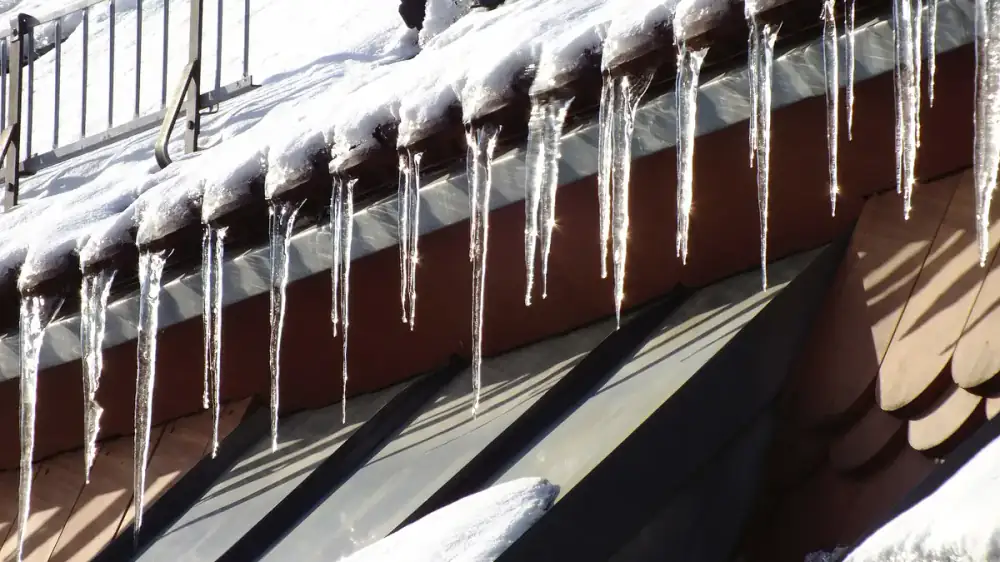
Gutter guards keep doing their debris job in winter, and going into the cold season with a clear, guarded gutter helps by leaving less trapped material to freeze. But guards can't stop water from freezing, and they don't prevent ice dams — those come from heat escaping through the roof, not from the gutter. Snow, ice and freeze-thaw affect a guarded gutter much like an open one, so keep expectations realistic and do all your checking from the ground.
A gutter guard has an easy summer and a hard winter. From spring through fall its assignment is simple and it mostly delivers: keep debris out. Then the temperature drops, water stops behaving like water, and the guard runs into forces no cover was ever built to overcome. Ice expands. Snow is heavy. The freeze-thaw cycle grinds away at everything, day after day, indifferent to what's clipped over the trough.
So the fair answer to "do guards work in winter" isn't yes or no — it's narrowly. They still do their one job, but that job is smaller than the season asks of it. To see where a guard helps, where it doesn't, and where it can even backfire, it's worth starting with what the cold is doing before any guard enters the story.
When water stops cooperating
Winter attacks a gutter through three overlapping mechanisms. Snow piles onto the roof and creeps toward the eave, loading the trough with dead weight and a steady supply of meltwater. Ice forms when that meltwater refreezes, and because ice expands as it hardens, it pries at seams and pushes outward on the trough walls. Freeze-thaw — melting under a midday sun, refreezing after dark — repeats that expansion over and over, and it's this daily grind, more than any single cold snap, that wears the system down.
The worst case in all of this is an open, debris-packed gutter. Trapped leaves hold standing water, that water freezes into a sodden mass, and the frozen weight sags and strains the whole run. That single failure mode is where a guard earns its modest winter keep — and understanding why explains exactly how limited the benefit is.
The head start a guard gives you
A guard's real winter contribution happens before the cold arrives. A gutter that enters the season clear of debris has little material to hold standing water, and less standing water means less ice forming down in the trough. Since a decent guard keeps most leaves and needles out through the fall, a guarded gutter is simply more likely to reach December clean than a neglected open one.
That's a genuine advantage — but look at how indirect it is. The guard never fights the ice. It just declines to add to the problem by keeping the trough clear, the same debris-out role covered in how gutter guards work. A conscientiously cleaned open gutter, emptied late in autumn, would arrive at winter in much the same condition. The guard's help is entirely about what it kept out beforehand, not about anything special it does once the freezing starts.
What a cover can't do — and where it backfires
This is the part the marketing tends to skip. A guard cannot stop water from freezing, and it has no answer for the mechanisms behind the worst winter damage. Ice, snow load and freeze-thaw act on a guarded gutter almost exactly as they act on an open one.
Worse, in some conditions a guard can tip from neutral to unhelpful:
- It can offer ice a surface to build on. Solid or fine-surfaced guards give snow and ice a place to accumulate and bridge across, instead of letting it drop clear of the eave.
- It can trap a frozen mat. A guard blanketed in a soaked leaf or needle mat that then freezes ends up holding a slab of ice in place directly over the gutter.
- It can hide the ice. Ice forming in or under a guard is harder to spot and slower to clear than ice sitting in an open trough.
Whether any of this actually happens depends on the guard type, the quality of the install, and the particular roof. There's no blanket rule — which is precisely why the biggest winter headache of all has to be solved somewhere other than the gutter.
The ice dam question a guard can't answer
Ice dams are the winter problem homeowners most want a guard to fix, and they're the problem a guard is least equipped to touch.
A dam forms when heat escaping through the roof — from a poorly insulated or under-ventilated attic — melts snow on the upper roof. The meltwater runs down to the cold eave, which overhangs the unheated exterior and stays below freezing, and refreezes there. As the cycle repeats, a ridge of ice grows at the edge and backs water up under the shingles. Read that sequence and note the absence: the gutter never appears. The dam is built by the roof and the attic, and a guard has no influence on the heat loss driving it. Any product marketed as an ice-dam solution at the gutter line is overpromising. Real prevention lives in attic insulation and ventilation, and is best assessed by a professional. For how the damage plays out down at the trough, see how snow and ice damage gutters.
Put the pieces together and the honest expectation is a modest one. A guard helps indirectly, by keeping the trough clear going into winter so there's less to freeze. It does not stop freezing, snow load or freeze-thaw, which stress a guarded gutter much like a bare one. It does not prevent ice dams. And depending on type and install, it can even worsen ice buildup a little. A guard is a debris tool that carries a small, sideways winter benefit — not a winter solution.
Watching from the ground
Winter is the single worst time to be on a ladder or a roof, so every bit of your inspecting should happen with both feet on the ground. From there, keep an eye out for the tells: large icicles hanging along the eave, the classic signature of meltwater refreezing at the edge; ice built up on or behind the gutter, or a thick ridge forming at the eave; sections visibly bowing under the weight of snow and ice; water backing up behind the gutter during a thaw and streaking the fascia or siding; and snow that stubbornly refuses to melt at the eave while it clears higher up the roof — the fingerprint of heat loss above.
If you spot these, note them, but resist the urge to act at height. Knocking ice off a gutter, climbing onto a snow-covered roof, or reaching up from a ladder in the cold is genuinely dangerous work. And a few habits make it unnecessary: clear any loaded surface during the last fall check rather than leaving a debris mat to freeze on top — our guide to how to clean gutters with guards covers the technique — and skip the seasonal removal ritual entirely, since pulling guards off and refitting them means ladder work in exactly the conditions you want to avoid, for little gain.
Bring in a professional when ice dams keep returning, when large icicles or ice building behind the gutter appear, when sections sag under snow load, and for any assessment or repair that would put you on a ladder or roof in winter. Ice-dam prevention in particular almost always comes back to attic insulation and ventilation — squarely a pro's domain.
So, do gutter guards work in winter? They keep doing their debris job and carry a quiet head start into the cold by keeping the trough clear. But they don't beat ice, snow or ice dams. For those, the answer was never on top of your gutters — it's up in your roof and attic.
Questions people also ask
Do gutter guards work in winter?
They keep doing their debris job, but winter tests them hard. In cold weather guards mostly help by keeping the trough clear of debris going into the season, so there's less trapped material to hold water and freeze. What they can't do is stop water from freezing — snow, ice and freeze-thaw affect a guarded gutter much as they do an open one.
Do gutter guards prevent ice dams?
No, not on their own. Ice dams form when heat escaping through the roof melts snow that then refreezes at the cold eave — a problem driven by attic insulation and ventilation, not by the gutter. A guard can't stop that cycle. At best a clear, guarded gutter avoids adding trapped debris and water to the mix; it doesn't address the cause.
Can gutter guards make ice dams worse?
They can in some cases. Solid or fine-surface guards can give ice and snow a surface to build on, and a guard packed with a frozen debris mat can hold ice in place. Whether a guard helps or hurts depends on the type, the install and your roof — which is why ice dams are best tackled at their source in the attic, not at the gutter.
Does ice damage gutter guards?
It can. Freeze-thaw cycles expand ice in and around a gutter, and the weight of ice and snow can bend, loosen or distort guards and gutters alike. Fine mesh can be pushed out of shape, and drop-in guards can shift. Heavy ice is hard on the whole gutter system, guard or not.
Should I remove gutter guards for winter?
Usually not — removing and reinstalling guards each season is impractical and means ladder work in poor conditions. The better approach is to go into winter with clean, clear gutters and guards, address ice dams at their source, and watch from the ground. If a specific guard is clearly worsening ice problems, raise it with a professional rather than pulling guards off in the cold.
How do I check gutter guards in winter safely?
From the ground. Look for large icicles along the eave, ice built up on or behind the gutter, sagging sections under snow load, and water backing up behind the gutter during a thaw. Don't climb ladders onto icy roofs or reach up to knock ice off — winter roof and ladder work is dangerous and best left to professionals.

Common Gutter Guard Problems
Guards solve some problems and create others. Here are the most common gutter guard issues — overflow, surface debris, ice, poor fit — and how to spot them.

Micro-Mesh vs Screen Gutter Guards
Both block leaves, but only one stops fine grit and pine needles. Here's how micro-mesh and screen guards compare on debris, upkeep and fit.
Do Gutter Guards Eliminate Cleaning?
The honest answer is no. Guards cut how often you clean, not the need entirely. Here's what still gets in and why checks still matter.