Gutter Guards and Pollen
Pollen and fine grit are smaller than almost any guard opening, so they pass straight through or settle on top. Here's what guards can and can't do about spring dust.
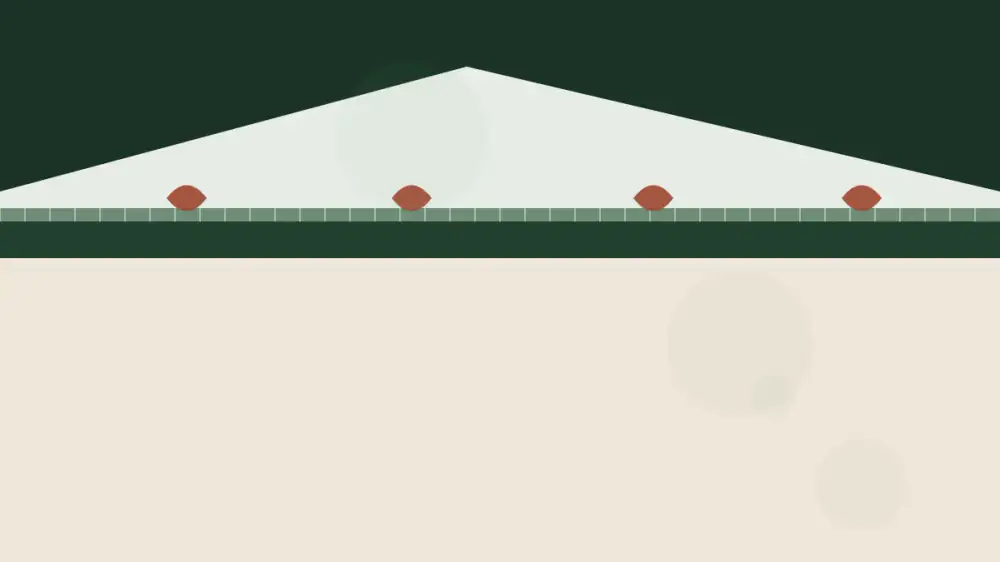
Gutter guards don't stop pollen — the grains are far smaller than any guard opening, including micro-mesh, so pollen washes through into the trough or settles as a film on top. What guards do is keep the coarse debris out, so the fine stuff has less to bind with. The upshot: pollen is mostly a minor, cumulative issue, worth a quick spring check but not a reason to expect a guard to keep dust out.
Ask a gutter guard to stop leaves and it will oblige. Ask it to stop pollen and you've misunderstood the machine. Every spring the yellow haze settles over cars, decks and rooflines, and homeowners with guards reasonably wonder whether the barrier overhead is catching any of it. It isn't, really — and not because the guard is failing. Pollen simply lives on a different scale from anything a guard was ever built to filter.
We don't sell guards, so here's a straight account of what actually happens to pollen on a guarded gutter, why the guard type matters less than you'd guess, and the modest upkeep spring adds.
It comes down to scale
A gutter guard sorts debris by size. It puts a barrier between the trough and whatever falls on it, and anything larger than the openings is turned away. Leaves and twigs are big and stiff, so even a coarse screen stops them easily. Pollen sits at the far opposite end of that scale.
A single grain of pollen is microscopic — smaller than nearly anything a guard is engineered to catch. Even micro-mesh, the finest type made, with openings measured in fractions of a millimeter, has gaps vastly larger than a pollen grain. So when rain hits a dusted roof and runs into the gutter, the pollen travels with the water: through the mesh, through a screen, into the trough and, ideally, out the downspout. It behaves less like debris and more like the water carrying it.
That's the whole thing to internalize. Expecting a guard to keep pollen out is asking a leaf filter to act as a dust filter — a job it was never designed for. For the mechanics behind what a guard does and doesn't screen, our guide to how gutter guards work lays it out.
Two places pollen ends up
Since it isn't being filtered, pollen simply relocates — and where it lands depends on the guard.
The first destination is the trough. With most guards, loose pollen washes straight through with the rain and collects below, favoring low spots and the area around the outlet. Alone it's a harmless dust. Mixed with roof grit and water, it becomes a thin sludge that settles rather than flushing cleanly away.
The second is the surface. On a fine guard like micro-mesh, a heavy drop during a dry spell can film the top of the mesh before any rain arrives to rinse it. If that mesh already carries a mat of fine debris, the pollen pastes onto it and can slow drainage until it's cleared.
So finer guards keep the trough cleaner but can film on top, while coarser guards stay clear on top but let more settle below. Neither blocks the pollen itself — they only decide where the fine residue collects.
| Guard type | Through to the trough? | Film on the surface? | Spring note |
|---|---|---|---|
| Micro-mesh | Mostly rinses through | Yes, can film when dry | Rinse the top after a heavy drop |
| Screen | Falls straight through | Little | Check the trough, not the top |
| Reverse-curve | Rides water into the slot | Some on the nose | Usually self-rinses in rain |
| Brush | Settles among bristles | Coats the bristle tops | Fine sludge lingers in bristles |
| Foam | Absorbs into the surface | Films the top | Holds fine dust and moisture |
The help a guard still gives
None of this means a guard is useless in spring — its contribution is just indirect. By keeping leaves, twigs, seed pods and coarse grit out of the trough, a guard removes the bulk material pollen would otherwise bind to and clog around. Pollen in a trough full of rotting leaves makes a thick paste; pollen in an otherwise clean trough is a thin film that largely rinses away. The benefit isn't stopping the dust — it's keeping the channel clear enough that the dust finds little to cling to.
That's the same reduction principle behind guards in general: they make the maintenance smaller, not nonexistent. Our look at what gutter guards don't do covers exactly where that line falls.
Wet spring, dry spring
Pollen doesn't trickle in evenly — it arrives in a concentrated burst, and the weather during that burst decides how it behaves. A wet spring is the easy case: frequent rain rinses pollen through the guard and down the trough before it can build, and any yellow film between showers clears with the next one. A dry, dusty spring is the trickier one. Without rain to carry it through, pollen accumulates as a film on the guard surface — most visibly on micro-mesh — and settles as dust in the trough, and the first heavy rain after the dry spell can wash a slug of it through all at once. Trees close overhead amplify everything; a home ringed by oaks, birches or pines in bloom takes a far heavier load than an open lot, so the film builds faster and the seasonal look matters more.
A five-minute spring look
Treat pollen as one item on a normal spring check rather than a chore of its own. From the ground, a few things tell you it's building up: a persistent yellow film that won't rinse off after rain; water sheeting over the front edge in a shower while the trough stays dry, which points to a filmed micro-mesh surface shedding water; a fine, pasty residue in the trough or washing from the downspout after the first rain; slower drainage from a section under a heavily blooming tree; and staining on the fascia below a spot that keeps overflowing.
The response is light. A rinse of the surface after the heaviest drop usually keeps things moving, and the trap to avoid is letting a pollen-and-grit film sit through several dry springs until it cements — that's when a quick rinse turns into a real cleaning. With coarse guards, remember the trough even when the top looks clean, since what fell through settles as sludge down there.
One caution on access: a filmed guard on a second-story run tempts exactly the kind of overreaching from a ladder that causes falls. If the roof is high, steep or complex, or safe access is out of reach, that's the point to bring in a professional, who can rinse the surface, flush a trough that's collected a season of fine sludge, and judge whether a filmed section needs a proper clean. For how a spring look fits your wider routine, see how often to clean gutters and how to clean gutters with guards.
Pollen is the debris a guard can't catch, and that's fine — catching it was never the job. What a guard does is keep the trough clear enough that spring dust has little to cling to. Treat it as a quick seasonal check rather than a failure of the guard, and pollen stays the minor, mostly cosmetic issue it usually is.
Common questions
Do gutter guards keep pollen out?
Not really. Pollen grains are far smaller than the openings in any guard, including micro-mesh, so most of it either passes straight through into the trough or settles as a fine film on top. Guards are built to block leaves and twigs, not dust-sized particles. What a guard does do is keep the coarse debris out, so the pollen that gets through has less to bind with and clog around.
Does micro-mesh stop pollen?
Micro-mesh has the finest openings of any guard, but they're still much larger than a single pollen grain, so loose pollen washes through with rain. What micro-mesh does is stop the fine grit and organic dust that pollen mixes with — so less sludge forms in the trough. In a wet spring the pollen largely rinses through; in a dry, dusty one it can film the mesh surface and needs a rinse.
Why does pollen matter for gutters at all?
On its own, pollen is harmless dust. The problem is what it becomes when it mixes with rain, roof grit and the film left by any debris on top of a guard — a fine sludge that can settle in low spots of the trough or paste onto a mesh surface. Over a heavy pollen season that thin layer builds, which is why spring is a good time to check guarded gutters rather than assume they're handling everything.
Do I need to clean guards during pollen season?
A quick spring check is worth it. Guards reduce cleaning, they don't end it, and pollen season adds a fine film that coarse-debris guards were never meant to stop. From the ground, watch for a yellow film on the guard surface and check that water still drains through in rain. A light rinse of the surface after the heaviest pollen drop usually keeps things moving.
Can pollen clog a gutter guard?
Pollen alone rarely clogs a guard, but combined with fine grit and pre-existing debris it can paste a thin layer onto a mesh surface that slows drainage. This is most likely on a micro-mesh guard that already carries a mat of fine material, where a heavy pollen drop cements the surface. A rinse clears it; the risk is letting it build over multiple dry, dusty springs.
Does the type of guard change how it handles pollen?
Somewhat. Finer guards like micro-mesh stop more of the grit that pollen binds with, keeping the trough cleaner, but they can film on top. Coarser screens let pollen and grit fall straight through, so it collects in the trough instead. No type blocks pollen itself — they just move where the fine sludge ends up, top versus trough.
Is pollen in the gutter a real problem or just cosmetic?
Mostly it's minor, but not zero. A single spring's pollen is largely cosmetic. The concern is cumulative: a fine sludge that settles year after year in a trough that's rarely checked, or a mesh surface that films over and slows drainage. Treated as part of a normal spring check, pollen is easy to stay ahead of.
Related guides

Common Gutter Guard Problems
Guards solve some problems and create others. Here are the most common gutter guard issues — overflow, surface debris, ice, poor fit — and how to spot them.

Micro-Mesh vs Screen Gutter Guards
Both block leaves, but only one stops fine grit and pine needles. Here's how micro-mesh and screen guards compare on debris, upkeep and fit.
Do Gutter Guards Eliminate Cleaning?
The honest answer is no. Guards cut how often you clean, not the need entirely. Here's what still gets in and why checks still matter.