Gutter Splash Guards and Diverters: When You Need Them
At inside corners and roof valleys, water can hit the gutter fast enough to leap right over the front edge. Splash guards and diverters are the small parts that keep it in the trough.
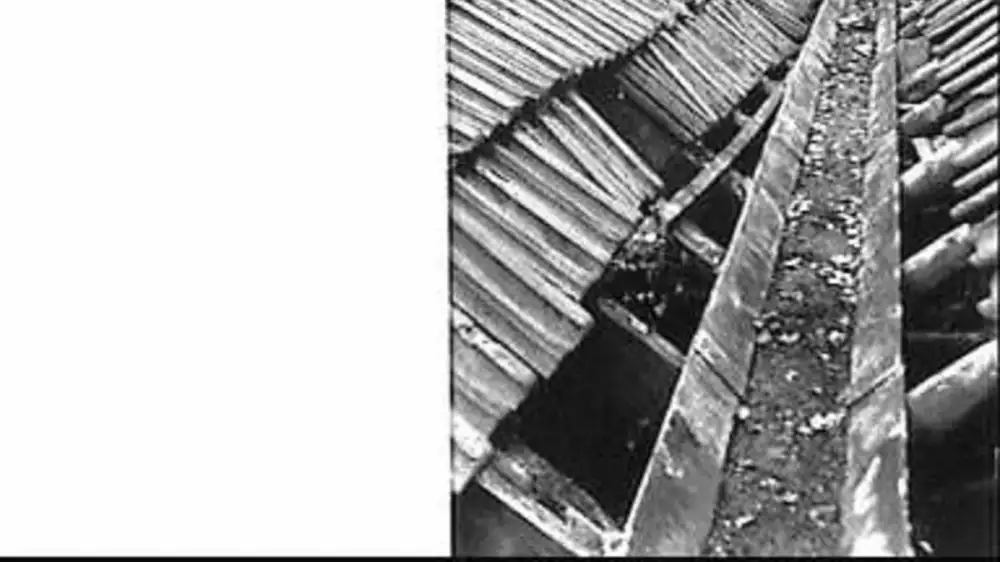
Splash guards and diverters solve one specific problem: water arriving at the gutter too fast and too concentrated to stay in the trough. Where a roof valley funnels runoff into an inside corner, the stream can leap right over the front edge in heavy rain. A splash guard is a small raised strip on the gutter that catches it; a diverter redirects the water up in the valley. You need them only at those specific overshoot points — not along the whole run.
Rain doesn't fall onto a roof evenly and leave evenly. Most of the roof sheds a gentle, spread-out trickle that dribbles off the eave and drops politely into the gutter. But every roof also has valleys — the long creases where two sloping planes meet — and a valley behaves nothing like the open field of shingles around it. It gathers runoff from a wide swath of roof and funnels it into a narrow channel, so what leaves the bottom of a valley isn't a trickle but a jet: fast, focused, and aimed. When that jet lands at an inside corner of the gutter during a real downpour, it can carry enough momentum to sail straight over the front lip and out the other side.
That single, oddly specific failure is the entire reason splash guards and diverters exist. They won't help a tired, clogged, or badly pitched gutter. But at the exact spot where a valley is overpowering the trough, they fix an overflow that no amount of cleaning ever could.
Two parts, one problem, different addresses
Splash guards and diverters get filed together because they cure the same symptom, but they do it from opposite ends of the water's path — one at the finish line, one further back.
The guard that catches the overshoot
A splash guard is a short raised strip, usually a bent piece of metal, fastened to the outer edge of the gutter right where the fast water lands. Picture a low retaining wall built onto the front lip. The valley's jet slams into it, sheds its forward momentum, and drops down into the trough instead of clearing it. It's a blunt, reactive fix, and it works because it meets the water at the last possible moment.
The diverter that breaks up the jet
A diverter works upstream, inside the roof valley itself. Typically a piece of flashing or an angled strip, it nudges and spreads the water's path before the stream ever reaches the gutter's edge, defusing the concentrated jet at its source rather than blocking it at the end. Because it acts earlier, its whole effectiveness rides on being placed correctly in the valley.
The two are not rivals. On an especially punishing valley, a diverter up top to break the stream and a splash guard at the corner to catch whatever's left can be paired to good effect.
| Splash guard | Diverter | |
|---|---|---|
| Where it sits | On the gutter's front edge | Up in the roof valley |
| How it works | Blocks fast water from overshooting | Redirects the water's path earlier |
| Best for | A corner that overflows in hard rain | A valley dumping a concentrated stream |
| Main drawback | Can trap debris at the corner | Depends on correct placement in the valley |
The signature of an overshoot problem
These are targeted repairs, not general upgrades, so the whole game is confirming you actually have the problem they solve. The tell is a very particular pattern of overflow, and you can read it from the ground during a heavy, steady rain without touching a ladder. Watch the roof valleys and the ground beneath the inside corners, and look for the following combination:
- A stream visibly jetting out of a valley and clearing the gutter's edge, rather than water lipping gently over.
- Overflow that is localized to one corner while the rest of the run stays calm — the strongest single clue.
- A bare, eroded, or persistently wet patch of ground directly below that corner, where the leaping water keeps landing.
- Splash staining on the siding near where a valley meets the roof edge, from water hitting the wall instead of the trough.
There's one especially decisive version of this. If the corner spills in hard rain even though the gutter is demonstrably clean — it flushes and drains freely when you test it — then you're not looking at a blockage at all. A free-flowing gutter that still "overflows" at one spot is the clearest possible sign that the water is overshooting, and that a guard or diverter is the right answer. The same rain-watching approach underpins most gutter diagnosis; there's a fuller walkthrough in how to inspect your gutters.
When it's a different problem wearing the same disguise
The most important skill here is knowing when not to reach for these parts, because a lot of overflow that looks similar has nothing to do with overshoot.
If the whole run spills rather than one corner, the cause is almost certainly a clog, an undersized gutter, or poor pitch — and the place to start is overflowing gutters: causes and fixes, not a splash guard bolted onto a corner. Scattering guards along an ordinary stretch of gutter "just in case" accomplishes nothing except giving leaves and pine needles a new ledge to pile against. And that debris trade-off is real even where a guard belongs: a raised strip at a corner naturally catches falling debris, so if you skip cleaning you've quietly built yourself a little dam. Keeping to your usual cleaning schedule is what keeps a guarded corner from becoming a clogged one.
Deciding what you can handle and what you can't
Diagnosing all of this is genuinely a ground-level job that anyone can do with a rainy afternoon and a bit of patience. Installing the fix is a different matter, because both parts live at the roof edge and up in the valleys — the two places where height and shaky footing turn a simple task into a real hazard. It's worth handing the installation to someone equipped for the roof when:
- the work means getting onto the roof or reaching well up into a valley to seat the part;
- the overshoot is severe enough to call for a diverter, since a diverter only works if it's placed correctly in the valley;
- you can't tell whether the trouble is overshoot or something underlying, like bad pitch, undersizing, or a fault in the downspout drainage;
- or the corner also shows water getting behind the gutter or soaking into the fascia, which points to a larger problem than overshoot alone.
Splash guards and diverters are small, inexpensive parts that punch well above their weight — but only when they're aimed at the exact problem they were made for. Confirm the overshoot from the ground, keep the guarded corner clear, and leave the up-high work to someone who can get there safely.
Frequently asked questions
What is a gutter splash guard?
A splash guard is a small raised strip — usually metal — attached to the outer edge of a gutter at a spot where water arrives fast, typically an inside corner beneath a roof valley. It acts like a low wall that keeps the concentrated stream from shooting over the front lip instead of flowing into the trough.
What's the difference between a splash guard and a diverter?
A splash guard sits on the gutter and keeps fast-moving water from overshooting it. A diverter is a flashing or strip fitted up in the roof valley itself, redirecting the water's path before it reaches the edge. They solve the same overshoot problem from two different positions, and are sometimes used together.
How do I know if I need a splash guard?
Watch the roof during heavy rain. If you see water jetting out of a valley and leaping over the gutter at an inside corner — usually with a wet stripe or eroded patch on the ground below — that's the classic sign. A gutter that overflows only at one corner, and only in hard rain, is a strong candidate.
Do splash guards cause clogs?
They can trap leaves and needles at the corner if the gutters aren't kept clear, since debris tends to collect against the raised edge. That's not a reason to skip them where they're needed — it's a reason to keep up with cleaning so the guarded corner doesn't become a dam.
Are diverters and splash guards a DIY job?
The parts themselves are simple, but they live at the roof edge and in valleys, which means height and safe access. Diagnosing the need is easy from the ground; installing them safely often is not. Where the work means getting onto or reaching well up the roof, it's best left to a pro.
Will a splash guard fix a gutter that overflows everywhere?
No. Splash guards fix a very specific problem — water overshooting at a concentrated point like a valley or inside corner. If a whole run overflows, the cause is usually a clog, undersized gutter or bad pitch, and a splash guard won't address any of those.
Related reading

How Trees Affect Gutter Maintenance
Leaves, pine needles, seed pods and shade each create a different gutter problem. Here's how tree cover reshapes your maintenance schedule.
Why Water Runs Behind Gutters
A missing drip edge, a gutter hung too low, or an overflowing clog — these three causes explain most water that ends up behind the gutter.
Signs Gutters Need Repair Instead of Cleaning
Sagging runs, leaking seams, loose hangers and standing water are repair problems, not cleaning problems. Here's how to tell them apart.