Why Gutters Sag and What to Do About It
A sagging gutter is almost always carrying weight it was never meant to hold. Here's what causes the dip, why it makes overflow worse, and how the fix depends on what's underneath.
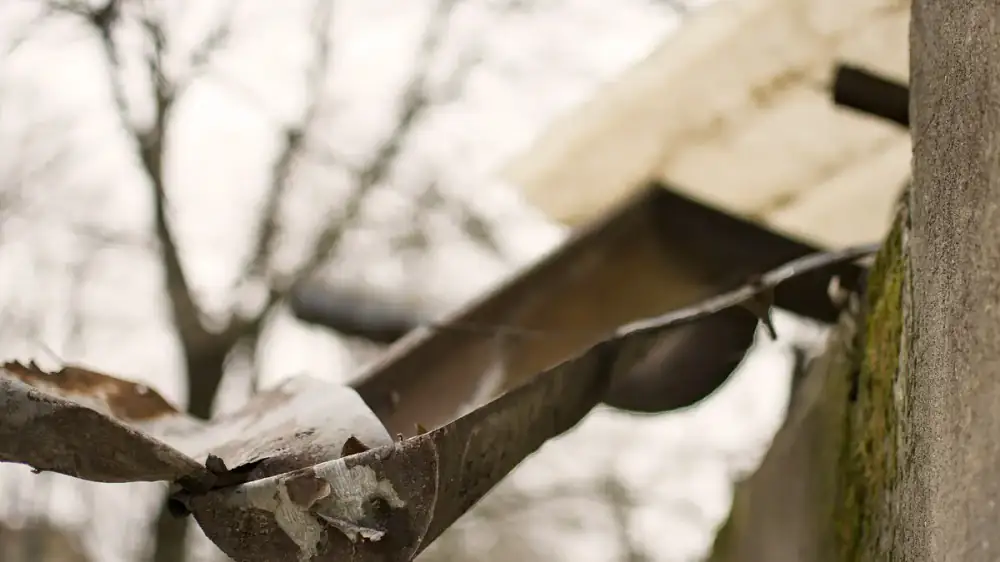
Gutters sag when a run carries more weight than its hangers or the fascia can hold — usually from trapped debris and standing water, too few or failed hangers, or wood rot behind the gutter. The lasting fix is to clear the weight and re-hang the run into sound fascia, adding hangers where needed. If the fascia is rotted, that has to be repaired first.
A dip in a gutter looks like a small cosmetic flaw, the kind of thing you notice and then forget. What makes it worth a second glance is that a sag is rarely the problem itself; it's the visible middle of a slow chain reaction. The dip collects water, the water adds weight, the weight deepens the dip, and if nothing interrupts the cycle the run eventually tears away from the house. Every worthwhile fix starts by figuring out what set the loop in motion, because that, not the dip you can see, decides how much work the repair really is.
The weight a gutter was never built to hold
At bottom, every sag is a loading problem: something is asking the run to carry more than it was designed to, and it gives way at its weakest point. That "something" is usually one of four culprits, and often a couple of them working together.
The most common is trapped debris and the sheer weight of water. Leaves, grit, and pine needles pack into the trough and hold water that should have drained off. Water is deceptively heavy, and a long stretch of clogged, water-logged gutter drags hard on the hangers until the run bows. Keeping the trough clear removes that load before it ever becomes damage, which is the quiet argument for a dependable cleaning schedule.
Then there are the hangers themselves, too few, spaced too far apart, or corroded and worked loose. They're meant to share the load evenly; when some fail, the survivors carry more than their share and the run droops between them. Old spike-and-ferrule fasteners are especially prone to backing out over the years, a failure mode we get into in loose gutter hangers.
The most consequential cause is soft or rotted fascia, the board the hangers screw into. If that wood has gone spongy, often from water that has been overflowing or running behind the gutter for a while, the fasteners lose their grip no matter how many you drive. This is the cause that turns a minor sag into a real project, because the wood has to be sound before anything can hold; overflow is a frequent instigator, as covered in how gutters damage fascia when they overflow and what causes fascia rot. Finally, in cold country, ice and snow pile weight on directly, freeze the trapped water so it expands, and let the freeze-thaw cycle wiggle fasteners loose, which is why a gutter that limped through fall with a load of debris so often sags under the first hard freeze.
The loop between sag and overflow
Sag and overflow aren't two separate problems so much as two phases of one. A gutter is supposed to slope steadily toward the downspout so water never stops moving. A sag punches a low point into that slope, and water pools there instead of draining. Come the next rain, the dip fills and spills over the front lip, so the sagging section and the overflowing section turn out to be the same section. That overflow then soaks the fascia, the fascia softens, the softened wood loosens the hangers' grip, and the sag deepens, closing the circle. The only way to break it is to correct both the weight and the pitch, not simply lift the gutter back into place. The standing-water half of this story lives in standing water in gutters and why pitch matters.
Reading the run from the ground
Reassuringly, most of the diagnosis happens without a ladder. Stand at one end of the run and sight down its length: a healthy gutter reads as a straight, gently sloping line, while a sag shows up as an obvious dip or a wavy profile. Watch it during a rain and the low point announces itself, filling and spilling where the water gathers. After the rain, a puddle standing inside the trough marks a spot that isn't draining. Look, too, at the gap where the gutter's back edge meets the fascia; a run pulling away leaves a widening seam. And scan the fascia below for streaks, stains, peeling paint, or discolored wood, the fingerprints of the overflow that so often travels with a sag, and helps cause it.
Fixing a sag in the right order
Sequence is everything here, because re-hanging a gutter over bad wood only resets the clock.
- Clear the weight first. Pull the debris and let any trapped water drain. A run that looks permanently bent will sometimes recover much of its shape once the load is gone.
- Check the fascia. If the wood behind the hangers is soft or rotted, stop. It has to be repaired or replaced before re-hanging, because fasteners won't bite into compromised wood.
- Re-hang into sound wood. With good fascia in place, re-secure the run and add any missing or failed hangers. Modern hidden hangers spread the load more evenly than old spikes.
- Reset the pitch. As the run goes back up, slope it steadily toward the downspout so no new low point forms.
- Test with water. A hose test confirms the run drains cleanly to the downspout with no pooling left behind.
When it's more than a re-hang
Some sags are past the point where clearing debris will save them, and it's worth knowing the tells. A widening gap between gutter and house, overflow that returns to the same spot every rain, fasteners visibly pulling free or a run hanging at an angle, soft or crumbling fascia you can see or press behind the gutter, and above all a sag that comes right back soon after you've lifted it, are all signs the underlying wood or fastening is the real problem. These sit among the clearer signs your gutters need repair rather than another round of cleaning.
They also mark the line between a weekend fix and a call to a professional. The recurring mistakes cluster on the wrong side of that line: pushing the gutter up and calling it done, adding hangers to rotted fascia, leaving a level or reverse-pitched run to relocate the pooling elsewhere, and ignoring the debris that started it all. The most hazardous of them is reaching or leaning from a ladder to muscle a bent section back into shape, exactly the kind of height work worth handing off. Bring in a professional when the fascia is soft or crumbling, when a run has pulled noticeably away from the house, when the sag returns after you've re-secured it, or when re-hanging and re-pitching call for ladder or roof access you can't manage safely. A sag is one of those problems that only grows more expensive with time: caught while it's still a dip, it's a modest repair; left until the run pulls free and the fascia rots, it becomes a much larger one.
Questions people also ask
Is a sagging gutter an emergency?
Not usually an emergency, but it shouldn't be ignored. A sag means a run is holding weight it wasn't designed for, and it tends to get worse — the low point collects more water, which adds more weight, which deepens the sag. Catching it early often means a simple re-hang rather than replacing a pulled-away section and repairing the fascia behind it.
Can I just push a sagging gutter back up?
Pushing it back into position is only a temporary fix if the underlying cause remains. If the hangers have failed or the fascia is rotted, the gutter will drop again — often quickly. The lasting repair is to clear the weight, then re-secure the run into sound wood, adding or replacing hangers as needed.
Does a sagging gutter cause overflow?
Yes. A sag creates a low point where water pools instead of draining to the downspout. During rain that dip fills and spills over the front edge, so a sagging run and an overflowing run are often the same run. Correcting the pitch and re-hanging the section usually resolves both problems at once.
Why did my gutter sag right after winter?
Winter is hard on gutters. Trapped water freezes and expands, ice and snow add heavy load, and the freeze-thaw cycle works fasteners loose. A gutter that was already carrying debris can sag or pull free under that added weight. Our guide on how snow and ice damage gutters covers this in detail.
Should the fascia be fixed before re-hanging the gutter?
Almost always, yes. Hangers are only as strong as the wood they screw into. If the fascia behind the gutter is soft or rotted, new fasteners won't hold and the gutter will sag again. The fascia has to be sound — repaired or replaced — before re-hanging makes sense. This is a common reason a sag turns into a larger job.
When should I call a professional for a sagging gutter?
Call a professional when the fascia behind the gutter is rotted, when a run has pulled away from the house, when the sag returns after you've re-secured it, or when the repair requires ladder or roof access you can't manage safely from the ground.
Related guides

How Trees Affect Gutter Maintenance
Leaves, pine needles, seed pods and shade each create a different gutter problem. Here's how tree cover reshapes your maintenance schedule.
Why Water Runs Behind Gutters
A missing drip edge, a gutter hung too low, or an overflowing clog — these three causes explain most water that ends up behind the gutter.
Signs Gutters Need Repair Instead of Cleaning
Sagging runs, leaking seams, loose hangers and standing water are repair problems, not cleaning problems. Here's how to tell them apart.