The Warning Signs Homeowners Most Often Miss
The signs that matter most are rarely the dramatic ones. They're quiet, gradual, and easy to walk past — which is exactly why they go unnoticed until the repair gets big.

The exterior warning signs homeowners miss most are the quiet, gradual ones — a faint tide line on the foundation, granules collecting in the splash zone, a downspout that has gone silent in the rain, a soffit a shade darker than it used to be, a gutter sagging an inch a season. They go unnoticed because we tune out slow change, look only in dry weather, and rarely look up. Looking slowly, in the rain, and above eye level is how you catch them.
Ask most people what an exterior problem looks like and they'll describe something dramatic: a gutter hanging off the roof, water pouring down a wall, a shingle in the yard after a storm. Those things happen, and they're easy to act on precisely because they're impossible to ignore. But the problems that quietly do the most damage almost never announce themselves that way. They arrive as whispers — small, slow, and camouflaged by the fact that you see them every single day.
This is a tour of those whispers: the signs that are sitting on your house right now, in plain view, that most homeowners walk past for years. And, just as importantly, why we're so good at not seeing them.
Why the quiet signs are the ones that matter
There's a reason the subtle signals are the valuable ones. Damage moves along a timeline. A dramatic failure — the fallen gutter, the soaked ceiling — is usually the end of a process that began quietly, sometimes seasons earlier. The faint version of a problem is simply the same problem caught earlier, while it's still cheap to fix. So the skill worth building isn't spotting disasters. It's noticing the small stuff that precedes them, which is the heart of reading exterior warning signs.
The catch is that "small and slow" is exactly what the human eye is worst at detecting. We're built to notice sudden change and to edit out anything that looks the same today as it did yesterday. A stain that deepens by a fraction each month never trips the alarm, because on no single day does it look different. That blind spot is where these signs live.
The signs hiding in plain sight
Here are the ones that most reliably get overlooked, and what each is quietly telling you.
The tide line low on the foundation. A faint horizontal band of discoloration or chalky residue near the bottom of a foundation or basement wall marks how high water has risen, again and again. It reads as dirt or age, so it gets ignored — but it's a record of water pooling against the house. If that line is creeping upward over the seasons, it's pointing straight at a drainage problem, the same one behind water pooling near the foundation.
Granules in the splash zone. Look where a downspout discharges, or along the drip line below the roof. A gritty, sand-like accumulation there can be roofing granules washing off aging shingles. From the ground it's only a hint, not a verdict — but it's the kind of hint that tells you to have the roof assessed rather than assume everything overhead is fine.
The downspout that went quiet. Downspouts are supposed to be noisy in a real storm — rushing, gurgling, working. If one that used to roar has gone silent, that's not a sign it's finally behaving. It often means water is backing up behind a clog and spilling somewhere else instead of draining through. Silence is easy to miss because nothing looks wrong; you have to notice an absence.
The soffit a shade darker than it was. The underside of the eaves discolors so gradually that the change is invisible day to day. A soffit slowly going from clean to dingy to faintly stained is one of the earliest signs that moisture is reaching the roof edge — worth catching long before it becomes obvious staining under the eaves.
The gutter with a slight dip. A gutter that has lost its line — sagging a little in the middle of a run, or tipping away from the fascia — sheds water poorly and puts strain on its fasteners. Because it drifts out of true so slowly, the eye accepts the new shape as normal. Sighting along the length of the run, rather than glancing at it, is what reveals the dip. It's one of several easily-missed signs gutters need repair.
The hairline gap at the trim. Where siding meets a window, door, or corner board, a thin gap can open as caulk ages and materials move. It looks like nothing, but it's a doorway for water to get behind the surface, where you can't see what it's doing.
Why we're wired to walk past them
Noticing these signs is less about knowledge than about fighting three natural habits.
The first is habituation. You stop seeing what you see constantly. The stain, the dip, the dingy soffit become part of the house's familiar face, and your brain quietly files them as "normal." This is why a visitor sometimes spots in a second what the owner has missed for a year.
The second is fair-weather looking. Most of us inspect the outside of the house when it's pleasant to be outside — which is to say, when it's dry. But water problems reveal themselves in water. A downspout backing up, a gutter overflowing behind the trough, a wall that sheets instead of shedding: none of it is visible on a sunny afternoon. Ten minutes watching the house in a steady rain shows you more than an hour of dry inspection.
The third is looking at eye level. We scan what's in front of us and rarely tilt our heads up. But the roof edge — fascia, soffits, gutters, the top of the wall — is where a huge share of exterior problems begin. A pair of binoculars turns that whole zone into a ground-level check, no ladder required.
How to actually see them
The fix for all three habits is to change how you look, not how hard.
- Walk slowly, once a month. Not a glance from the driveway — a deliberate lap of the house, looking at each face of it as if you'd never seen it before.
- Look during a rain. Water in motion is the best diagnostic tool you own. Watch where it goes at the gutters, the downspouts, and the base of the walls.
- Look up. Use binoculars to read the roof edge and soffits from the ground.
- Photograph the ambiguous. A dated photo defeats habituation. When you compare this month's picture to last month's, gradual change finally becomes visible — the stain that's a little bigger, the line that's a little higher.
None of this requires tools, height, or expertise. It requires attention paid on purpose, in the weather that matters, above eye level. The dramatic problems will always get noticed; they leave you no choice. It's the quiet ones you have to go looking for — and they're the ones that reward the looking. Very often these subtle signals don't stay solo, either: one quiet failure tends to set off several others, which is why they so often come in clusters.
Questions homeowners ask
Why do homeowners miss the most important warning signs?
Because the important signs are usually subtle and slow. We notice sudden, dramatic change — a fallen gutter, a broken pane — but the eye edits out gradual change it sees every day. A stain that darkens over months, a gutter that sags an inch a year, a downspout that has gone quiet: these hide behind familiarity. We also tend to look only in dry weather and only at eye level, missing the clues rain and the roof edge would reveal.
What is a foundation tide line and why does it matter?
It is a faint horizontal band of discoloration or mineral residue low on a foundation or basement wall, marking how high water has repeatedly risen. It is easy to dismiss as dirt, but it is a record of water collecting against the house. A tide line that creeps higher over time points to a drainage problem worth taking seriously before it reaches anything valuable.
Should I worry about roofing granules in the splash zone?
They are worth noticing. A few granules washing down is normal, especially on a newer roof shedding loose material. But a steady accumulation of gritty, sand-like granules where the downspout discharges can indicate shingles wearing down. From the ground it is only a clue, not a diagnosis — but it is the kind of quiet signal that tells you to have the roof looked at rather than assume all is well overhead.
Why is a quiet downspout something to check?
Because downspouts are supposed to carry water, and moving water makes noise in a storm. If a downspout that used to gurgle and rush in heavy rain has gone silent, water may be backing up behind a clog rather than flowing through. The silence is easy to miss precisely because nothing is obviously wrong — but it often means water is spilling somewhere it shouldn't instead of draining as intended.
How often should I look for these subtle signs?
A slow walk around the house once a month catches most of them, and a look during a steady rain catches the rest, because water in motion reveals problems that a dry inspection hides. Photographing anything ambiguous and comparing month to month turns a vague impression into a clear before-and-after, which is how gradual change finally becomes visible.
Are subtle signs less urgent than obvious damage?
Often the opposite. By the time damage is obvious — a sagging soffit, a soaked wall — the underlying problem has usually been at work for a while. The subtle signs are earlier in the timeline, which makes them more valuable, not less. Catching a problem while it is still quiet is exactly what keeps a repair small.
Related guides

Why Green Growth Keeps Returning on Siding
Algae and mold return because cleaning removes the growth but not the shade and moisture that feed it. Fixing those conditions is what makes it stop.
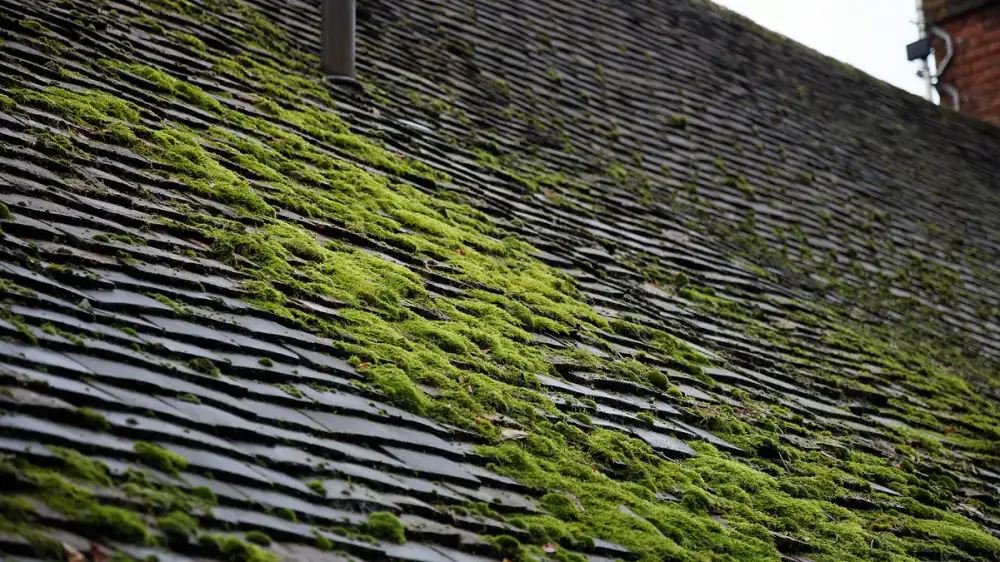
Moss Growing on the Roof: What to Do
Moss takes hold on shaded, damp roof sections and holds moisture against the shingles — but removing it from the roof is risky work for a professional.

Efflorescence: The White Residue on Brick
The white powder on brick is efflorescence — mineral salts drawn to the surface by moisture moving through the masonry and left behind as water evaporates.