Paint Bubbling on Soffits
Blistering paint under the roof overhang almost always means one thing: moisture is getting behind the coating. Repainting won't hold until you find where the water is coming from.

Paint bubbles on soffits when moisture gets trapped behind the coating and pushes it off the surface. The water usually comes from a roof-edge leak, gutter overflow, or humid air trapped in a poorly ventilated overhang. Repainting alone won't hold — the lasting fix is to find and stop the moisture source, let the wood dry fully, and only then prepare and repaint.
The soffit is the flat underside of your roof overhang, and by design it should be one of the driest parts of the whole exterior. It sits tucked back from the rain, shaded, and out of the weather. So a blister forming up there carries a specific message: water is reaching a surface that is supposed to stay dry. The blister itself is trivial. What it announces is not.
What a blister is actually telling you
Think of the paint film as a thin, waterproof skin. It seals the outside of the wood and it works beautifully as long as the wood behind it stays dry. The trouble starts when moisture arrives from the other direction — soaking into the wood, then trying to evaporate back out. It can't pass through the paint, so it lifts it instead, doming the film into a bubble. Every blister on a soffit is a small pocket where the coating lost its grip because the wood underneath got wet.
That single idea reframes the whole problem. You are not looking at a paint that failed; you are looking at wood that couldn't stay dry. Once you accept that, the shopping trip for a better paint gets postponed, and the search for the water begins.
Tracing the water to its source
Overhang moisture tends to arrive by one of a few routes, and the location of the bubbling usually narrows it down.
The most common is drainage gone wrong at the roof edge. A gutter that overflows, leaks at a seam, or backs up behind itself sends water spilling toward the fascia and soffit instead of carrying it away. Bubbling clustered beneath a specific gutter joint or a section that stays clogged points straight here. Our piece on gutters that leak at the seams covers one frequent version of that spill.
Next is a leak higher up at the roof edge — failing flashing, worn shingles at the eaves, or a compromised drip edge. Water entering there can run along the underside of the roof deck and surface at the soffit some distance from where it got in. A localized patch of blisters directly below a suspicious spot often traces back to this.
Then there is the quieter cause: trapped humidity. Soffits usually house the intake vents that let outside air flow up into the attic. When that airflow is blocked or the attic is running humid, moist air condenses against the cool surfaces in the overhang and attacks the paint from behind. Our explainer on how soffit ventilation is meant to work helps you separate this from a drainage problem.
Two smaller contributors round it out. Paint applied over wood that was already damp, or without a proper primer, never bonds well and lifts early — which is why a rushed repaint over a still-wet soffit fails so quickly. And direct heat and sun on an already-damp overhang accelerate the whole process by expanding the moisture caught under the film. Heat rarely acts alone, but it speeds up bubbling wherever dampness is already present.
Reading the evidence from the ground
You can gather nearly everything you need standing on the ground and looking up, which is exactly where you should stay. Probing the wood or getting up near the roof edge is a job for someone equipped to work at height.
Start by mapping the pattern. Is the bubbling one contained patch or spread across the whole overhang? Note what sits directly above it — a valley, a gutter seam, a downspout. Then watch the roof edge during a rain: look for overflow, drips sneaking behind the gutter, or water sheeting onto the soffit. Bubbling that lines up under a particular joint or clogged run is telling you where water is escaping.
Look, too, for staining alongside the blisters. Discoloration suggests repeated wetting rather than a one-time event. Factor in exposure as well — a shaded, slow-drying overhang, or one on the weather side of the house, holds moisture far longer than a sunny, breezy one. The whole exercise is about connecting the blisters to a water source you can actually see, not climbing up to investigate.
Fixing it in the right order
The durable repair always begins with the water and ends with the paint. Reverse that order and you'll be back with a scraper by next season.
Stop the moisture first. If a gutter is overflowing or leaking, correct it so water drains away from the fascia and soffit. If a roof-edge leak is feeding the area, that repair comes before any paint touches the wood. It's worth remembering that unmanaged roof water causes trouble well beyond the overhang — see how water pools near the foundation when drainage isn't handled.
Restore airflow if humidity is the driver. Clearing blocked soffit vents and improving attic ventilation gives trapped moisture a way out instead of letting it condense behind the coating.
Let the wood dry completely. Once the source is handled, the overhang needs real time to dry before anything goes on it. Painting over damp wood simply restarts the cycle you just interrupted.
Then, and only then, prep and repaint. Scrape off the loose and blistered paint, sand back to a sound surface, prime the bare wood, and finish with an exterior coating. With the moisture gone, this is the coat that finally holds.
A few instincts are worth resisting along the way. Don't reach for a stronger primer or "better" paint as a shortcut — no product bonds to wood that's wet from behind. Don't paint over damp or stained wood, and definitely don't seal the soffit vents shut to keep water out; blocking the intake traps humidity and makes everything worse. Above all, don't wrestle with roof-edge or upper-story soffit work from a wobbly ladder. Height and roof access carry real fall risk and are best left to a professional.
When the problem is bigger than paint
Some situations have outgrown a homeowner fix. If the bubbling traces to a roof-edge or flashing leak, if the soffit or fascia wood feels soft or looks deteriorated, or if the overhang is on an upper story out of safe reach, bring in a pro. Roof-edge diagnosis, flashing repair, and any work near the roof itself belong with someone set up to do it safely.
Persistent overhang moisture rarely stays put, either. It tends to reach the fascia hidden behind the soffit, which is why fascia rot so often travels alongside blistering paint. And if the soffits are darkening as well as bubbling, the related symptom of dark stains on the soffits usually points back to the same water. If your paint troubles reach past the overhang and onto the walls, the moisture-first logic in exterior paint that keeps peeling applies on a larger scale, too — same principle, bigger surface.
Common questions
Why is the paint on my soffits bubbling?
It's almost always moisture. Water or water vapor works its way behind the paint film and pushes it off the wood, forming blisters. That moisture typically arrives from a leak at the roof edge, water spilling out of the gutter, or humid air trapped in an overhang that can't breathe. The paint is only reporting the problem, not causing it.
Can I just scrape and repaint the bubbled areas?
You can, but if the moisture source is still active the fresh coat will blister again, often within a single season. Repainting is the last step, not the first. Find and stop whatever is wetting the wood, let everything dry out, then prep and repaint. Skipping the diagnosis is exactly why so many soffit repaints fail so fast.
Does bubbling paint mean the wood underneath is rotting?
Not automatically, but ongoing dampness is precisely what leads to rot. Bubbling is an early flag that the wood is getting wet. Catch it soon and dry things out and the wood may be perfectly sound. If the moisture has lingered for a long time, the surface beneath can be soft, stained, or breaking down, which is worth inspecting once the paint comes off.
How does gutter overflow cause soffit paint to bubble?
When a gutter overflows or leaks, water spills back toward the fascia and soffit instead of draining away. That water soaks into the overhang and creeps behind the paint. If the bubbling lines up beneath a gutter seam, a clogged run, or a downspout, drainage is the likely culprit, and fixing the overflow usually matters far more than any amount of repainting.
Can poor attic or soffit ventilation cause paint to bubble?
Yes. Soffits often carry the intake vents that feed the attic. If warm, humid air is trapped in the overhang or attic with no way out, that moisture condenses against cool surfaces and collects behind the paint. Here the fix isn't just drying the outside, it's restoring airflow so the humidity has somewhere to go.
Is bubbling paint on soffits an urgent problem?
Not an emergency, but not something to shrug off either. Bubbling means moisture is reaching the wood, and left alone that path leads to peeling, staining, and eventually rot in the soffit and fascia. Handling it while it's still just paint is far cheaper and simpler than dealing with deteriorated wood at the roof edge later.
Why does the paint keep bubbling even after I repaint?
Because the water is still getting in. Paint only bonds to a dry, sound surface. If moisture keeps reaching the wood from a leak, overflow, or trapped humidity, it will push any new coat off just as it did the old one. Recurring blisters after a repaint are the clearest possible sign the real problem is water, not paint.
Keep reading

Why Green Growth Keeps Returning on Siding
Algae and mold return because cleaning removes the growth but not the shade and moisture that feed it. Fixing those conditions is what makes it stop.
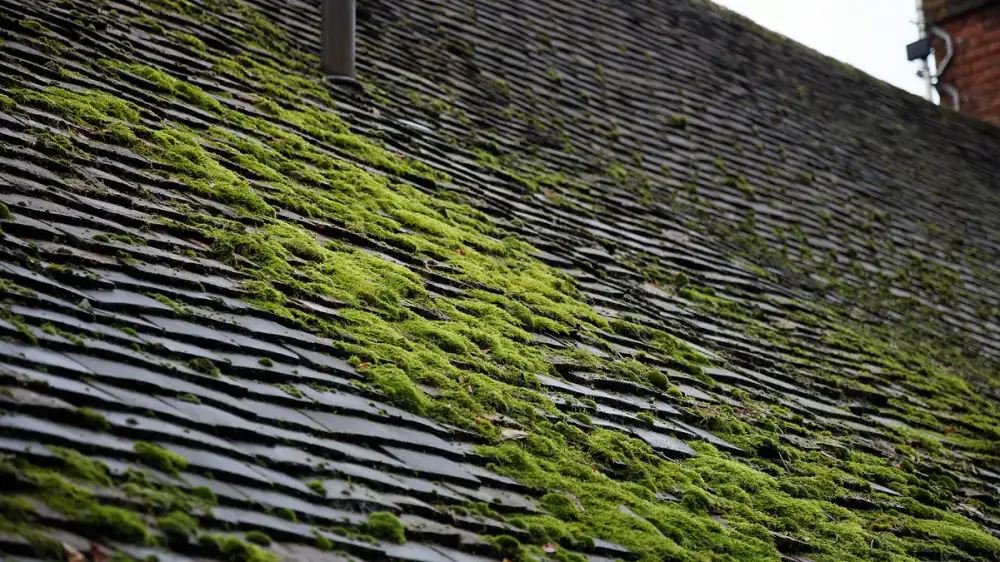
Moss Growing on the Roof: What to Do
Moss takes hold on shaded, damp roof sections and holds moisture against the shingles — but removing it from the roof is risky work for a professional.

Efflorescence: The White Residue on Brick
The white powder on brick is efflorescence — mineral salts drawn to the surface by moisture moving through the masonry and left behind as water evaporates.