Paint Won't Stick to the Fascia
When fresh paint peels off the fascia within a season, the paint isn't the problem — the wood is wet, and it's usually getting wet from behind.
Paint won't stick to the fascia because the board is getting wet from behind, and paint can't grip wood it can't stay bonded to. The moisture almost always comes from the roof edge just above — gutter overflow, water running behind the gutter, or poor drainage — not from a bad paint job. Repainting without fixing that source just repeats the failure; find and stop the water first, dry and repair the wood, then paint.
You painted the fascia. It looked crisp for a few months. Then it started blistering and flaking, and the temptation is to blame the paint, the brand, or your own brushwork. Set all of that aside, because fascia paint failure is one of the most reliably misdiagnosed problems on the outside of a house. The coating is almost never the villain. The villain is water — specifically, water reaching the board from a direction paint was never designed to defend against.
Why the fascia takes more abuse than any other trim
The fascia is uniquely exposed. It's the long, flat board running the length of the roof edge, and on most homes it's the very board the gutters are bolted to. That single fact drops it into the path of nearly every drainage problem a roof edge can produce. Rain sheets off the roof past it. Gutters hang from it, funneling everything the roof collects along its face. Any water that misbehaves up there tends to land on — or slip behind — the fascia before it lands anywhere else. No other painted surface on the house sits in a spot that consistently wet, which is why the fascia is where a coating first gives up.
A coat of paint is essentially a skin: it bonds to a dry surface and shields it from weather coming at it from the outside. What it categorically cannot do is cling to wood that's damp underneath. When moisture soaks into a board and then tries to escape, it presses outward against the film and lifts it — in bubbles, in blisters, in sheets. The paint didn't fail because it was cheap. It failed because it was asked to seal in a problem it had no chance of beating. Understood that way, "the paint won't stick" is really "the wood won't stay dry."
The usual routes water takes to the board
Gutter overflow, and water running behind the gutter. This is the leading cause and the first thing to check. An overflowing gutter spills water straight down the face of the fascia. Worse, when water runs behind the gutter — often because drainage is failing at the back edge — it soaks the hidden back of the board, and you won't know until the paint on the front starts lifting. Peeling that concentrates behind the gutter or beneath a seam is almost certainly drainage-fed. The same spilling that stains soffits and streaks siding is frequently what's wrecking your paint; our look at gutters that overflow only in heavy rain explains why that overflow is so consistent.
A failing roof edge. The fascia and soffit team up to close off the roof edge. When water gets past that edge, it can wet the fascia from the top or back and travel the length of the board. Persistent dampness here is the same condition that eventually produces fascia rot — peeling paint and softening wood are simply two chapters of one story.
Trapped moisture and poor ventilation. If the roof-edge assembly can't breathe, humidity collects and condenses against the wood. It's subtler than overflow but every bit as effective at lifting paint over time, and it often appears alongside dark stains on the soffits, since both come from moisture that never gets a chance to dry. Knowing how the edge is meant to breathe — see soffit ventilation explained — helps you tell a ventilation problem from a drainage one.
Bare wood and skipped prep. Occasionally the failure genuinely is on the surface: paint laid over dirty, glossy, or already-damp wood, or applied without primer, never gets a real grip. This is the one cause that's actually about the paint job — but it's the exception, and it rarely explains a coat that peeled after looking fine for a whole season.
Let the failure pattern make the diagnosis
Before you pick up a scraper, read what the peeling is telling you — all of it visible from the ground:
- Bubbling or blistering over damp, discolored wood is moisture pushing from behind. Look up at the gutter and roof edge directly above.
- Peeling concentrated behind or below the gutter line points squarely at overflow or water running behind the gutter.
- Paint that simply chalks, fades, or wears thin across a sunny stretch is age and UV, not water.
- Soft or spongy-looking wood under the film means moisture has been at work long enough to matter — that's a rot concern now, not just a paint one.
- Peeling that returns fastest after storms ties the failure directly to rain and drainage.
The pattern tells you whether you're fighting water from above, moisture from behind, or a surface that was never prepped properly — and that answer decides everything you do next.
Doing it once, in the right sequence
Order of operations is the whole game here.
First, stop the water. Correct the gutter overflow, deal with water running behind the gutter, and make sure the roof edge sheds properly. Until the board can stay dry, nothing you paint will last. This is the step people skip, and skipping it is precisely why the job comes back.
Second, let the wood dry out. Paint over a board still holding moisture will lift again. Give it real drying time once the water source is handled.
Third, prep honestly. Scrape off everything loose, sand back to a sound, dull surface, and prime bare wood before the topcoat. Prep is where plenty of repaints quietly fail even after the water's been fixed — a rushed surface undoes good intentions. And resist the shortcuts along the way: don't caulk the peeling area shut hoping to lock moisture out, because you'll usually trap it in and speed the damage. Don't chase the problem with ever-stronger primer, and don't ignore soft wood, which has already left the paint stage for the rot stage.
Finally, paint — onto a dry, sound, primed board, where quality exterior paint can at last do its job, because you've stopped asking it to seal in a leak.
Knowing when it's past a homeowner fix
Some situations belong with a professional: when the moisture source is a gutter, flashing, or roof-edge problem that can't be corrected safely from the ground; when the fascia has already gone soft and needs repair or replacement; or when the peeling keeps returning after you've addressed the obvious causes. Fascia and gutter work at height carries genuine fall risk, and anything above easy reach is worth handing off rather than improvising from a shaky ladder.
Peeling fascia paint is a nuisance dressed up as a paint problem. Treat it as the moisture signal it truly is and it becomes one of the more solvable issues on the house. Skip that step and you'll be back with a scraper — which is exactly how a repair fails to hold even when the paint itself was flawless.
Questions people also ask
Why does paint keep peeling off my fascia specifically?
The fascia runs along the roof edge, directly behind the gutters, which makes it one of the wettest trim boards on the whole house. Paint fails there because the wood keeps getting damp — from gutter overflow, water running behind the gutter, or condensation — and paint simply can't grip a surface that's wet from behind. It isn't that fascia paint is inferior; it's that the fascia faces harder conditions than almost anything else you'd paint.
Can I just sand and repaint over the peeling paint?
You can, but if the wood is still getting wet, the new coat peels exactly like the old one did. Sanding and repainting treats the surface, not the moisture pushing from behind. The lasting fix is to find and stop the water first — usually a gutter or roof-edge issue — then repair and repaint onto a board that can finally stay dry.
How do I know if the moisture is coming from behind the paint?
Watch how the paint fails. Coating that bubbles, blisters, or peels off in sheets while the wood beneath looks damp or discolored is being shoved off by moisture from behind. Paint that merely chalks, fades, or wears thin is usually a sun-and-age issue. Peeling concentrated behind the gutter or below a roofline almost always means water, not a bad paint job.
Does gutter overflow cause fascia paint to peel?
Very often, yes. The fascia is the board the gutter hangs on, so an overflowing or leaking gutter keeps it wet right where the paint needs to grip. Water running behind the gutter is especially destructive because it soaks the back of the board where you can't see it. If your peeling lines up with a gutter seam or a spot that overflows, drainage is likely feeding the failure.
Is peeling fascia paint just cosmetic?
The peeling itself is cosmetic, but what it signals usually isn't. The same persistent moisture that lifts paint is the moisture that leads to fascia rot over time. So while the flaking hurts nothing on its own, it's an early warning that the board is staying wet — and wet wood at the roof edge is worth addressing before it softens.
Should I use a special primer to make it stick?
Good primer and careful prep matter, but no primer holds on wood that's wet from behind. Primer is part of the answer once the surface is dry and the moisture source is fixed — it's not a workaround for the water problem. Reaching for a stronger primer while the board keeps getting soaked is just treating the symptom.

Why Green Growth Keeps Returning on Siding
Algae and mold return because cleaning removes the growth but not the shade and moisture that feed it. Fixing those conditions is what makes it stop.
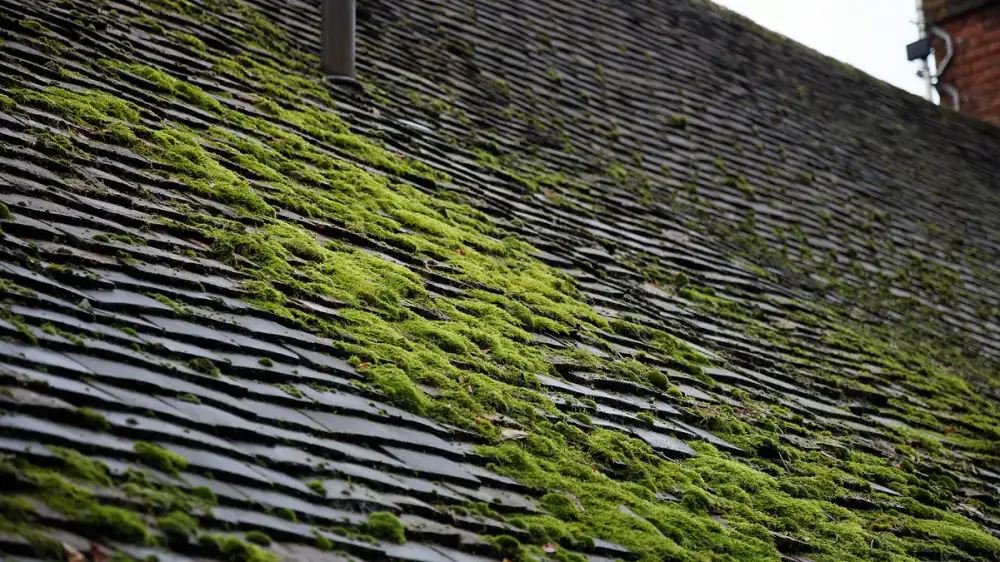
Moss Growing on the Roof: What to Do
Moss takes hold on shaded, damp roof sections and holds moisture against the shingles — but removing it from the roof is risky work for a professional.

Efflorescence: The White Residue on Brick
The white powder on brick is efflorescence — mineral salts drawn to the surface by moisture moving through the masonry and left behind as water evaporates.