Chimney Damper and Flue Basics
The flue is the passage smoke travels up; the damper is the valve that opens and closes it. Here's a high-level look at how they work together to control draft — and why inspection belongs to a pro.
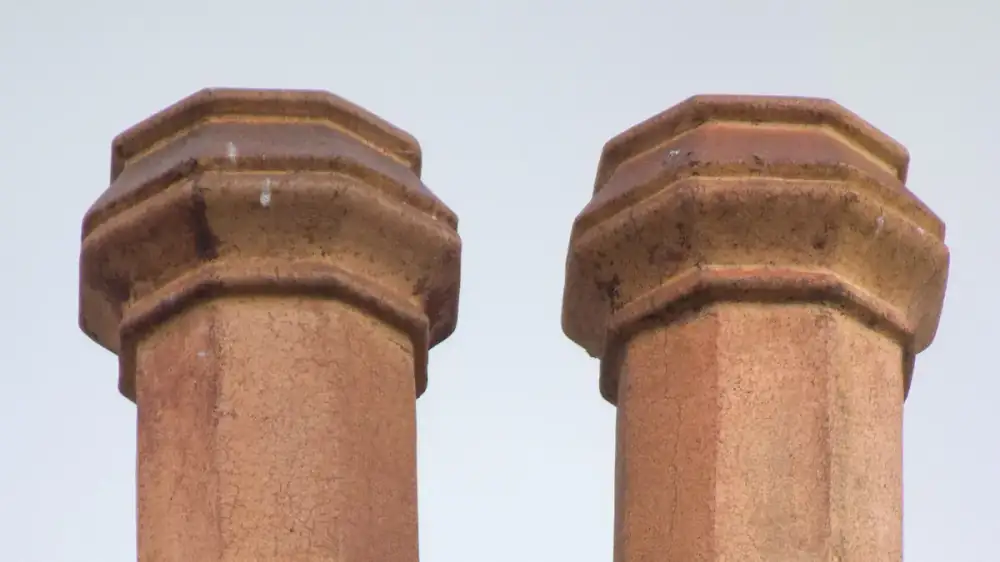
The flue is the passage inside the chimney that carries smoke up and out; the damper is the plate that opens and closes that passage. Together they control draft — the upward flow of air that carries smoke away and feeds the fire. Operating a damper is routine, but inspecting the flue interior is skilled work that belongs to a qualified professional.
Most of what a chimney does happens where you can't watch it. The brick, the cap, the crown — those are the visible members. But the two parts that actually decide whether a fire behaves are tucked out of sight: the flue and the damper. Get them working together and smoke rises quietly out the top; get them wrong and it rolls back into the living room. This is a plain overview of what each one is and how they cooperate — not a how-to, because the hands-on side of both is a professional's territory.
The passage: what the flue is
Picture the chimney as a tube with a fireplace at the bottom. The flue is that tube — the vertical passage running up the inside, carrying smoke and combustion gases from the firebox or appliance to the opening at the top. Everything the fire produces travels this one channel, which makes it fair to call the flue the working core of the whole chimney.
It rarely does that work bare. Most flues are lined, and the liner — clay tile in older chimneys, metal in many newer or relined ones — gives the gases a smooth, contained route and shields the surrounding masonry from heat and the corrosive residue of burning. A liner in good shape is quietly essential, and its condition is exactly the kind of thing that calls for trained eyes rather than a homeowner's guess.
The valve: what the damper is
If the flue is the passage, the damper is the gate across it. It's a movable plate, usually metal, sitting just above the firebox, and it does one simple job in two positions:
- Open, it clears the way for smoke and gases to rise up the flue during a fire.
- Closed, it seals the passage when the fireplace is cold, so warm household air doesn't slip up the chimney and cold outside air doesn't pour down.
Working it is part of the ordinary rhythm of a fireplace: open before you light, close only once everything has gone fully cold and dark. What isn't ordinary is a damper that fights you — one that sticks, warps, or refuses to seal. That's not a quirk to live with; it's a signal that something needs a professional's attention.
Draft: why the two only matter together
Neither part means much alone. What ties them into a system is draft — the natural upward flow of air that makes a chimney a chimney. When a fire burns, its hot gases rise; as they spill out the top of the flue, they draw fresh air in at the bottom, which feeds the flame and sweeps smoke away with it. The flue supplies the path for that current, and the damper decides whether the path is open or shut. Take away either and the draft collapses.
Draft is also a balancing act, sensitive to several conditions at once:
| Factor | Why it affects draft |
|---|---|
| Flue size and height | Influences how strongly gases rise |
| Temperature difference | Warmer gases rise more readily |
| A clear passage | Blockages choke the upward flow |
| Damper position | An open damper allows flow; a closed one stops it |
| Cap and top condition | Debris or a damaged cap can restrict the outlet |
Because so many things pull on draft at once, weak performance can trace back to any of them — which is precisely why sorting out a draft problem is a job for someone who can inspect the whole system rather than one guessed-at cause. The outlet at the very top counts too; how chimney caps protect against rain and debris shows how conditions up there ripple down.
What the fireplace tells you, and what it can't
Here's the honest division of labor. From inside the house, you can read the symptoms of a flue or damper going wrong — and you should stay alert to them:
- Smoke spilling back into the room instead of climbing the flue.
- A sluggish fire that's hard to get drawing and never quite pulls.
- A balky damper that sticks, won't open fully, or won't seal when shut.
- Persistent odors drifting out of the chimney.
- Debris dropping into the firebox, which can hint at deterioration overhead.
- A cold draft near the fireplace when it's out, suggesting a damper that no longer closes tight.
Any one of those is reason enough to stop burning until the chimney has been looked at.
What you can't do is turn those symptoms into a diagnosis. It's tempting to think you could shine a light up the flue and judge it, but the flue is a long, dark, largely sealed shaft. Assessing it honestly means checking for liner cracks, blockages, and creosote — the flammable residue that builds up from burning — and none of that shows itself without proper tools and, usually, access from the top. That's skilled work with genuine safety stakes, which is why the inspection itself sits firmly with a qualified chimney professional. Moisture shapes flue and liner health as well; how water gets in around a chimney traces where that water originates.
Keeping them on a schedule
Because the flue and damper hide their condition, the reliable way to stay ahead of trouble is a regular professional inspection rather than a wait-and-see. General guidance lands on having a chimney checked about once a year, and before the heating season gets underway, so liner cracks, blockages, and buildup surface before they turn into hazards. A stuck or unsealing damper, spillback, poor draft, odors, or falling debris all warrant a call between those visits. Think of it as a clean split: watching for the warning signs is your part, and assessing or servicing the flue interior is theirs.
Fold your own observations into a repeatable habit with how to spot chimney problems from the ground, and line the professional visit up with a seasonal chimney inspection.
Answers to common questions
What is a chimney flue?
The flue is the vertical passage inside the chimney that carries smoke and combustion gases up and out of the house. It runs from the fireplace or appliance at the bottom to the opening at the top. Many flues are lined with clay tiles or a metal liner that protects the surrounding masonry and gives the gases a smooth, contained path. It is essentially the working core of the chimney.
What does a chimney damper do?
The damper is a movable plate that opens and closes the flue. Open, it lets smoke and gases escape up the chimney during a fire. Closed, it seals the flue so warm indoor air stays in and outdoor air stays out while the fireplace is idle. In short, it is the valve that lets you control airflow through the chimney.
What is draft in a chimney?
Draft is the natural upward flow of air through the chimney. Warm gases from a fire rise, and as they leave the top of the flue they pull fresh air in at the bottom, sustaining the fire and carrying smoke away. Good draft depends on flue size, height, temperature, and whether the passage is clear. When draft is poor, smoke can spill back into the room.
Should the damper be open or closed?
As a general rule, open it whenever there is a fire or any burning, so smoke and gases escape safely. Close it when the fireplace is cold and out of use, so conditioned air does not drift up the flue. Operating a damper is routine, but a unit that sticks, warps, or will not seal is a sign to have it looked at by a professional.
Why can't I inspect the flue myself?
The flue is a long, dark, largely enclosed passage, and judging its condition means checking for liner cracks, blockages, and creosote buildup that are invisible without proper tools and access from the top. This is skilled, sometimes roof-level work with real safety stakes. You can watch for outward signs of trouble, but the interior inspection belongs to a qualified chimney professional.
What are signs of a flue or damper problem?
Watch for smoke spilling back into the room, a fireplace that draws poorly, a damper that sticks or will not seal, strong odors from the chimney, or debris falling into the firebox. Cold drafts and higher heating bills can also hint at a damper that no longer closes properly. Any of these is a reason to stop using the fireplace until a professional has inspected it.
How often should the flue be inspected?
Industry guidance generally points to having chimneys and flues inspected on a regular basis, typically once a year and before a heating season begins. A professional inspection can find liner cracks, blockages, and buildup before they become hazards. Your ground-level and indoor observations are a helpful supplement, but they do not replace that scheduled professional visit.
You might also like
Chimney Storm Damage: What to Check
Storms dislodge caps, crack crowns, and lift flashing. Here's a ground-level, post-storm chimney check — what to look for, what to do, and when to call a pro.
Seasonal Chimney Inspection From the Ground
A short binocular check each season catches most chimney trouble early. Here's what to look for from the ground, a simple cadence, and when to book a pro sweep.
Roof Vents and Vent Covers Explained
Roof vents let the attic breathe, and their covers keep weather out while air keeps moving. Here are the common types, what covers do, and how to spot damage safely.