Signs of Chimney Flashing Leaks
Flashing seals the joint where the chimney meets the roof. When it fails, the clues show up at the ceiling and on the walls — here's what to look for from the ground and indoors.

Chimney flashing seals the joint where the chimney meets the roof, and when it leaks the clues usually appear indoors first — water stains on the ceiling or upstairs wall near the chimney, a musty attic, or peeling paint. From outside, look for rust streaks, lifted metal, or cracked sealant at the joint. All of these can be spotted safely from the ground or inside; the actual repair is roof work for a professional.
Nobody thinks about flashing until a brown ring blooms on the ceiling above the fireplace. Yet it seals one of the roof's genuinely weak points — the seam where a solid masonry chimney shoulders its way up through flexible shingles — and it ranks among the most frequent places water finds a way in. What makes flashing forgiving, oddly, is that it rarely fails in secret. It leaves a trail you can pick up from the ground and from inside the house, well before anyone would need to set foot on the roof.
The seam that was always going to leak first
Where a chimney passes through a roof, two materials that behave nothing alike are forced to meet: rigid brick that doesn't move and a roof surface that flexes, expands, and shifts with the weather. That mismatch leaves an unavoidable gap. Flashing is the layered metal engineered to bridge it — usually base flashing tucked beneath the shingles paired with counter-flashing set into the masonry above, the two overlapping so water runs down and out instead of down and in.
Because it guards a joint that is constantly moving and permanently exposed, flashing lives a hard life. The sealant along its top edge dries and cracks; the metal corrodes or peels up; fasteners loosen; storms pry at the edges season after season. For a fuller account of the part and how it's built, see chimney flashing explained.
The evidence usually surfaces indoors
Flashing leaks have a habit of showing up inside the house before anything looks wrong outside. Watch for:
- ceiling stains near the chimney — brown or yellowish rings on the ceiling in the room below or beside it;
- damp or discolored upstairs walls, especially where the chimney runs behind the plaster;
- a musty smell in the attic after rain, or visible dampness on the attic side of the masonry;
- peeling paint or bubbling wallpaper near the chimney breast;
- stains that appear or worsen right after rain — a strong hint the entry point is weather-driven.
One quirk worth remembering: water rarely drips straight down. It runs along framing before it finds a place to fall, so the stain can surface a few feet from the actual breach. A closely related pattern is walked through in water stains on the ceiling near an exterior wall.
What the joint tells you from the yard
Plenty is visible with binoculars from the lawn or an upstairs window — no ladder involved. Fix your gaze on the joint where the chimney meets the roof and look for:
- rust streaks bleeding down from the flashing onto the shingles or brick;
- lifted, curled, or gapping metal where the flashing no longer lies flat;
- cracked or missing sealant along the top edge where counter-flashing meets masonry;
- displaced or damaged shingles right around the chimney base;
- staining on the masonry just beneath the flashing line.
If a storm has just rolled through, run this alongside chimney storm damage: what to check, since wind and ice are prime movers of loosened flashing.
Flashing, or something else entirely?
Water near a chimney is not proof the flashing is the culprit. The cap, the crown, a chase cover, or the open field of roof can all deliver moisture to the same spot. Before you call anyone, the pattern of the clue helps narrow the suspect.
| Clue | More likely points to |
|---|---|
| Rust and lifted metal at the roof joint | Flashing |
| Rust streaks on the masonry top or a metal chase | Crown or chase cover |
| Stains only after wind-driven rain, near the joint | Flashing sealant |
| Dampness inside the flue or firebox | Cap or crown |
| Stains well away from the chimney | Roof field |
For the whole catalogue of ways moisture enters, read how water gets in around a chimney and water stains near the chimney. A missing or badly placed kickout flashing at the base of the chimney can also route water straight into the wall, so it belongs on the list of suspects too.
Why a faint ring is not a small problem
It is tempting to watch a light stain and hope it holds. Water at a joint rarely obliges. A bead of caulk smeared over the seam can mask the symptom for a season, but failed flashing almost always needs proper metal repair rather than more sealant, and covering it only buys time while the real leak keeps running. That faint ring today can read as rotted decking and sodden insulation by next season — the leak doesn't just stain, it feeds decay in the wood and mold in the wall and attic, all of it hidden until it is extensive. Blaming the shingles and re-roofing before ruling out the joint is another common misstep; so is assuming a single repair ends it, when flashing works in concert with the cap, crown, and roof, and a failure in one often means the others deserve a look.
Handing the roof to someone equipped for it
The clues are all readable from the ground and from inside — and that is exactly where a homeowner's investigation should end. Climbing up to inspect the seam up close is where the risk lives, and it isn't necessary to gather the evidence.
Contact a qualified roofing or chimney professional as soon as you see interior water stains near the chimney, rust streaks or lifted metal at the roof joint, or cracked sealant along the flashing line. Repairing flashing means getting onto the roof and correctly layering the metal and sealant so water sheds away for the long term — precise, height-exposed work best left to someone set up for it. Cost turns on several things, chiefly the roof pitch, the chimney size, and how much water damage has already collected underneath, so any early figure is a rough guide rather than a quote.
To keep flashing on your radar year-round, fold these checks into a seasonal chimney inspection.
Answers to common questions
What is chimney flashing?
Flashing is the thin metal that seals the joint where the chimney passes through the roof. It bridges the gap between the masonry and the shingles, directing water away from that seam so rain can't run down alongside the chimney into the roof and attic. It usually comes in layers — base flashing against the roof and counter-flashing set into the masonry — working together to shed water.
What are the first signs of a flashing leak?
The earliest signs usually appear indoors: a faint water stain on the ceiling near the chimney, discoloration on an upstairs wall, or a damp, musty smell in the attic after rain. From outside, rust streaks below the flashing or lifted, gapping metal are common tells. Because flashing sits at a joint, leaks often show up some distance from the actual failure point.
Can I check flashing myself?
You can look for the clues safely — from the ground with binoculars and from inside the house — but you should not climb onto the roof to inspect flashing up close. Ground-level observation catches most warning signs, and interior stains often reveal a leak before it's visible outside. Close inspection and any repair is roof work for a professional.
Why does flashing fail?
Flashing fails for several reasons: the sealant or caulk at the top edge dries out and cracks, the metal corrodes or lifts, fasteners loosen, or the flashing was poorly installed in the first place. Storms, ice, and thermal movement all work at the joint over time. Because it's a moving, weather-exposed seam, flashing is one of the most common sources of chimney leaks.
Is a flashing leak the same as a roof leak?
Not exactly. A flashing leak is water entering specifically at the chimney-to-roof joint, while a roof leak can come from anywhere in the field of shingles. They can look similar indoors, which is why water stains near a chimney should be traced carefully — the culprit could be the flashing, the crown, the cap, or the roof itself.
How urgent is a flashing leak?
A flashing leak should be addressed promptly. Water entering at the roof joint doesn't just stain — it can rot roof decking, soak insulation, and feed mold inside the wall or attic. The longer it runs, the more hidden damage it causes. Catching the clues early and getting a professional to it quickly keeps a small repair from becoming a large one.
When should I call a professional about flashing?
Call a qualified roofing or chimney professional as soon as you see interior water stains near the chimney, rust streaks below the flashing, or lifted metal from the ground. Flashing repair requires roof access and correct layering of the metal and sealant, so it belongs to someone equipped for the work rather than a do-it-yourself attempt.
Keep reading
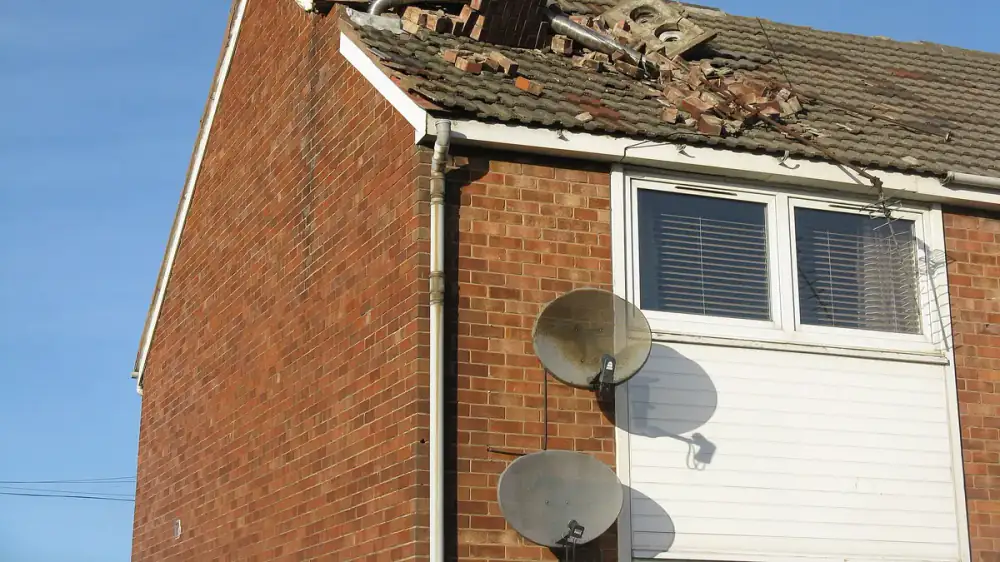
Chimney Storm Damage: What to Check
Storms dislodge caps, crack crowns, and lift flashing. Here's a ground-level, post-storm chimney check — what to look for, what to do, and when to call a pro.
Seasonal Chimney Inspection From the Ground
A short binocular check each season catches most chimney trouble early. Here's what to look for from the ground, a simple cadence, and when to book a pro sweep.
Roof Vents and Vent Covers Explained
Roof vents let the attic breathe, and their covers keep weather out while air keeps moving. Here are the common types, what covers do, and how to spot damage safely.