How to Remove Moss From a Roof Safely
Moss holds moisture against shingles and lifts them over time, so it is worth addressing — but gently. Scraping hard or pressure washing does more damage than the moss ever would.
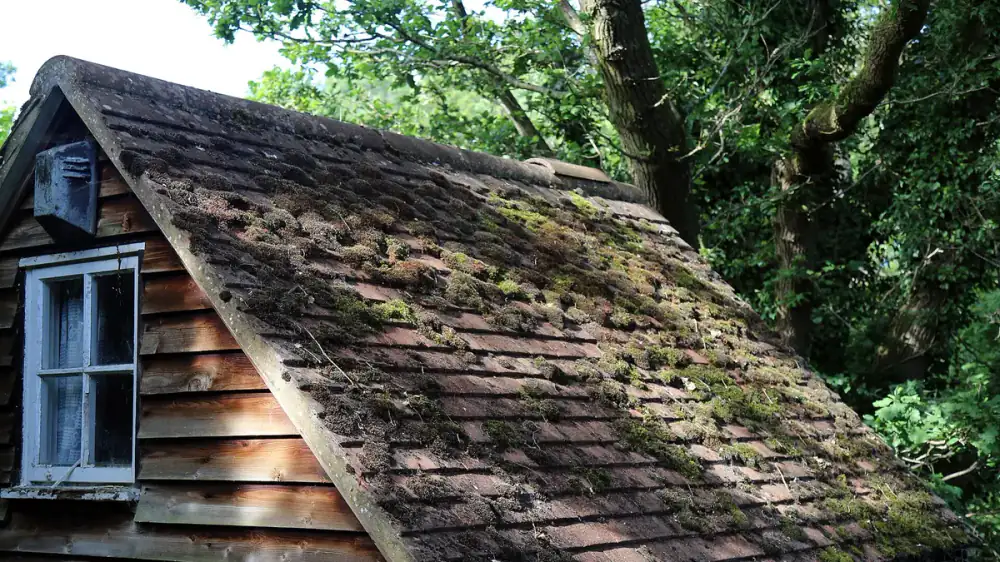
Treat roof moss gently and slowly: apply a moss product made for roofs per its label, let it kill the moss over days to weeks, then brush the dead residue downward with a soft brush. A pressure washer is the one tool never to bring near a shingle roof — it tears off the granules that protect it. And since the roof surface itself is the genuine danger, the climbing and walking is best handed to a professional.
There is a temptation, looking up at a green-furred roof, to match the scale of the problem with the force of the fix. Homeowners reach for the pressure washer, the wire brush, the paint scraper — and in an afternoon they age the roof by years. Moss earns its bad reputation honestly: it traps water against the shingles, edges into the seams, and slowly pries shingle edges upward until water finds a way in. But the cure has to be gentler than the disease, or it stops being a cure. Everything below rests on that single idea.
The thin layer that does all the work
An asphalt shingle is not really a solid tile. It is asphalt shielded by a bonded coat of mineral granules, and that granule layer is what stands between the roof and the sun. Strip it and the asphalt underneath bakes, dries, and cracks far ahead of schedule. This is the reason abrasive and high-pressure methods are so destructive: they do not distinguish between moss and granules. A pressure washer blasts both off at once and drives water up beneath the overlaps for good measure. A wire brush does the same damage, just more slowly and with more effort. Even scraping in the wrong direction — upward, against the way the shingles lap over one another — catches their leading edges and lifts them.
Gentle treatment sidesteps all of that because it works with the roof's structure rather than fighting it. Our overview of exterior surfaces that should not be pressure washed puts a shingle roof near the very top of the list, and moss is exactly the situation that tempts people to ignore that.
Treat, wait, then brush — never the reverse
Assuming the roof can be reached safely, which is a large assumption I will return to, the method is deliberately unhurried:
- Clear loose debris. Sweep off fallen leaves and twigs so the treatment can actually reach the moss instead of soaking into a mat of litter.
- Protect the ground below. Wet down and cover nearby plants, and note where the runoff will travel. Any cleaning solution needs to be contained, not left to drain into a flower bed.
- Apply a roof-specific moss treatment. Mix and apply it precisely as the label directs. Do not improvise by combining products — mixing cleaning chemicals is a real hazard and never a shortcut.
- Give it time. Moss dies over days and weeks, not minutes. This waiting is the hardest part, because a still-green roof invites impatient scraping.
- Brush lightly, downward. Once the moss is brown and loose, a soft brush drawn in the direction the shingles run lifts the residue. Whatever clings can weather off on its own.
- Rinse at low pressure. A garden hose, never a machine, clears the last of it.
If treating a surface with chemistry rather than force is unfamiliar, our explainer on how soft washing works covers the same principle applied across the rest of the house.
Weighing the options honestly
Laid side by side, the trade-off between speed and damage is stark:
| Method | Effect on moss | Effect on shingles |
|---|---|---|
| Gentle treatment, then light brushing | Kills and clears it over time | Safe when done patiently |
| Low-pressure rinse | Clears dead residue | Safe |
| Hard scraping or wire brush | Fast | Scratches the surface, knocks granules loose |
| Pressure washing | Fast | Severe — strips granules, forces water under |
The fast columns are seductive. The right-hand column is why you ignore them.
Changing the conditions, not just the roof
Clearing moss without touching what grew it simply resets a clock. Moss is a plant of shade and standing damp, so the durable fixes go after those conditions rather than the growth itself. Trimming back branches that overhang the roof lets in sun and moving air, which is the single most effective deterrent. Keeping the roof and gutters free of debris matters too — clogged gutters keep the roof edge perpetually wet, feeding the exact microclimate moss wants. And near the ridge, strips of zinc or copper release faint traces of metal in every rain, discouraging regrowth on the slope below. For why it keeps returning and which roofs are most prone to it, see our companion piece on moss growing on the roof.
When cleaning is the wrong answer entirely
Some of what you see from the ground is past the point of a treatment. Curling or lifted shingle edges where moss has crept underneath, bare patches where the granules are already gone, soft or sagging spots in the deck, water stains on the ceilings inside, or a thick established mat spread across a large area — each of these is a signal that the roof needs an inspection or a repair, not a wash.
And this is where the honest advice about who does the work belongs. The treatment is genuinely simple; the roof is not. A wet, mossy slope is one of the most slippery surfaces a homeowner ever steps on, and a fall from that height is in a different category of consequence than a stained shingle. Much of the time the product can be applied from a ladder at the edge, or handed off entirely — and it should be, whenever the job means walking the roof, whenever the moss is thick across a wide span, whenever those damage signs appear, or whenever the pitch is steep or high. Understanding what the asphalt shingle surface can tolerate reinforces the gentle approach, and the wider exterior cleaning library covers the jobs you can safely take on from solid ground.
Common questions
Can I pressure wash moss off my roof?
No. High pressure strips the protective granules from asphalt shingles, forces water under them, and shortens the roof's life dramatically. Moss should be treated gently and allowed to die and loosen, then brushed away lightly — never blasted off with force.
What kills moss on a roof?
Purpose-made roof moss treatments, applied per their label, break moss down over days to weeks. Some homeowners use gentler solutions as well. Whatever the product, apply it carefully, protect plants and drains below, and follow the manufacturer's guidance — never mix cleaning chemicals.
Should I scrape moss off the roof?
Only lightly, and only downward with a soft brush after the moss has died and loosened. Aggressive scraping, wire brushes, or scraping against the direction of the shingles tears the surface and dislodges granules. Patience does more than force here.
Is it safe to remove roof moss myself?
Treating moss is straightforward, but getting onto a roof is not. Roofs are steep, slippery when wet or mossy, and unforgiving of a fall. The treatment can often be applied from a ladder edge or by a pro; walking a mossy roof is best left to someone equipped for height work.
How do I stop moss from coming back?
Moss thrives in shade and moisture. Trimming overhanging branches to let in sun and air, keeping the roof and gutters clear of debris, and in some cases fitting zinc or copper strips near the ridge all reduce regrowth. Removing the moss without changing the conditions usually means it returns.
Does moss actually damage a roof?
Over time, yes. Moss holds moisture against the shingles, works into the seams, and can lift shingle edges as it grows, which lets water in. It is worth addressing — but the cure should never be harsher on the roof than the moss itself.
Related guides

Pressure Washing vs Soft Washing
One relies on force, the other on cleaning solution at low pressure. Matching the method to the surface is what protects siding, roofs and trim.
How to Remove Algae from Exterior Walls
That green film is a moisture problem, not just dirt. Here's why gentle cleaning beats blasting, how to protect plants and windows, and how to stop it coming back.
Can Pressure Washing Damage Siding?
The same force that strips dirt can crack panels, peel paint and push water into the wall. Here's how siding gets damaged — and the safer way to clean it.