Zinc Gutters
Zinc gutters develop a self-protecting patina that makes them exceptionally long-lived — but that same chemistry means they don't like harsh cleaners or contact with the wrong metals. Here's how to care for them.
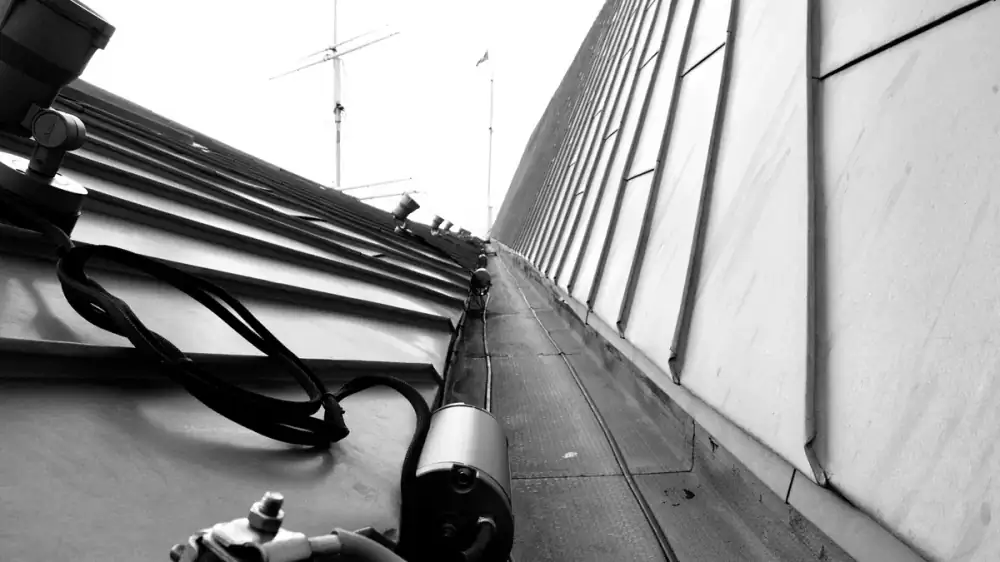
Zinc gutters are exceptionally long-lived because they form a self-protecting patina that seals the surface as it weathers. Care for them by working *with* that chemistry: rinse gently, skip harsh or acidic cleaners, and keep zinc away from incompatible metals like copper, whose contact or runoff drives galvanic corrosion. Most of caring for zinc is knowing what not to do to it.
Most gutter materials fight the weather. Zinc enlists it. Exposed to air and moisture, a bright zinc surface gradually forms a layer of zinc carbonate — the soft gray, faintly blue film you see on any weathered zinc gutter — and that layer seals the metal beneath and slows further corrosion to a crawl. The patina isn't decay setting in; it's the surface building its own armor out of the same conditions that would rust cheaper metals.
That single piece of chemistry explains almost everything about caring for zinc, including the parts that feel counterintuitive. The material largely maintains itself, so the homeowner's job is mostly to stay out of its way — and to avoid the two or three specific things that undo the patina's work. More than with most materials, caring for zinc is a discipline of what not to do.
The metal that armors itself
The practical meaning of the patina is that a zinc gutter left reasonably alone will keep protecting itself for decades. It appears not just on gutters but across the whole rainwater system — half-round and box gutters, downspouts and conductor pipes, the decorative hoppers and rainwater heads at downspout tops, and the flashing and trims that match. Wherever it shows up, it behaves identically: it patinas, it resists harsh chemistry, and it must be kept clear of the wrong metals.
Two consequences follow. First, an evolving, uneven patina is completely normal — cosmetic variation across a run is not a defect, and no amount of scrubbing will "even it out" without stripping the protection. Second, and this is where good intentions do the most damage, polishing zinc back to bright metal removes the very layer keeping it alive. The gray film is the point. Leave it be.
The copper problem
If there is one hard rule with zinc, it's this: keep it away from copper. Zinc is a reactive metal, and when it's in direct contact with a dissimilar metal — copper above all — or receives water that has run over copper, galvanic corrosion sets in. The zinc becomes the sacrificial partner and can pit and perforate where the reaction concentrates.
In practice that means two things. Don't let zinc components touch incompatible metals at joints and fixings. And don't route runoff from a copper roof, copper flashing, or copper components upstream into a zinc gutter, because that water arrives chemically primed to attack it. Where a mix of metals already exists on a house, this compatibility question is worth getting a professional to assess rather than guessing — galvanic corrosion is slow, hidden and unforgiving, and it's the one failure mode that can defeat zinc despite the patina.
What zinc dislikes in the water
Zinc is built to carry flowing water; that's its entire purpose. What it doesn't tolerate is standing water and chemically aggressive water. Debris that dams a gutter and holds a pool against the metal keeps the surface constantly wet, and constant wetness can accelerate corrosion in that spot — most often at seams and low points, where water lingers. So the everyday enemies are ordinary: leaves, grit and roof debris that clog the channel, plus the organic film and algae that green up slow-draining, shaded runs.
The subtler threat is what the water carries. Beyond the copper issue, acidic runoff and harsh cleaning chemistry both attack the patina directly, etching and discoloring the surface and stripping its protection. Which is why, with zinc, "water management" means two things at once: keep it draining freely so nothing stands, and control what flows into it so nothing corrosive lands on it.
Cleaning that respects the patina
Cleaning zinc is mostly clearing debris and leaving the surface alone. It sits at the delicate, rinse-and-wipe end of the scale, and a garden hose with a soft brush handles it:
- Clear debris by hand or scoop, lifting out leaves and grit that dam water, working from stable, safe access.
- Rinse with a garden hose to flush the channel and confirm water runs freely to the downspout.
- Use a mild, pH-neutral cleaner only if grime remains, and test a hidden spot first.
- Agitate with a soft brush or cloth — never wire brushes or abrasive pads, which scratch the metal and strip patina.
- Avoid acids and bleach entirely, since they etch and discolor zinc.
- Confirm free drainage and check for standing water at low points and seams.
There's rarely any reason to bring a pressure washer near zinc. It's a soft, thin metal, and high pressure can dent it, drive water behind the gutter and up under the roof edge, and disturb the patina — all with no benefit a gentle rinse doesn't already deliver. Save the machine for harder surfaces on the house; our overview of pressure washing versus soft washing covers when a machine earns its place and when it doesn't.
One safety note that outweighs any cleaning question: a full external gutter clean means ladders and height, and fall risk is the real hazard here, not the zinc. Clearing debris from safe, stable access is reasonable; the more involved work up at the eave is sensibly handed to a professional. Gutter guards can stretch the interval between cleanings, but they don't end it — leaves, grit and organic film still accumulate and eventually need attention.
Reading the signs
Most zinc trouble is a clue about either chemistry or drainage. Read it that way:
| What you see | What it usually means |
|---|---|
| Localized pitting or holes | Galvanic corrosion, often from copper contact or runoff |
| Standing water in the channel | Debris dam or incorrect slope |
| Etched, discolored patches | Acid or harsh-cleaner damage to the patina |
| Weeping or dripping seams | Joint failure needing repair |
| Persistent green growth inside | Slow drainage and chronic dampness |
| Streaking on the wall below | Mild zinc runoff, usually cosmetic |
The wall-staining item deserves a word: as zinc weathers it sheds a little runoff that can lightly streak porous masonry or render below. It's usually mild and cosmetic, and thoughtful downspout placement and free drainage do more about it than repeated scrubbing ever will. Pitting, perforation, corroded seams and standing water are the signs that actually warrant repair — and wherever dissimilar metals are in the picture, that's a professional's call.
Kept draining freely, chemically undisturbed and isolated from copper, zinc sits firmly at the durable end of the gutter spectrum, generally outlasting painted steel and aluminum and rivaling copper for longevity at lower cost. Its durability is genuine but conditional — respect the patina and the compatibility rules and zinc is a true long-term, low-fuss choice; violate them with standing water, harsh cleaners or galvanic contact and even zinc can fail early. For how these trade-offs compare across the rainwater system, see our overview of how long gutters last.
Related guides
- Pressure washing vs. soft washing
- How long do gutters last: repair vs. replacement
- Copper gutters: exterior care and cleaning
- Aluminium gutters: exterior care and cleaning
- Painted steel gutters: exterior care and cleaning
Your questions, answered
Can I pressure wash zinc gutters?
You can rinse them, but there is rarely a reason to use high pressure, and it can dent the metal, force water behind the gutter, and disturb the protective patina. A gentle rinse with a garden hose and a soft brush clears debris and grime without harming the surface. Save the pressure washer for tougher, harder surfaces and treat zinc as a rinse-and-wipe job.
What is the gray coating on zinc gutters?
That soft gray to blue-gray film is the zinc patina — a layer of zinc carbonate that forms as the metal reacts with air and moisture. It is not corrosion in the destructive sense; it is the surface sealing and protecting itself, which is a big part of why zinc lasts so long. Leave it be. Trying to polish it back to bright metal only removes the protection.
Do zinc gutters react with other metals?
They can. Zinc is reactive, so direct contact with dissimilar metals — copper especially — or runoff from a copper roof or flashing above can drive galvanic corrosion and eat through the zinc. Keep zinc gutters isolated from incompatible metals and avoid routing copper runoff into them. This compatibility issue is one of the most important things to get right with zinc.
Can I use bleach or acidic cleaners on zinc?
Avoid them. Zinc's patina is sensitive to acids and to harsh chemicals like bleach, which can etch and discolor the surface and strip the protective layer. Stick to plain water and a mild, pH-neutral cleaner if needed, and always test a hidden spot first. Gentle chemistry preserves the very patina that makes zinc durable.
Why is my zinc gutter staining the wall below?
As zinc weathers it releases a small amount of zinc runoff, which can leave light streaking on porous materials below, such as masonry or render. It is usually mild and cosmetic. Directing overflow properly and keeping the gutter draining freely limits it; on staining-prone walls, thoughtful downspout placement helps more than repeated scrubbing.
How long do zinc gutters last?
Zinc is one of the longest-lived gutter materials, thanks to its self-protecting patina, and it typically outlasts painted steel and aluminum. Its longevity depends on avoiding the things zinc dislikes — standing water, harsh cleaners, and contact with incompatible metals. Kept draining freely and isolated from copper, zinc gutters are a long-term, low-fuss choice.
Keep reading
Metal Roof Edges and Drip Edge
Drip edge and metal roof-edge trim quietly protect the fascia, decking and gutters. Here's what they do and how to keep them working.
Composite Decking: Care and Cleaning
Composite decking is low-maintenance, not no-maintenance. Here's how to clean it, remove stains and avoid damaging the boards.
Natural Stone: Exterior Care and Cleaning
Natural stone is the most durable exterior surface, but some stones etch or stain easily. Here's how to clean and care for it safely.