What a White Stain on Your Chimney Means
That chalky white bloom on the brick isn't dirt and it won't scrub off for long. It's efflorescence — and it's less a stain than a message about water moving through the masonry.

A chalky white stain on a chimney is almost always efflorescence — mineral salts left behind when water moves through the masonry and evaporates at the surface. The deposit itself is harmless, but it's a message: water is getting into the chimney and traveling through it. That's why it keeps coming back after you scrub it — new water carries new salts out. The real fix is finding the water source (crown, cap, flashing, or a driven-wet face), not cleaning the bloom.
The first response is nearly always the wrong one. A pale, powdery patch shows up on the brick — chalky, faintly crystalline, like dried salt — and it reads as dirt, so out comes the hose or the stiff brush. Sometimes the bloom lifts off with almost no effort, which feels like a win. Then it returns, a few weeks or a season later, in roughly the same place. That return is the entire point. What looks like a smudge sitting on the surface is actually the tail end of something that traveled out through the wall, and until you read it that way, you'll keep cleaning the same spot forever.
Salt carried out of the wall
Brick, block, stone, and mortar all carry soluble mineral salts — some baked into the material, some picked up over years of contact with soil, water, and weather. Dry, those salts do nothing and stay invisible. Water changes that. When moisture works into the masonry, it dissolves the salts and carries them along as it moves. Reach the surface, evaporate, and the water leaves the salts behind as a fine white crystalline crust.
That crust is efflorescence. Read literally, it is a record: proof that water made a journey through your chimney and exited at the face. The salts were not deposited from outside by rain or grime — they were escorted out from within by moisture. That is what makes the bloom so much more useful than an ordinary stain. It isn't cosmetic. It's evidence. Our fuller explainer on efflorescence walks through the chemistry, but the working translation is short: white bloom means water is getting in.
Why the brush never wins
Here is the trap. Because efflorescence is the symptom of moving water, removing the deposit does absolutely nothing to the water. Clean the face, admire the brick, feel finished — and the moisture path is exactly as open as it was. The next time water travels through and evaporates, it ferries out a fresh load of salt, and the bloom is back.
This is why a single appearance and a recurring one mean different things. One patch after an unusually wet stretch might be minor and self-limiting — the wall got damp, dried out, and that was that. A bloom that keeps returning after every cleaning is telling you the intrusion is live: there's an active path, not a closed chapter. That gap — between "watch it" and "find the leak" — is the whole diagnostic value of the stain, and you get it for free just by noticing whether the white comes back.
If you do wipe away a deposit, be gentle about it. Pressure washing or harsh cleaners can scour the masonry face and open the mortar, which trades a harmless powder for genuine damage.
Reading the bloom like a map
Once you accept that water is moving, the next question is where it enters. On a chimney the entry points are a familiar short list, and each tends to leave its own signature in where the salt surfaces:
- A cracked or worn crown admits water at the very top of the masonry, and the bloom often shows high on the stack.
- A missing or damaged cap lets rain into the flue and structure.
- Failed or lifted flashing admits water down at the roofline, so patches there can implicate it.
- Wind-driven rain soaks a porous face directly, usually concentrating the bloom on one storm-exposed side.
The location is a rough map, not a diagnosis. Salt surfacing high on the stack points upward, toward crown or cap. A single face blooming while the others stay clean hints at wind-driven rain hitting that side. Blooming low or near the roof can mean flashing. A high bloom often travels with other tells, which is why the signs of a failing chimney crown are worth knowing alongside it.
The stain is harmless; the water is not
Take the reassurance only so far. Yes, the deposit is inert powder — but the moisture that produced it is the same moisture that does the real harm. Water traveling through masonry is the engine behind spalling, where saturated brick faces flake off after a freeze; freeze-thaw cracking, as trapped water expands in the cold and pries joints apart; interior deterioration of mortar, liner, and core; and eventually interior stains where that water reaches living space.
That places efflorescence at a genuinely lucky point on the timeline. It appears because water is intruding, but usually before the water has done its worst. It's a warning that arrives while the fix is still cheap. Scrubbing the bloom away and moving on is silencing a smoke alarm; treating it as a prompt to look closer is catching the problem when it's smallest.
A twice-a-year habit from the yard
You can learn a surprising amount about a bloom without ever leaving the ground. A couple of times a year, with binoculars:
- Note where it appears — which face, how high, near which feature.
- Watch whether it spreads, intensifies, or returns after rain.
- Glance at what sits above it — the cap and crown edge — and at the flashing line, since those are the likely upstream sources.
- Look for companions like spalling brick, open joints, or interior stains, which corroborate that water is at work.
Photograph the patches so you can compare season to season. A bloom that grows or recurs is a far louder signal than one that shows up once and fades. Folding this into an existing routine — the seasonal chimney inspection is built for exactly this — makes the pattern easy to catch.
Chasing the source, not the surface
The real remedy is to stop the water, which means locating its entry and addressing it: a crown resurfaced, a cap replaced, flashing reworked, a porous face treated. A breathable water repellent is sometimes part of that answer — but this is precisely where good intentions backfire. A sealer that traps moisture inside the wall accelerates freeze-thaw damage instead of stopping the bloom. Anything applied has to let the masonry breathe, which is why chimney care in freeze-thaw climates keeps returning to breathability.
Both halves of the fix — finding the entry point and applying any treatment — happen at the top of the chimney and on the roof, which is unforgiving height work and belongs to a qualified chimney pro. Your contribution is the part that's actually decisive: reading the white bloom as the message it is, logging where and when it turns up, and making the call while the water behind it is still cheap to stop. Recurrence, spreading, or company like spalling and interior stains are the clearest cues that it's time.
Questions people also ask
Is the white stain on my chimney dangerous?
The white deposit itself is harmless — it's just mineral salts left behind when water evaporates out of masonry. What it signals is the real issue: water is moving through the chimney. Efflorescence is a symptom, not the disease. It tells you moisture is getting into and traveling through the masonry, and that's what deserves attention, because ongoing water intrusion is what damages a chimney over time.
Can I just scrub the white stain off?
You can remove the visible deposit, but if the moisture source isn't addressed, it comes back — because new water keeps carrying new salts to the surface. That's the key insight: recurring efflorescence isn't a cleaning problem, it's a water problem. Removing it treats the symptom while the cause keeps working. Any cleaning should also be gentle, since harsh methods can damage the masonry.
What's actually causing the efflorescence?
Water entering the masonry and then evaporating at the surface, carrying dissolved salts with it. The water can come from a cracked crown, a failed or missing cap, bad flashing, or wind-driven rain soaking a porous face. Where the bloom appears is a rough clue to where the water is: high on the chimney often points upward to the crown or cap, while patches lower down can suggest driving rain or flashing.
Does efflorescence mean my chimney is damaged?
Not by itself, but it means the conditions for damage are present. The same moisture that produces the white bloom is the moisture that drives spalling, freeze-thaw cracking, and interior deterioration. So while the stain isn't damage, it's an early warning that water intrusion is underway — which is exactly the moment to investigate, before that water causes the harm it's capable of.
How do I stop it from coming back?
By finding and fixing the water source, not by repeated scrubbing. That usually means having a professional identify where moisture is entering — crown, cap, flashing, or the masonry face — and addressing it, sometimes alongside a breathable water-repellent treatment. Because the sources are on the chimney and roof, and because the wrong sealer can trap moisture and make things worse, this is professional territory.
Chimney Storm Damage: What to Check
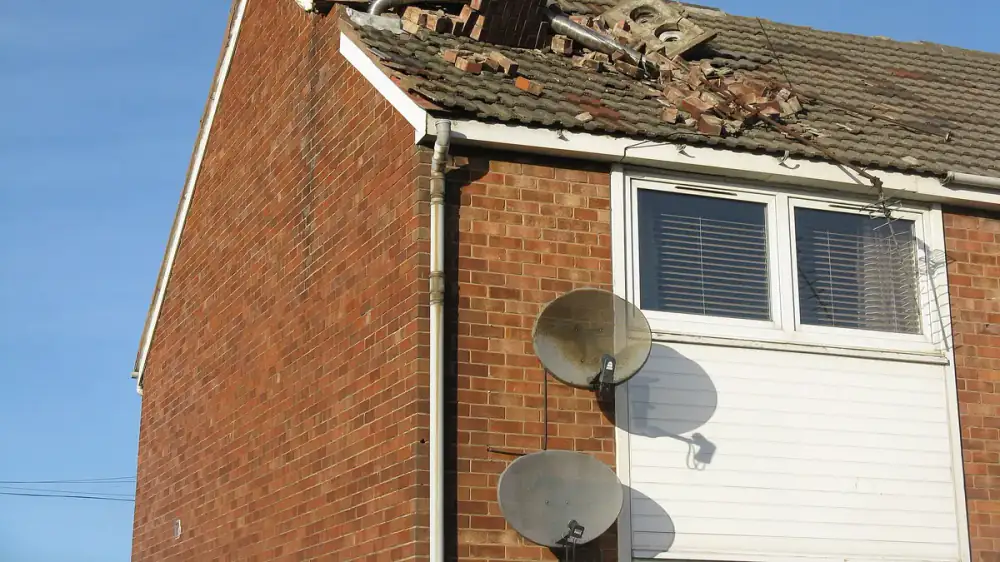
Storms dislodge caps, crack crowns, and lift flashing. Here's a ground-level, post-storm chimney check — what to look for, what to do, and when to call a pro.
Seasonal Chimney Inspection From the Ground
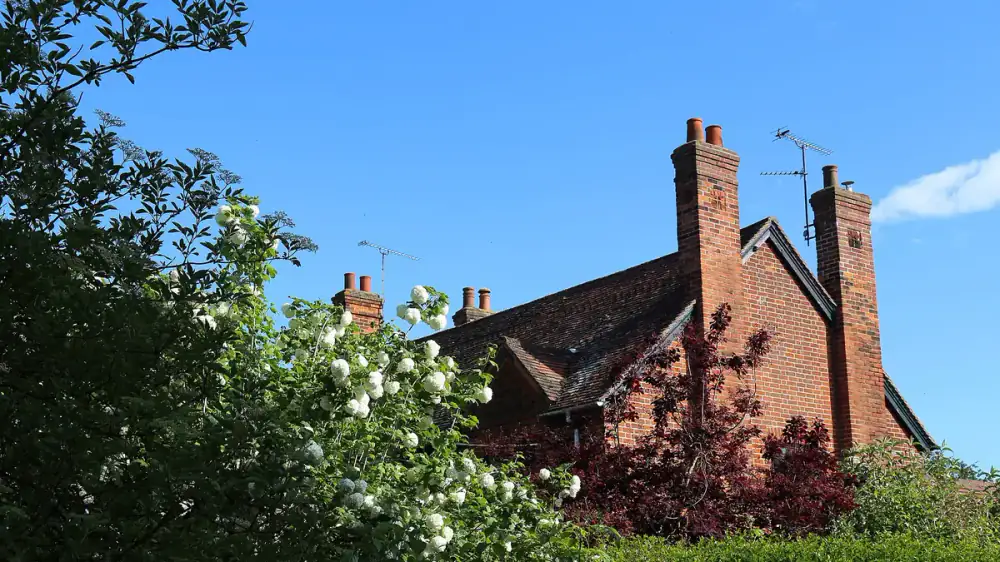
A short binocular check each season catches most chimney trouble early. Here's what to look for from the ground, a simple cadence, and when to book a pro sweep.

Roof Vents and Vent Covers Explained
Roof vents let the attic breathe, and their covers keep weather out while air keeps moving. Here are the common types, what covers do, and how to spot damage safely.