Why Chimneys Cause More Leaks Than You Think
Of everything that pokes through a roof, the chimney is the biggest and most complicated. That's exactly why so many roof leaks trace back to it rather than the shingles.
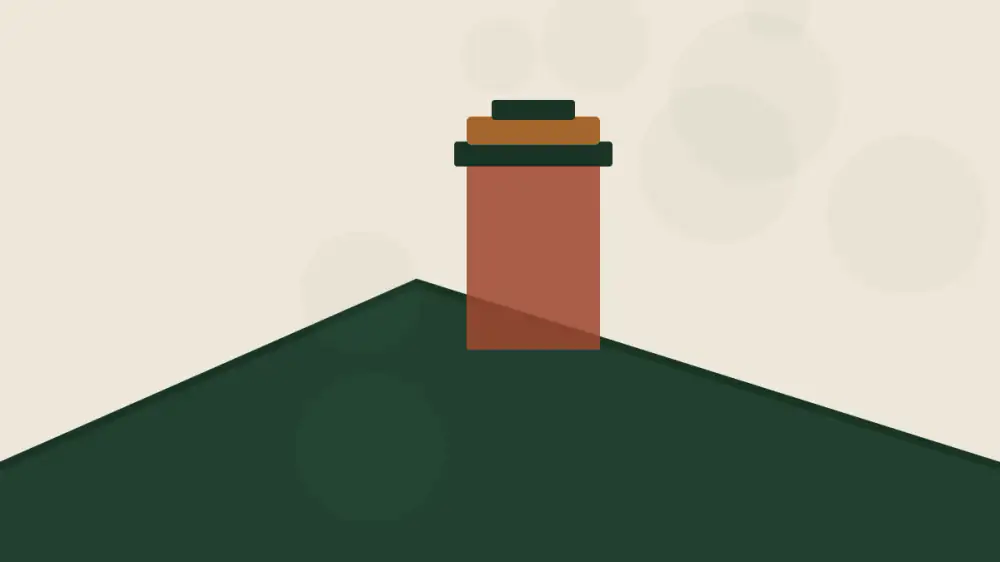
A chimney leaks more often than the roof around it because it's the largest and most complex penetration the roof has to seal. Instead of simple overlapping shingles, the chimney forces several materials — flashing, mortar, a sloped crown, porous brick — to meet at awkward angles, and each junction is a place water can enter. Those parts also age together, so a chimney concentrates leak risk in one spot. Spotting the early signs is a ground-level job; tracing and fixing the source is work for a professional.
Ask most homeowners where a roof leak comes from and they'll picture a cracked shingle or a bad patch of roofing. Ask a roofer, and there's a good chance the first thing they'll check is the chimney. That gap between intuition and experience is worth closing, because understanding why the chimney leaks so readily changes how you watch your house.
The short version: a roof is very good at shedding water off a continuous, sloped surface, and very challenged by anything that interrupts it. The chimney is the biggest interruption there is.
A roof is built to shed water — until something pokes through it
Think about what shingles actually do. They overlap in rows so that gravity carries water down and off the edge, each course covering the seam below it. As long as that surface stays uninterrupted, it's remarkably reliable. Water never gets a chance to sit or pool; it just runs.
The trouble starts wherever something breaks that continuity — a vent pipe, a skylight, a valley where two roof planes meet, and above all, a chimney. Roofers call these penetrations, and they're where the vast majority of roof leaks begin. Every penetration has to be sealed by hand with additional materials, and every one of those seals is a maintenance item with a shorter lifespan than the shingles around it.
The chimney is the extreme case. It's not a two-inch pipe; it's a masonry structure that can be several feet wide, sitting square in the path of the water running down the roof. The roof has to be sealed around all four sides of it, at the top, and up its face. That's a lot of seams, and seams are where water gets in.
Four materials, four ways to fail
What makes the chimney especially leak-prone isn't just its size — it's that sealing it requires several different materials, each with its own failure mode, meeting in the same small area. There's a fuller breakdown in how water gets in around a chimney, but the headline is that four things have to work at once.
Flashing is the layered metal that bridges the joint between the masonry and the shingles. It's arguably the hardest-working and most failure-prone part of the whole assembly, because it sits at the exact seam between two materials that expand, contract, and move at different rates. Sun bakes its sealant, temperature swings flex it, and eventually it lifts, rusts, or opens up. If you want to understand the single biggest reason chimneys leak, start with chimney flashing explained.
The crown is the sloped slab of masonry across the top, meant to shed rain off the structure the way a roof sheds it off a house. When it cracks — and freeze-thaw cycles almost guarantee it eventually will — water runs into those cracks and down into the chimney's core. Because it's a flat-ish rooftop surface, its damage is largely invisible from the ground. What is a chimney crown covers how it works and why it fails.
The masonry itself is porous. Brick and mortar drink water. A chimney that's decades old, with weathered mortar joints, can soak up rain directly through its face and carry that moisture inward, often announcing itself with a chalky white bloom on the brick.
The cap covers the flue opening. When it's missing or damaged, rain falls straight down the flue — the most direct route of all.
Any one of these can leak. What makes the chimney genuinely tricky is that they tend to fail together.
Why they all age at once
Here's the part that surprises people. A chimney's flashing, crown, cap, and mortar were usually installed around the same time and have weathered the same decades of the same climate. So they don't fail one at a time in a tidy sequence — they reach the end of their service lives in the same rough window.
That has a practical consequence. Fix only the flashing, and the leak may improve without disappearing, because the crown was quietly letting water in too. This is why chasing a chimney leak by patching a single part so often disappoints, and why a proper inspection looks at all the paths rather than the first one someone finds.
It's also why the chimney rewards a slightly different mindset than the rest of the roof. The roof field is largely "install and forget for twenty-plus years." The chimney is a cluster of shorter-lived components that need periodic attention regardless of how new the shingles are.
The leak that looks like a roof problem
One of the most common scenarios a roofer sees: a homeowner gets a new roof, and a leak that had been blamed on old shingles comes right back. The culprit was never the field of the roof. It was the chimney all along — a cracked crown or tired flashing that the re-roofing didn't address.
This is worth remembering whenever roofing work is on the table. A roof replacement doesn't automatically include rebuilding the crown or repointing the chimney, and flashing is sometimes reused around an existing chimney rather than replaced. If you're evaluating that kind of work, ask specifically how the chimney will be handled — the guidance in how to evaluate an exterior contractor applies directly here.
The other place this shows up is inside the house. A stain that appears on a ceiling near an exterior wall can look like a wall or window problem when it actually started at the chimney above and traveled down the framing — a reminder that where a stain lands rarely marks where the water got in.
What you can actually do about it
The reassuring part is that the most valuable thing you can do requires no ladder. Because so much chimney trouble is visible from below — a crooked cap, a lifted piece of flashing, a rust streak down the brick, cracks in the crown edge — regular ground-level watching catches a surprising amount of it early. A pair of binoculars from the yard or an upstairs window is the whole toolkit. How to spot chimney problems from the ground lays out a simple routine, and building it into a twice-a-year rhythm through the seasonal chimney inspection guide keeps small problems from becoming ceiling stains.
What you shouldn't do is treat the chimney as a DIY repair site. Everything that actually stops a chimney leak — reflashing, rebuilding a crown, repointing masonry, resealing at the top — happens on the roof at the highest, most exposed point of the house. That's professional work, and it's the natural handoff: you spot the signs from the ground, a qualified professional confirms the source and fixes it.
Understanding why the chimney leaks so readily doesn't make the leaks stop. But it does something almost as useful — it tells you where to look first, and stops you from replacing a perfectly good roof to solve a problem the chimney was causing all along.
Common questions
Why are chimneys so prone to leaking?
Because a chimney is the largest and most complex hole in the roof. Where shingles simply overlap, the chimney forces the roof to seal around a tall masonry box using bent metal flashing, mortar, and a sloped crown — several different materials meeting at odd angles. Every one of those junctions is a potential entry point, and they all age at once, so a chimney concentrates more leak risk into one spot than almost anything else on the roof.
How do I know a leak is coming from the chimney and not the roof?
The location of the interior stain is the first clue: water showing up on a ceiling or wall near the chimney or fireplace points there before it points at the field of shingles. That said, water travels along framing before it drips, so the stain can be misleading. A ground-level scan with binoculars can flag obvious chimney trouble, but confirming the source is a job for a professional who can examine the flashing and crown up close.
What part of the chimney leaks most often?
Flashing is the most common culprit. It's the layered metal sealing the seam where masonry meets shingles, it flexes with every temperature swing, and its sealant dries out over years of sun and rain. The crown and the masonry itself are close behind. In practice, several of these tend to fail around the same time, which is why chimney leaks are often the result of more than one weak point at once.
Does a newer roof mean the chimney won't leak?
Not on its own. A roof replacement doesn't always include rebuilding the crown or repointing the masonry, and flashing is sometimes reused or reflashed imperfectly around an existing chimney. A brand-new roof with tired chimney flashing or a cracked crown can still leak right at the chimney. It's worth asking specifically how the chimney was handled during any roofing work.
Can I reduce the risk of a chimney leak myself?
You can keep watch, which matters more than it sounds. Regular ground-level checks with binoculars catch missing caps, cracked crowns, and lifted flashing while they're still cheap to fix. Keeping gutters clear so water sheds properly near the chimney helps too. But the actual repairs — anything at the crown, flashing, or upper masonry — mean being on the roof, and that's professional work.
When should I call a professional?
Call a qualified chimney or roofing professional as soon as you see water stains near the chimney, damp or crumbling masonry, or rust streaks on the brick. Because a chimney concentrates several leak paths in one place, tracing the real source usually takes a hands-on inspection at the top of the chimney and on the roof. Your role is to notice the early signs from the ground and get help before the water spreads.
Related guides
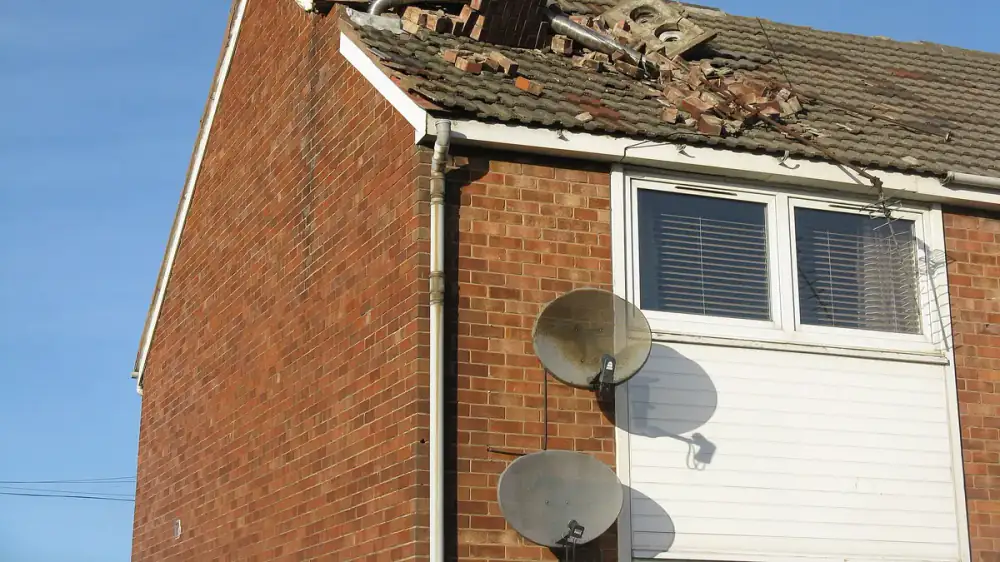
Chimney Storm Damage: What to Check
Storms dislodge caps, crack crowns, and lift flashing. Here's a ground-level, post-storm chimney check — what to look for, what to do, and when to call a pro.
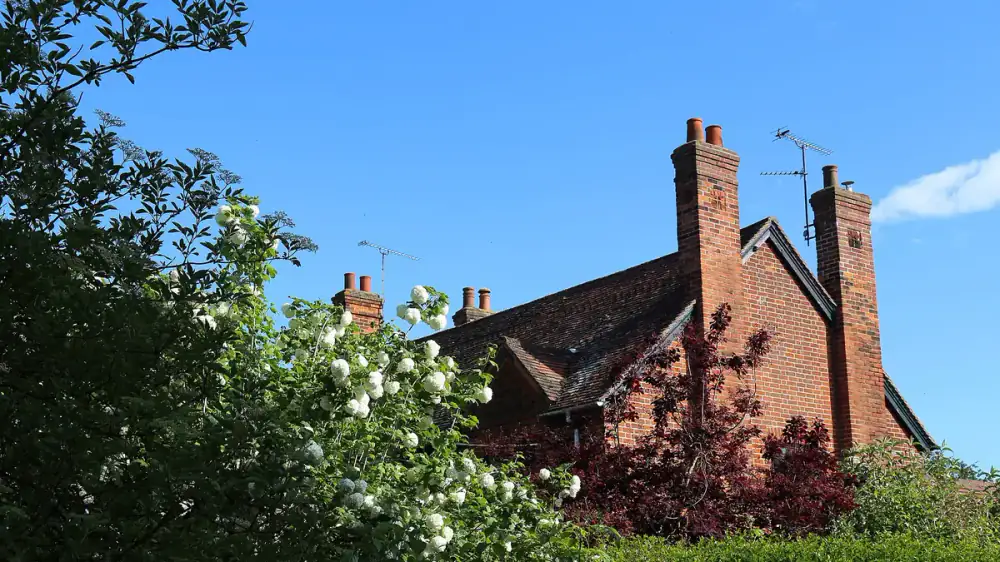
Seasonal Chimney Inspection From the Ground
A short binocular check each season catches most chimney trouble early. Here's what to look for from the ground, a simple cadence, and when to book a pro sweep.
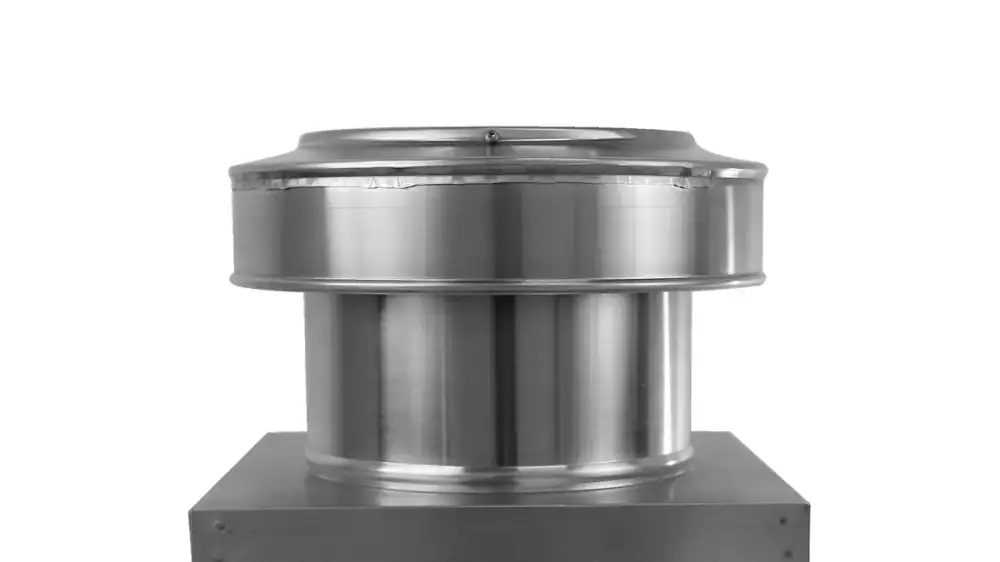
Roof Vents and Vent Covers Explained
Roof vents let the attic breathe, and their covers keep weather out while air keeps moving. Here are the common types, what covers do, and how to spot damage safely.