Exterior Maintenance in a Snowy Climate
Snow, ice and the freeze-thaw cycle put unique stress on gutters, the roof edge and the chimney. Here is how to prepare and what to watch from the ground.
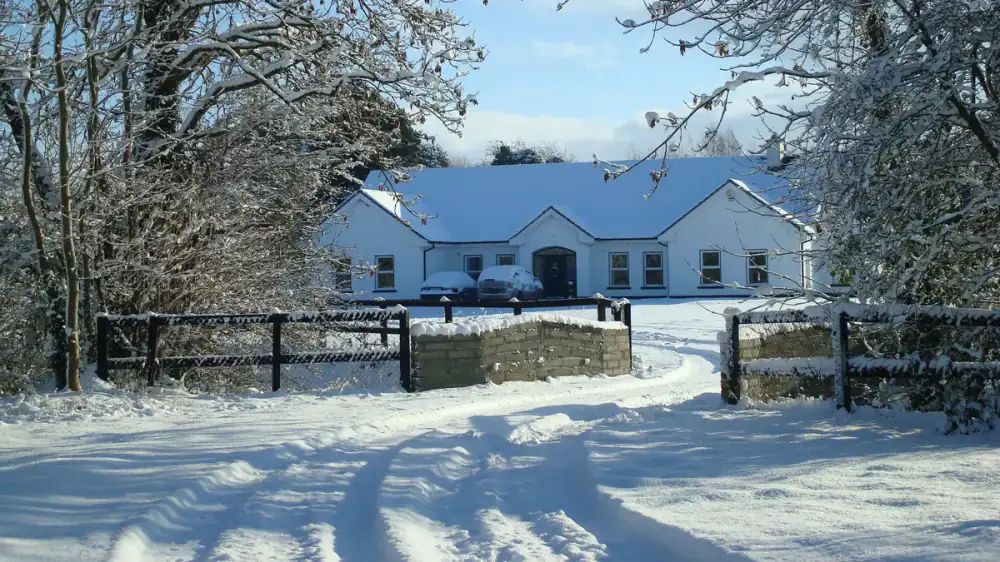
In a snowy climate the real enemy is not the snow — it is trapped water that freezes. Head into winter with clean gutters, a sound roof edge, and good attic ventilation, then watch from the ground for sagging gutters, ice dams, and meltwater at the foundation. The riskiest jobs — clearing roof snow or ice — belong to professionals. Everything you should be doing yourself can be done with both feet planted on solid ground.
Cold does not add a new item to the maintenance list so much as it rewrites the rules under the whole thing. Water that would quietly drain away in a mild climate instead freezes, expands, and levers materials apart, and snow piles on weight the exterior was not carrying for the other three seasons. The reassuring part is that preparing for all of this is straightforward, and nearly all of the winter-long watching happens safely from the ground. This guide zeroes in on the three parts of the exterior that cold treats worst: the gutters, the roof edge, and the chimney.
Freeze-thaw: the force behind the damage
Almost every cold-climate failure comes back to one line of physics — water expands when it freezes. Any moisture caught somewhere it should not be — inside a clogged gutter, down a masonry crack, behind a poorly drained edge — turns into a small wedge each time the temperature drops, and pries the space a little wider with every freeze. Run that cycle across a single winter and a hairline crack can open into a real one, while a gutter packed with frozen debris can sag or tear away under the load. Once you see it this way, how water damages a home's exterior reads with a cold-weather edge: draining water before it freezes is not one tactic among many, it is the entire game.
The fall window you cannot miss
In a snowy climate, autumn preparation stops being optional. The season hands you a short, decisive window to remove the water that would otherwise freeze in place, and the single most important task in it is the late-fall gutter cleaning, done after the last leaves have dropped.
- Clear the gutters so no standing water is left behind to freeze; see how often gutters should be cleaned and the autumn exterior maintenance checklist.
- Confirm downspouts run freely and discharge well clear of the foundation, adding downspout extensions where they fall short.
- Inspect the roof edge from the ground for anything that would let water linger; how to inspect the roof edge from the ground shows what to look for without leaving solid footing.
- Have the chimney checked before you come to rely on it; seasonal chimney inspection covers the pre-winter look.
What winter does to gutters
Gutters absorb the worst of winter. Frozen debris, the dead weight of ice, and meltwater that refreezes overnight all bear down on the trough and its supports at once. How snow and ice damage gutters covers the mechanisms in detail; the practical takeaways are short.
- A gutter that enters winter clear and draining is far less likely to freeze solid in the first place.
- Ice is genuinely heavy, and that weight is what makes marginal hangers pull loose or an already-tired run sag.
- Standing water and lost pitch become freeze points, so correcting drainage before the cold arrives pays for itself all season.
Ice dams start in the attic, not at the edge
Ice dams are the signature cold-climate problem, and the most common mistake is fighting them at the wrong end. Heat escaping into the attic melts snow up on the roof; the meltwater runs down to the colder eave and refreezes there, building a ridge that traps the next round of water behind it — and that trapped water can back up under the shingles. Chipping at the ice on the edge treats the symptom. The lasting fixes live in the attic: better soffit ventilation and insulation to keep the roof deck cold and even, so the snow stops melting unevenly in the first place — plus clear gutters so what does melt can actually drain. How the roof edge works together shows how the pieces cooperate. And to be plain about it: getting up to remove ice from a roof is dangerous, it damages shingles when done wrong, and it is best left to professionals with the right equipment.
The chimney's cold season
The chimney stands exposed to cold on every side, and it leans on masonry that freeze-thaw attacks directly. A cracked crown or failed flashing lets water in, and that water then freezes and widens the very gaps that admitted it — a self-worsening loop across a winter. How water gets in around a chimney explains where to look, and a pre-winter seasonal chimney inspection is what catches those flaws before the cold sets them permanently.
Watching safely from the ground
Winter watching is a ground-level activity, and it needs to stay that way — a ladder on icy, uneven, snow-hidden ground is one of the most dangerous setups in home maintenance, and no glimpse of the roof is worth it. A pair of binoculars gives you almost everything a ladder would, from a safe stance. From the ground, look for:
- Sagging gutter runs or visible dips, a sign that trapped ice weight is pulling the system down.
- Large icicles or an ice ridge along the roof edge, pointing to ice-dam conditions building above.
- New stains appearing on fascia or soffit, meaning water is finding its way where it should not.
- Meltwater discharging against the foundation instead of being carried away from it.
Fold these into the winter exterior maintenance checklist and the monthly exterior home checks so the watching becomes routine rather than something you remember only after a storm.
The thaw is when the truth arrives
The melt is inspection time. Winter's wear surfaces all at once as loosened hangers, sagging runs, cracked seams, and fascia that stayed damp for months. Run a full check the moment conditions allow — the spring exterior maintenance checklist and the annual gutter inspection checklist both cover it — because catching this wear early is exactly what keeps a winter's stress from graduating into a spring repair. That is also the line for handing work off: anything involving roof snow or ice, any ice-dam remediation, any chimney repair, and any damage the thaw reveals — sagging runs, rotted fascia, failed flashing — belongs to a professional. The preparation and the ground-level watching are yours; the height and the cold-weather repairs are theirs, and in winter that division is a safety rule as much as a practical one.
Frequently asked questions
What is the most important thing to do before winter in a snowy climate?
Clean the gutters after the last leaves drop. Going into winter with clear gutters is the single best defense against ice-related damage, because it is trapped, standing water that freezes, expands and does the harm. The late-fall cleaning matters more here than anywhere.
What causes ice dams and can I prevent them?
Ice dams form when heat escaping into the attic melts snow on the roof, which then refreezes at the colder edge and traps water behind it. Better attic ventilation and insulation reduce them; clear gutters help water drain when it does melt. Removing ice from a roof is dangerous and best left to professionals.
How does freeze-thaw damage the exterior?
Water expands as it freezes, so any moisture caught in a crack, a gutter or a masonry joint pries the material wider with every cycle. Over a winter, small cracks grow and gutters can sag or pull loose from the weight of ice. Keeping water drained before it freezes is the key.
Should I remove snow from my roof?
This is risky work. Getting onto or reaching a snowy, icy roof is dangerous, and the wrong tools can damage shingles. Light snow usually poses no problem. When snow load or ice is a genuine concern, it is a job for professionals with the right equipment.
How do I watch for winter damage safely?
From the ground. Look for sagging gutter runs, large icicles or ice ridges at the edge, water stains appearing on fascia or soffit, and meltwater discharging against the foundation. Binoculars let you check the roof edge without a ladder on icy ground.
What should I check as soon as the snow melts?
Run a full gutter and roof-edge inspection. Winter is hard on both, and the thaw is when you find out what the ice did — loosened hangers, sagging runs, cracked seams, and any fascia that stayed wet all season. Catching it early keeps a winter's wear from becoming spring's repair.
Related guides

Prioritizing Exterior Maintenance on a Budget
When funds are limited, spend where they prevent the most damage. Here is how to rank exterior tasks so a small budget does the most good.
Reading Exterior Warning Signs
Most exterior problems announce themselves early. Here is how to read the signs across the whole house and where each one points.

Exterior Maintenance for Coastal Homes
Salt air, corrosion and wind-driven rain make coastal homes their own category. Here is how to rinse, choose materials and check more often.